 Image 1 of 1
A foundational highland maize of central Mexico. It has been grown for centuries across the Central Highlands and Mesa Plateau, especially in the regions of Tlaxcala, Puebla, México, and Michoacán, where volcanic soils, strong sun, and cool nights at high elevation (2,200–2,800 meters) shape its distinctive character.
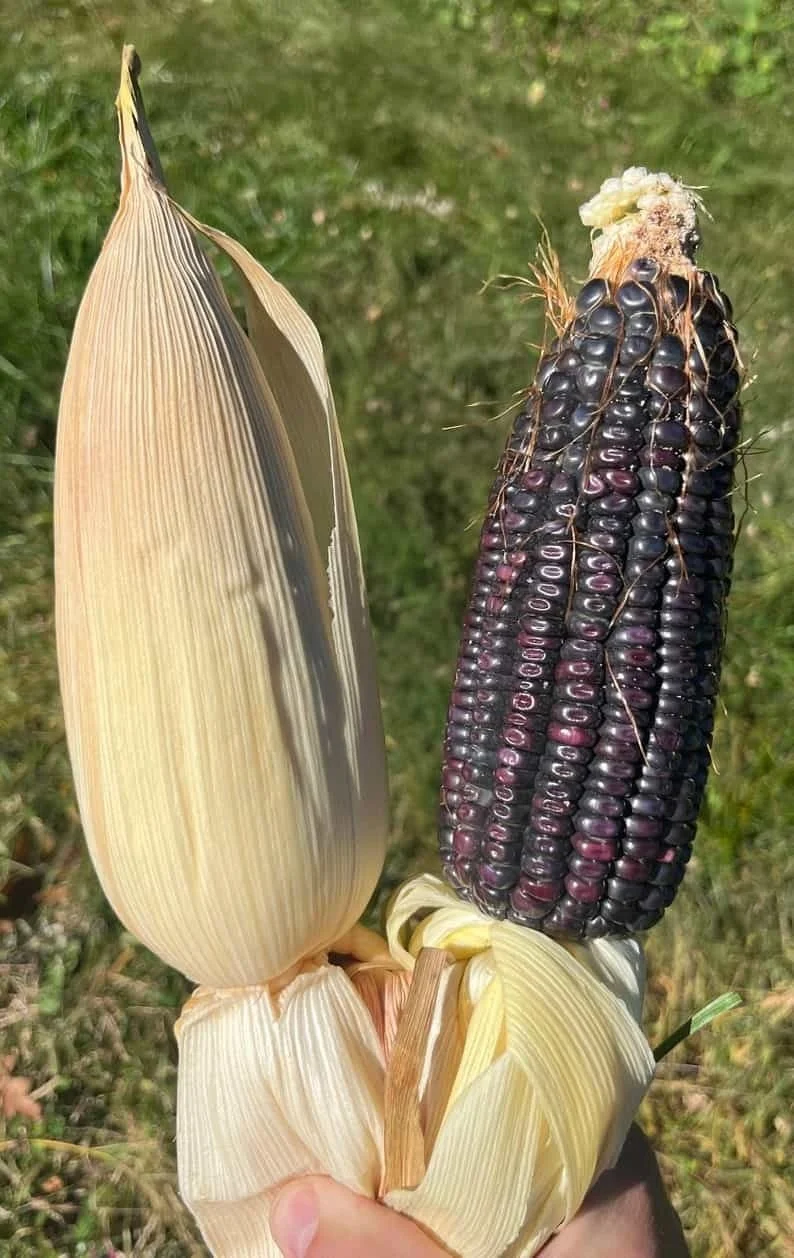
The defining feature of the Cónico race is the gradual tapering of the ear—narrowing from the base to the tip, forming a true cone. The kernels of this strain are blue to blue-black, with a soft, floury starch structure ideal for nixtamalization, grinding, and traditional dough-making. When prepared, the masa becomes a deep sapphire or slate blue, rich in anthocyanins—nutritionally dense pigments deeply valued in highland foodways.
Archaeological evidence places Cónico in pre-Columbian agricultural systems associated with Teotihuacán and the broader altépetl networks of the Central Valley. Botanically, its lineage represents a union of two ancient maize races: Palomero Toluqueño — early, flinty, high-altitude popcorn lineage and Cacahuacintle — the ancestral flour corn used to make pozole.
Blue Cónico remains widely grown today for tortillas, tamales, atole, tetelas, memelas, and ceremonial breads. The flavor is sweet-earthy, nutty, and deeply aromatic—a taste that is unmistakably tied to altitude, soil, and ancestry.
Plants are medium-tall (roughly 5–7 feet but might be taller), well-adapted to cool mountain evenings and warm days. Ears are 5–7 inches, typically with 12–16 rows of kernels.
Days to maturity: 110–130
Seeds per pack: ~50-70 seeds
Germination rate: 90% 10/15/2025
Plant after danger of frost in warm, well-drained soil. Space seeds 8–10 inches apart in blocks or multiple short rows for strong pollination. Hill soil lightly around the stalk base once plants are knee-high to support against wind.
Blue Cónico prefers the rhythm of the highlands:
warm days
cool nights
moderate rainfall
deep, fertile soils
In lower elevations, it benefits from consistent moisture and airflow.
Sow seeds after frost in warm, fertile soil. Space 10–12 inches apart in rows 30–36 inches wide, or in blocks for better pollination. Conico prefers mild days and cool nights typical of highland climates and may require staking in windy areas. Plants produce large, heavy ears on sturdy red-tinged stalks. For culinary use, harvest at the milk stage for elote or allow ears to dry fully for nixtamal and masa production.
As a wind-pollinated open-pollinated variety, isolate by at least ½ mile from other maize to preserve purity. Select fully mature ears with large, rounded kernels and uniform white color. Allow to dry completely on the stalk until husks are papery, then harvest and finish drying in a ventilated space. Shell by hand and store in a cool, dry, dark location. Properly stored seed remains viable for 3–5 years or 10+ years if frozen in the freezer.
A foundational highland maize of central Mexico. It has been grown for centuries across the Central Highlands and Mesa Plateau, especially in the regions of Tlaxcala, Puebla, México, and Michoacán, where volcanic soils, strong sun, and cool nights at high elevation (2,200–2,800 meters) shape its distinctive character.
The defining feature of the Cónico race is the gradual tapering of the ear—narrowing from the base to the tip, forming a true cone. The kernels of this strain are blue to blue-black, with a soft, floury starch structure ideal for nixtamalization, grinding, and traditional dough-making. When prepared, the masa becomes a deep sapphire or slate blue, rich in anthocyanins—nutritionally dense pigments deeply valued in highland foodways.
Archaeological evidence places Cónico in pre-Columbian agricultural systems associated with Teotihuacán and the broader altépetl networks of the Central Valley. Botanically, its lineage represents a union of two ancient maize races: Palomero Toluqueño — early, flinty, high-altitude popcorn lineage and Cacahuacintle — the ancestral flour corn used to make pozole.
Blue Cónico remains widely grown today for tortillas, tamales, atole, tetelas, memelas, and ceremonial breads. The flavor is sweet-earthy, nutty, and deeply aromatic—a taste that is unmistakably tied to altitude, soil, and ancestry.
Plants are medium-tall (roughly 5–7 feet but might be taller), well-adapted to cool mountain evenings and warm days. Ears are 5–7 inches, typically with 12–16 rows of kernels.
Days to maturity: 110–130
Seeds per pack: ~50-70 seeds
Germination rate: 90% 10/15/2025
Plant after danger of frost in warm, well-drained soil. Space seeds 8–10 inches apart in blocks or multiple short rows for strong pollination. Hill soil lightly around the stalk base once plants are knee-high to support against wind.
Blue Cónico prefers the rhythm of the highlands:
warm days
cool nights
moderate rainfall
deep, fertile soils
In lower elevations, it benefits from consistent moisture and airflow.
Sow seeds after frost in warm, fertile soil. Space 10–12 inches apart in rows 30–36 inches wide, or in blocks for better pollination. Conico prefers mild days and cool nights typical of highland climates and may require staking in windy areas. Plants produce large, heavy ears on sturdy red-tinged stalks. For culinary use, harvest at the milk stage for elote or allow ears to dry fully for nixtamal and masa production.
As a wind-pollinated open-pollinated variety, isolate by at least ½ mile from other maize to preserve purity. Select fully mature ears with large, rounded kernels and uniform white color. Allow to dry completely on the stalk until husks are papery, then harvest and finish drying in a ventilated space. Shell by hand and store in a cool, dry, dark location. Properly stored seed remains viable for 3–5 years or 10+ years if frozen in the freezer.