 Image 1 of 4
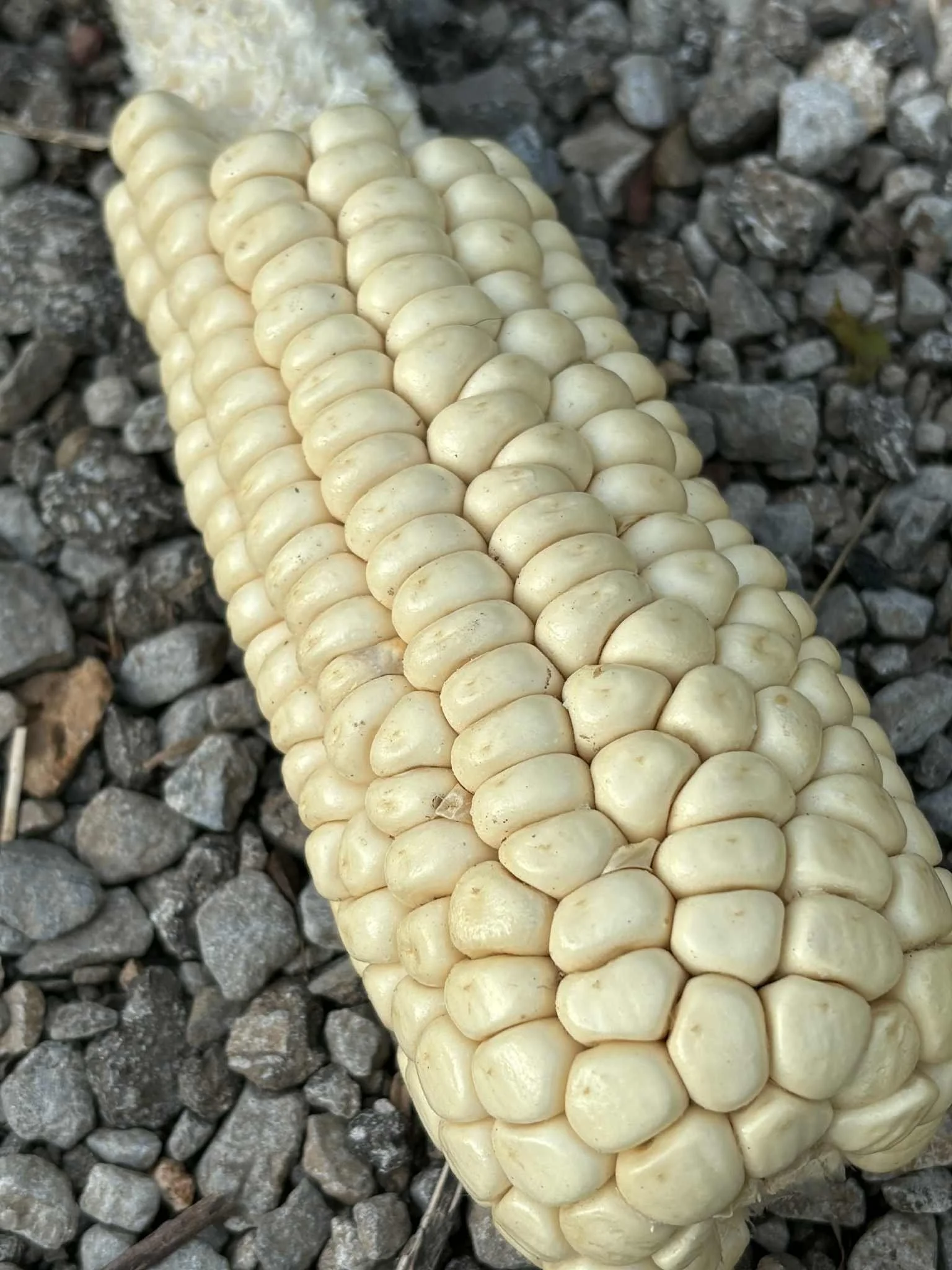 Image 2 of 4
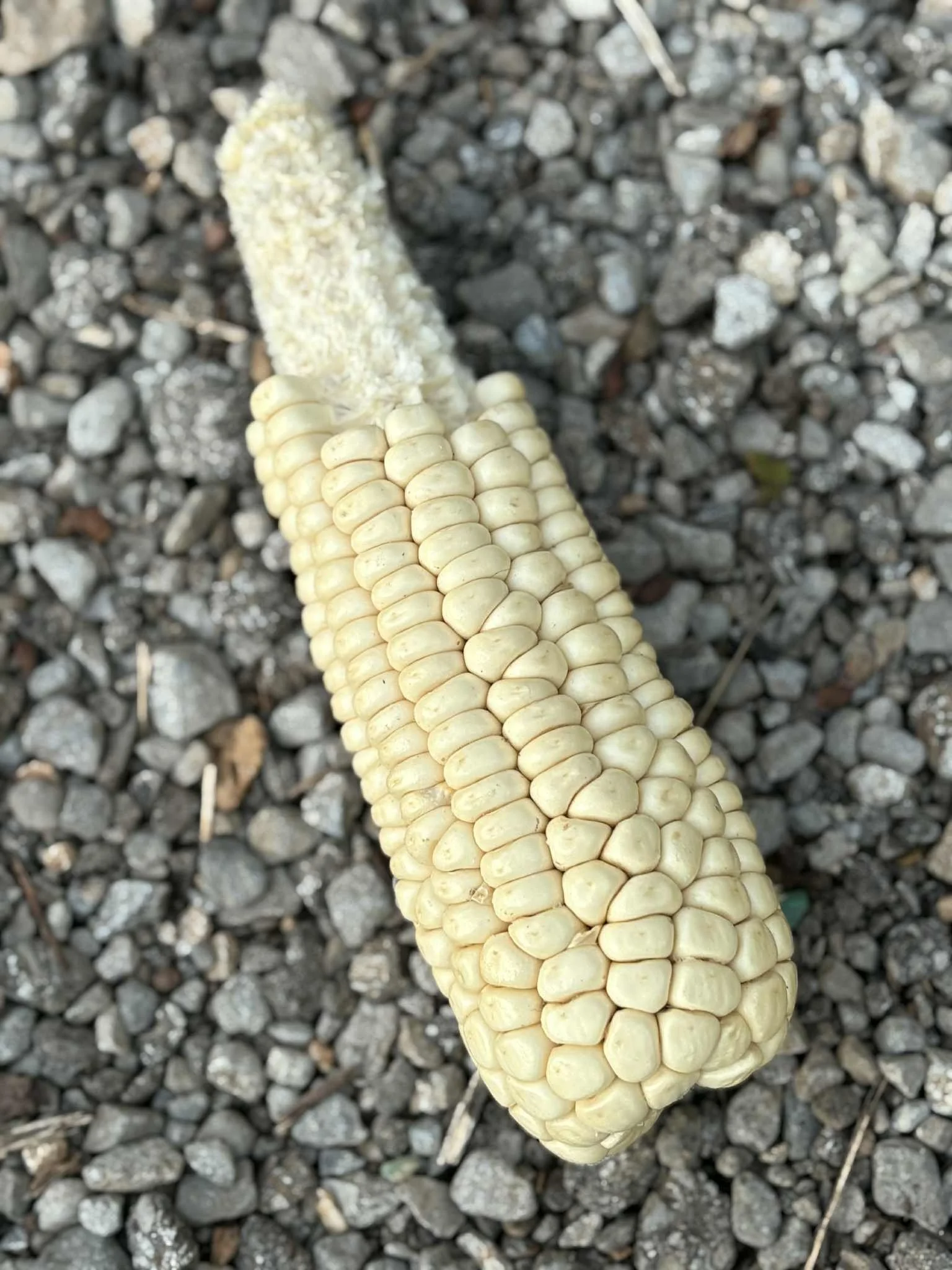 Image 3 of 4
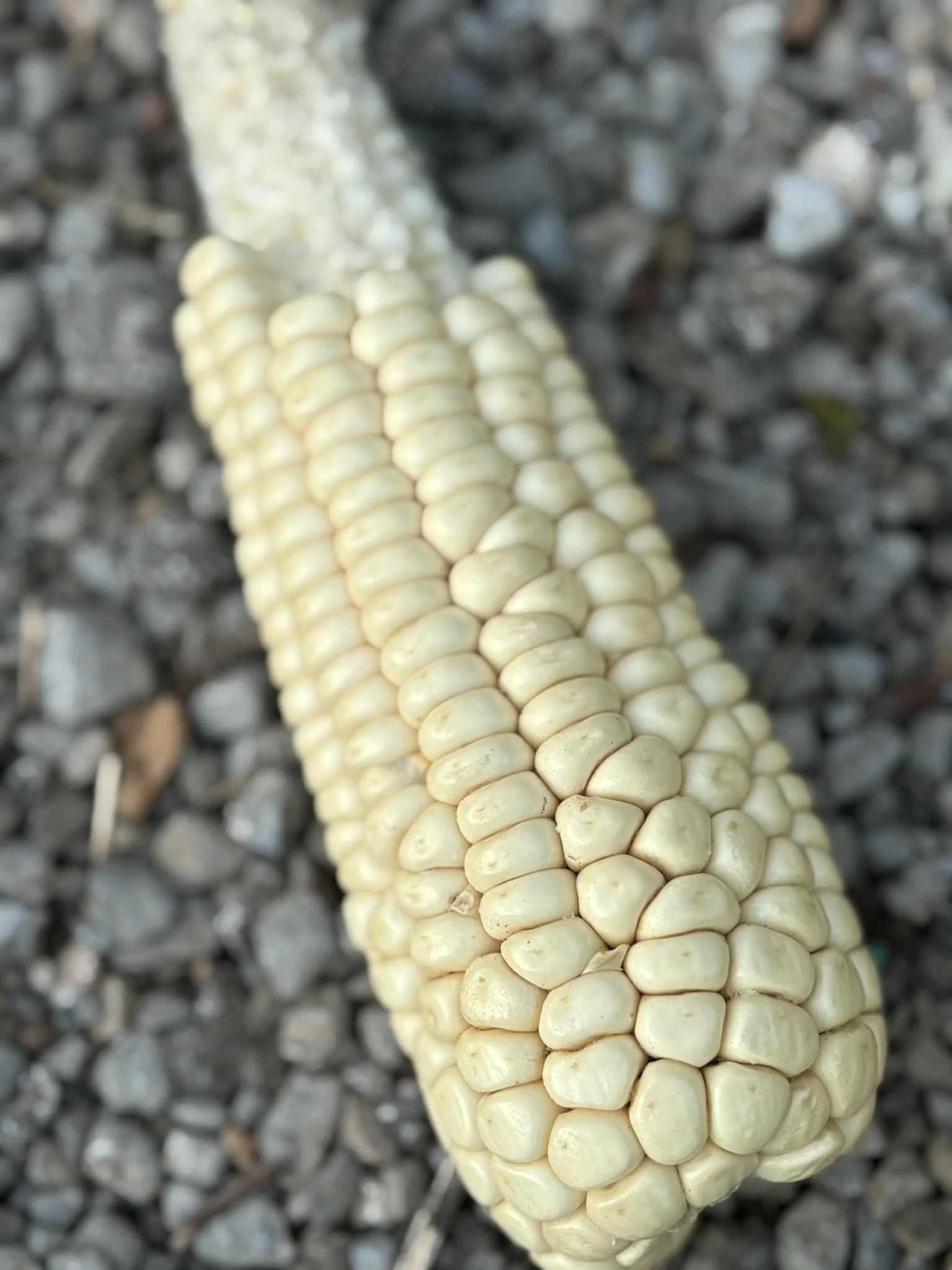 Image 4 of 4
A cornerstone of Mexico’s highland agriculture and cuisine, Maíz Cacahuazintle (also spelled Cacahuacintle) is a large-seeded flour corn revered for its soft, floury kernels and deep cultural roots. Grown since pre-Columbian times in the Central Plateau of Mexico, particularly in the states of México, Tlaxcala, Puebla, and Michoacán, this race thrives at elevations of 2,200 to 2,800 meters where cool nights and fertile volcanic soils nurture its immense ears.
The name Cacahuazintle derives from the Nahuatl words cacahuatl (“cacao”) and cintli (“maize”), meaning “maize with cacao-like kernels.” Its plump, rounded kernels resemble cacao seeds in size and sheen, and when nixtamalized, they swell into the iconic, cloud-like hominy used for pozole, one of Mexico’s most ancient ceremonial and culinary dishes.
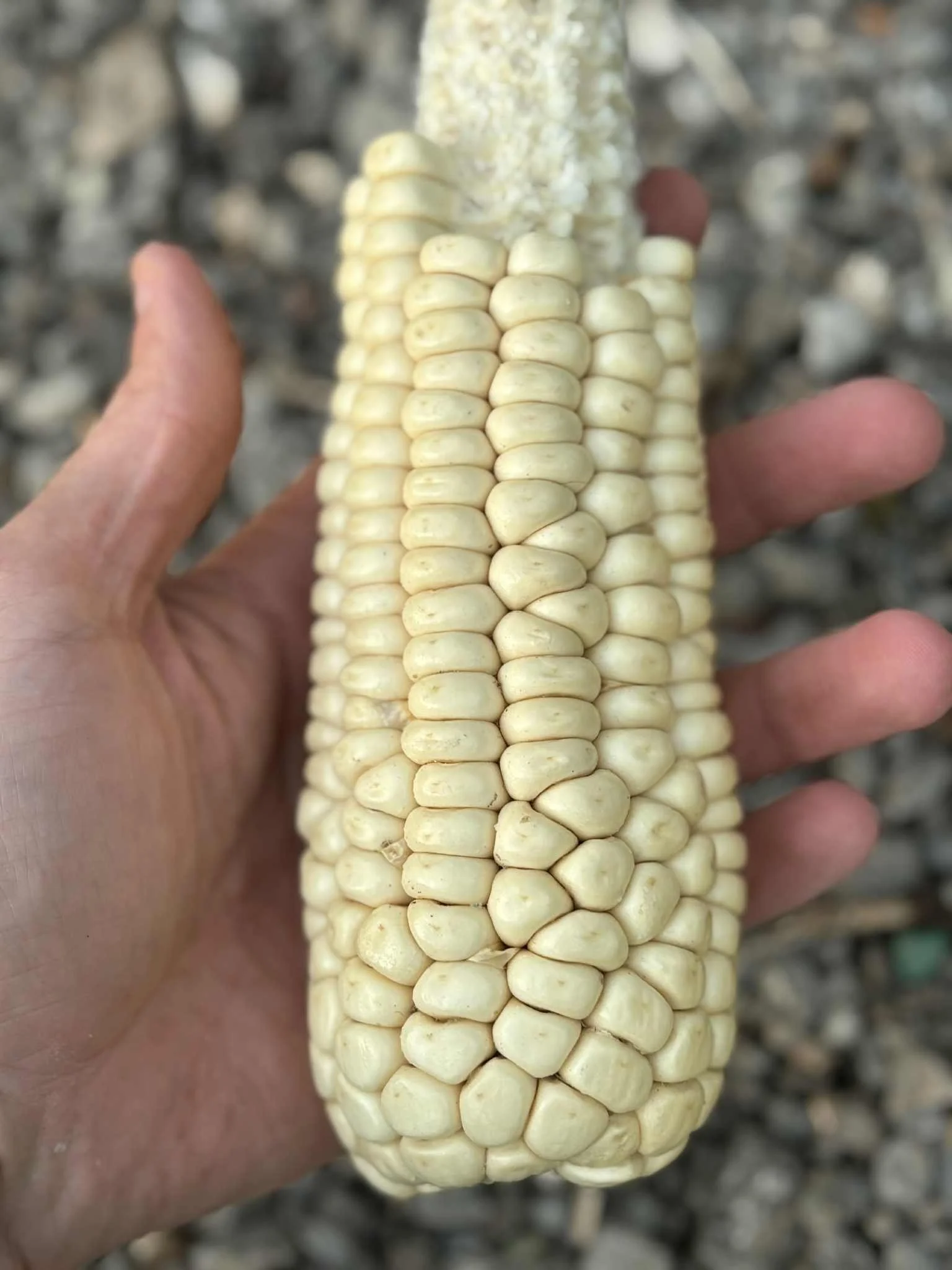
Botanically, Cacahuazintle is a flour-type maize with large, white, slightly dented kernels and a spongy rachis. Ears range from 8 to 12 inches in length, borne on tall, vigorous plants that reach 7–10 feet. The kernels are prized for their high starch and low oil content, yielding a soft, fragrant masa ideal for tortillas, tamales, and atole.
Archaeobotanical and genetic studies confirm that Cacahuazintle likely entered central Mexico from the south in pre-Columbian times, closely related to the Guatemalan flour corn Salpor and even the ancient flour corns of Colombia. Its introduction predates European contact, making it one of the oldest documented maize races still in use today. Over centuries, it gave rise to several derived races—including Cónico, Chalqueño, and Cónico Norteño—which still dominate the upland maize landscapes of Mexico.
It is still the preferred corn for making elote (green corn or roasting ears) across the Central Highlands and has become a national symbol of maize heritage—representing nourishment, memory, and identity in equal measure.
Days to maturity: 110–130+
Seeds per pack: ~50
Germination rate: 90% (tested 10/15/2025)
Sow seeds after frost in warm, fertile soil. Space 10–12 inches apart in rows 30–36 inches wide, or in blocks for better pollination. Cacahuazintle prefers mild days and cool nights typical of highland climates and may require staking in windy areas. Plants produce large, heavy ears on sturdy red-tinged stalks. For culinary use, harvest at the milk stage for elote or allow ears to dry fully for nixtamal and masa production.
As a wind-pollinated open-pollinated variety, isolate by at least ½ mile from other maize to preserve purity. Select fully mature ears with large, rounded kernels and uniform white color. Allow to dry completely on the stalk until husks are papery, then harvest and finish drying in a ventilated space. Shell by hand and store in a cool, dry, dark location. Properly stored seed remains viable for 3–5 years or 10+ years if frozen in the freezer.
A cornerstone of Mexico’s highland agriculture and cuisine, Maíz Cacahuazintle (also spelled Cacahuacintle) is a large-seeded flour corn revered for its soft, floury kernels and deep cultural roots. Grown since pre-Columbian times in the Central Plateau of Mexico, particularly in the states of México, Tlaxcala, Puebla, and Michoacán, this race thrives at elevations of 2,200 to 2,800 meters where cool nights and fertile volcanic soils nurture its immense ears.
The name Cacahuazintle derives from the Nahuatl words cacahuatl (“cacao”) and cintli (“maize”), meaning “maize with cacao-like kernels.” Its plump, rounded kernels resemble cacao seeds in size and sheen, and when nixtamalized, they swell into the iconic, cloud-like hominy used for pozole, one of Mexico’s most ancient ceremonial and culinary dishes.
Botanically, Cacahuazintle is a flour-type maize with large, white, slightly dented kernels and a spongy rachis. Ears range from 8 to 12 inches in length, borne on tall, vigorous plants that reach 7–10 feet. The kernels are prized for their high starch and low oil content, yielding a soft, fragrant masa ideal for tortillas, tamales, and atole.
Archaeobotanical and genetic studies confirm that Cacahuazintle likely entered central Mexico from the south in pre-Columbian times, closely related to the Guatemalan flour corn Salpor and even the ancient flour corns of Colombia. Its introduction predates European contact, making it one of the oldest documented maize races still in use today. Over centuries, it gave rise to several derived races—including Cónico, Chalqueño, and Cónico Norteño—which still dominate the upland maize landscapes of Mexico.
It is still the preferred corn for making elote (green corn or roasting ears) across the Central Highlands and has become a national symbol of maize heritage—representing nourishment, memory, and identity in equal measure.
Days to maturity: 110–130+
Seeds per pack: ~50
Germination rate: 90% (tested 10/15/2025)
Sow seeds after frost in warm, fertile soil. Space 10–12 inches apart in rows 30–36 inches wide, or in blocks for better pollination. Cacahuazintle prefers mild days and cool nights typical of highland climates and may require staking in windy areas. Plants produce large, heavy ears on sturdy red-tinged stalks. For culinary use, harvest at the milk stage for elote or allow ears to dry fully for nixtamal and masa production.
As a wind-pollinated open-pollinated variety, isolate by at least ½ mile from other maize to preserve purity. Select fully mature ears with large, rounded kernels and uniform white color. Allow to dry completely on the stalk until husks are papery, then harvest and finish drying in a ventilated space. Shell by hand and store in a cool, dry, dark location. Properly stored seed remains viable for 3–5 years or 10+ years if frozen in the freezer.