 Image 1 of 2
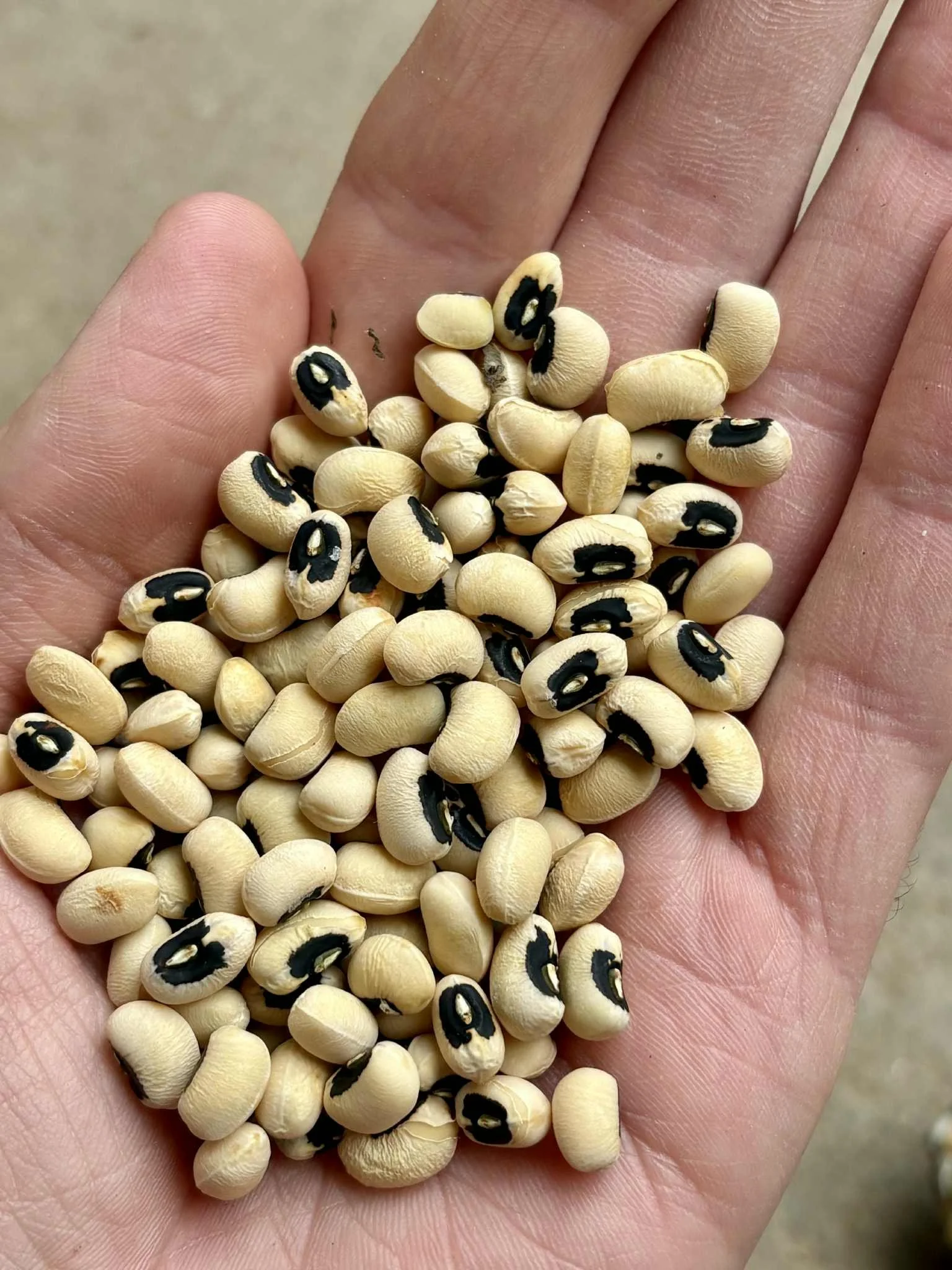 Image 2 of 2
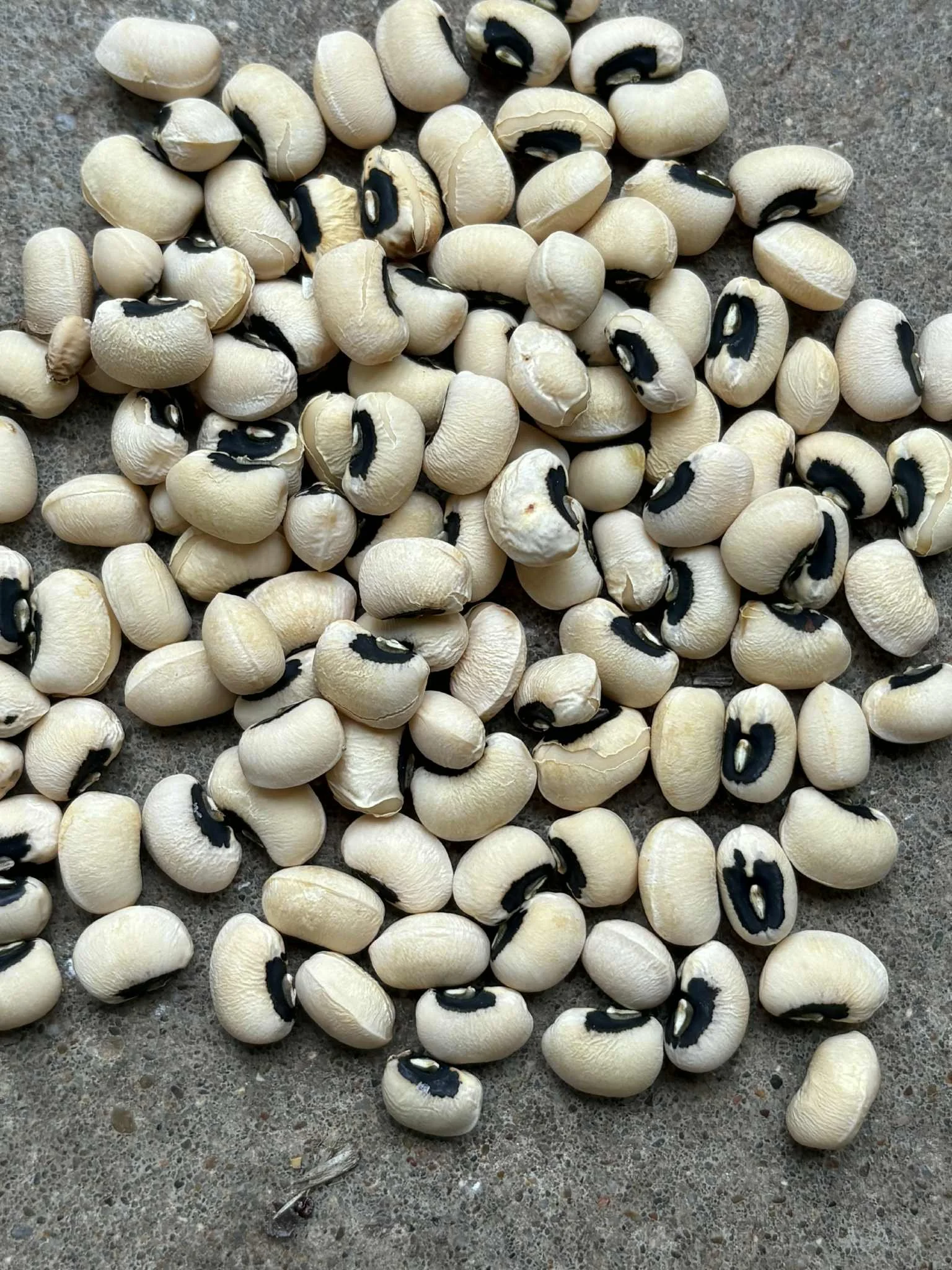
Cream-colored peas with striking black eyes—each one like a drop of ink on ivory—grow 10 to 15 to a pod on vigorous, highly productive vines that can reach six feet in height. Their white blossoms add a quiet grace to the garden, and the young pods are tender and delicious when picked early. Most growers, however, allow them to mature fully for shelling, either fresh or dried, to best appreciate their rich flavor and heritage.
This variety was originally brought into the seed world by by Kris Hubbard of Artemus, Kentucky—an extraordinary seed keeper, healer, and ethnobotanist whose decades of work have helped preserve the agricultural and cultural memory of the Appalachian region. Kris has long traveled the hills and hollows, collecting seeds and the stories that accompany them.
This particular pea was gifted to Kris in the early 1990s by an elder named Mr. Ezelle, then in his eighties, whose family traces its roots to Mali, West Africa. The Ezelle family was first enslaved on a plantation in Hahnville Parish, Louisiana (1820s–1860s) and later relocated to Chickasaw County, Mississippi. Mr. Ezelle shared that his grandmother carried this variety north by hiding a few peas wrapped in a wilted leaf beneath her hair—a small act of resistance and remembrance. His mother, who called it Fish Eye, continued to grow and safeguard the variety until it was passed to him, and eventually to Kris.
Days to maturity: 65–80
Seeds per pack: ~25 seed minimum
Germination rate: 90% (10/15/2025)
Sow directly after the last frost, anytime from late May through mid-July. This climbing variety performs best with a trellis, fence, or pole for support. Plant seeds 1 inch deep and space 3–4 inches apart. As a legume, black-eyed peas enrich the soil with nitrogen, making them both productive and restorative in the garden.
Black-eyed peas are self-pollinating, though it’s best to isolate distinct Vigna unguiculata varieties (cowpeas, southern peas, long beans) by at least 20 feet to maintain purity. Allow pods to dry fully on the vine until brown and crisp before harvesting. If needed, lay them out to dry further indoors. Once cured, shell and store the seeds in a cool, dry place to preserve their vitality for seasons to come.
Cream-colored peas with striking black eyes—each one like a drop of ink on ivory—grow 10 to 15 to a pod on vigorous, highly productive vines that can reach six feet in height. Their white blossoms add a quiet grace to the garden, and the young pods are tender and delicious when picked early. Most growers, however, allow them to mature fully for shelling, either fresh or dried, to best appreciate their rich flavor and heritage.
This variety was originally brought into the seed world by by Kris Hubbard of Artemus, Kentucky—an extraordinary seed keeper, healer, and ethnobotanist whose decades of work have helped preserve the agricultural and cultural memory of the Appalachian region. Kris has long traveled the hills and hollows, collecting seeds and the stories that accompany them.
This particular pea was gifted to Kris in the early 1990s by an elder named Mr. Ezelle, then in his eighties, whose family traces its roots to Mali, West Africa. The Ezelle family was first enslaved on a plantation in Hahnville Parish, Louisiana (1820s–1860s) and later relocated to Chickasaw County, Mississippi. Mr. Ezelle shared that his grandmother carried this variety north by hiding a few peas wrapped in a wilted leaf beneath her hair—a small act of resistance and remembrance. His mother, who called it Fish Eye, continued to grow and safeguard the variety until it was passed to him, and eventually to Kris.
Days to maturity: 65–80
Seeds per pack: ~25 seed minimum
Germination rate: 90% (10/15/2025)
Sow directly after the last frost, anytime from late May through mid-July. This climbing variety performs best with a trellis, fence, or pole for support. Plant seeds 1 inch deep and space 3–4 inches apart. As a legume, black-eyed peas enrich the soil with nitrogen, making them both productive and restorative in the garden.
Black-eyed peas are self-pollinating, though it’s best to isolate distinct Vigna unguiculata varieties (cowpeas, southern peas, long beans) by at least 20 feet to maintain purity. Allow pods to dry fully on the vine until brown and crisp before harvesting. If needed, lay them out to dry further indoors. Once cured, shell and store the seeds in a cool, dry place to preserve their vitality for seasons to come.