 Image 1 of 3
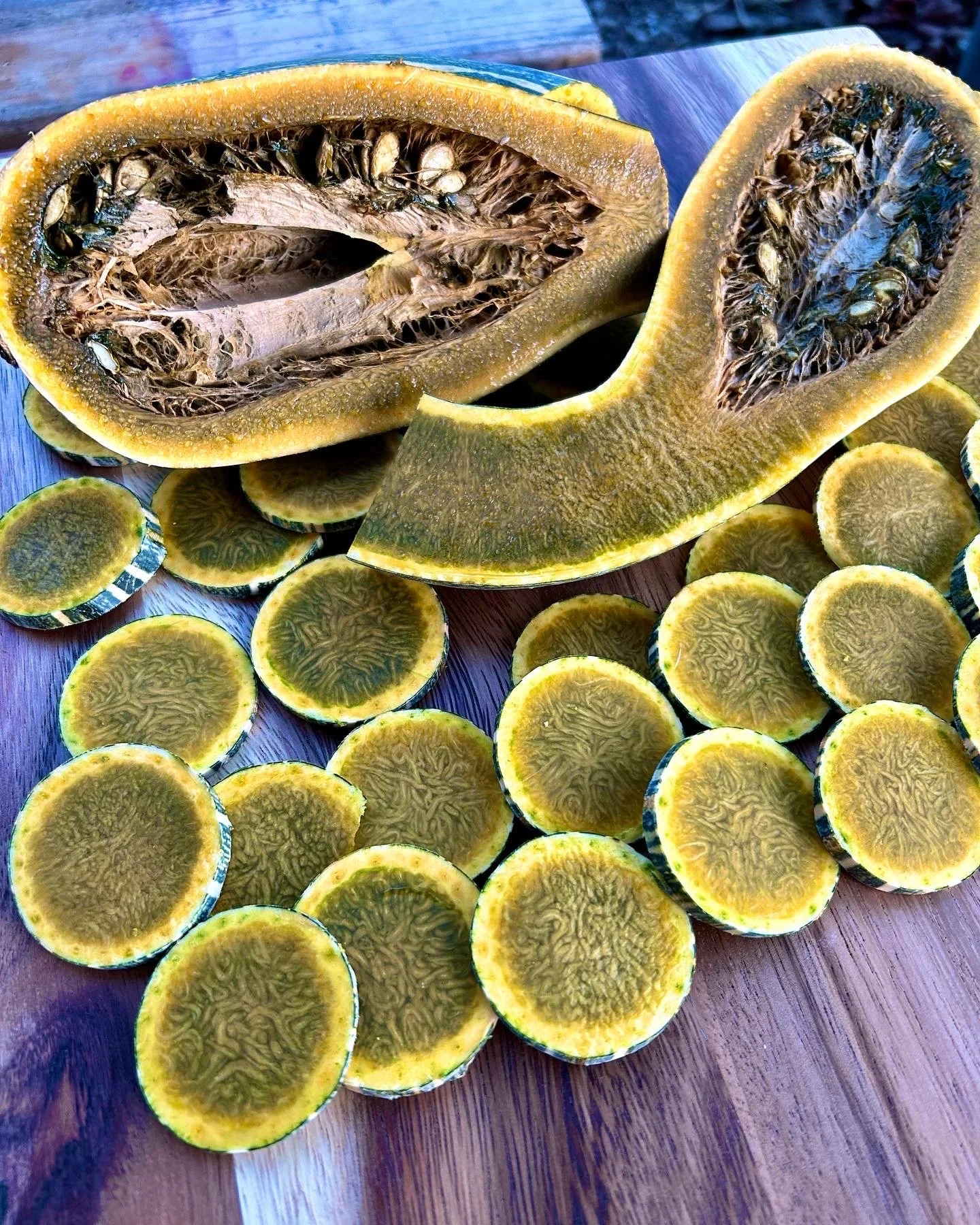 Image 2 of 3
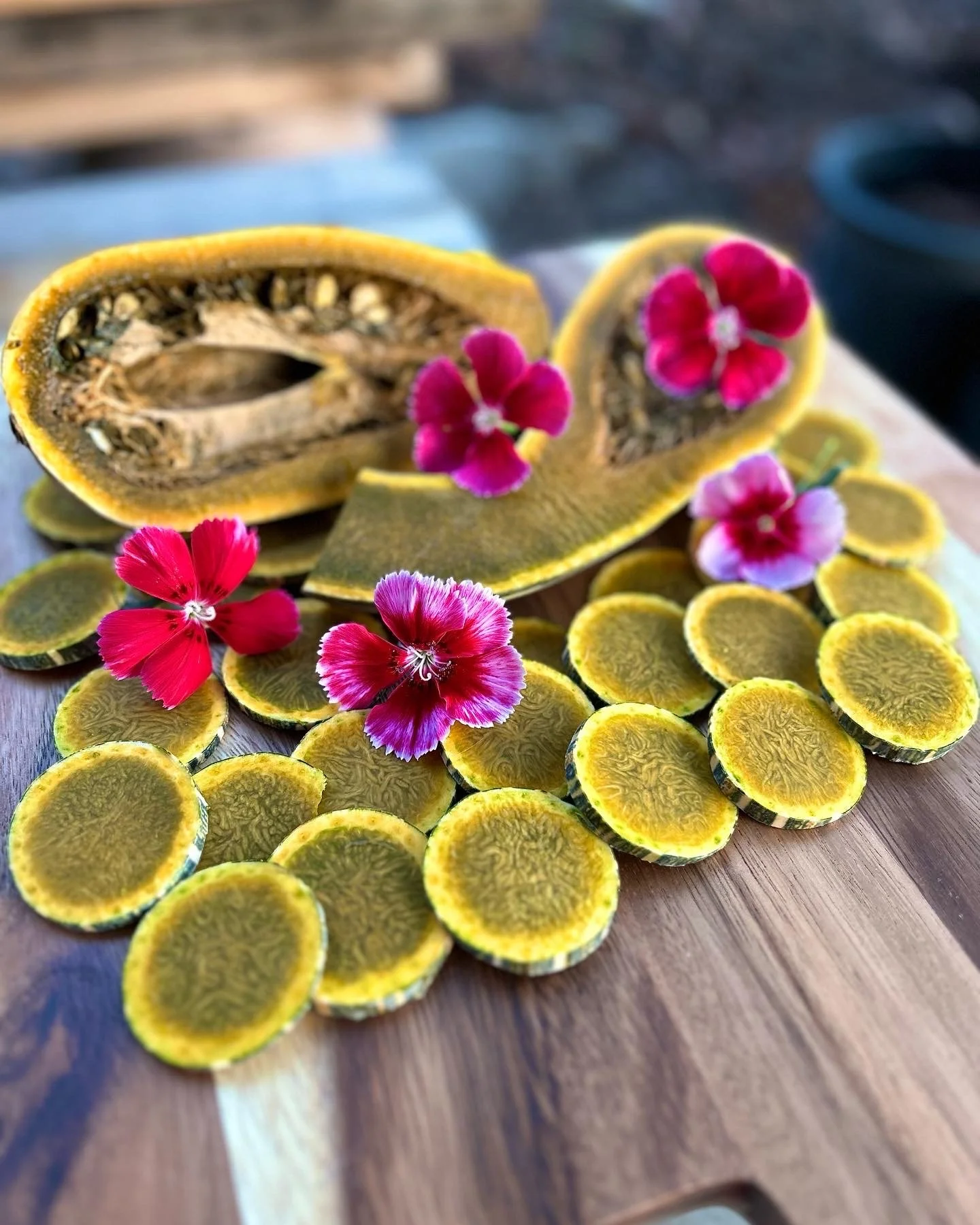 Image 3 of 3
Green Ayote is an ancestral Indigenous landrace of Cucurbita moschata originating in Mesoamerica, especially in regions of southern Mexico, Guatemala, Honduras, El Salvador, and Nicaragua. Its lineage is pre-Columbian, and archaeological evidence shows the domestication of C. moschata in Central America well over 4,000 years ago, where squashes were cultivated alongside maize and beans as part of deeply interwoven agricultural and cultural systems.
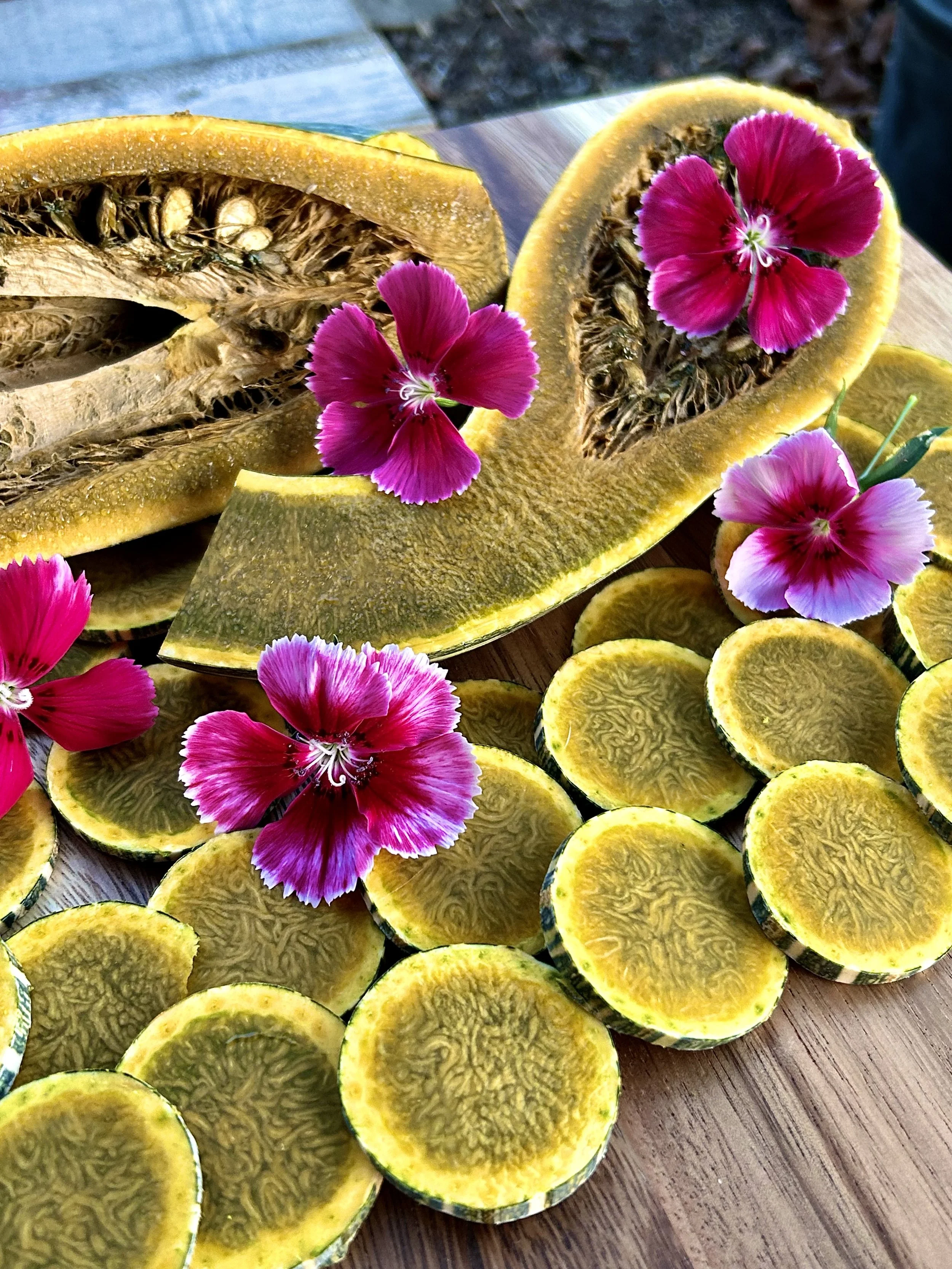
This particular strain represents the green-fleshed, deep-keeping form traditionally grown in highland and lower-montane valleys, where long seasons and warm soils encourage fruits with firm, dense, sweet-savory flesh and exceptional storage ability. When properly cured, Green Ayote can store many months, and the green flesh is very earthy, almost grassy/matcha like. It is amazing in soups, baking, or as you use other winter squash. When young, fruits can be treated like zucchini.
In many Maya and other Indigenous communities of southern Mexico and Central America, ayotes were prepared in stews, roasted, sun-dried, or ground and were valued not only as sustenance but as part of seasonal ritual life. The seeds, high in oils and protein, were historically used in dishes comparable to pepitas, and are still central to traditional sauces and ceremonial foods today.
Ethnobotanical documentation notes that certain ayote landraces were included in earth-honoring observances, seasonal harvest offerings, and fertility-related rites, where planting, tending, and saving seeds were understood as acts of relationship between people, land, ancestors, and future generations.
Days to maturity: 110–135
Seeds per pack: ~20
Germination rate: 90% 10/15/2025
Plant after danger of frost when soil has fully warmed. Sow seeds 1 inch deep, spacing 3–5 feet between plants or grow on hills. Full sun and heat are essential. Like many moschata types, Green Ayote shows excellent resistance to vine borers, heat stress, and fungal pressure.
Allow fruits to fully cure: leave on the vine until stems harden and rind deepens, then store in a cool, dry space to develop full flavor.
The vines will run long—give them room, and they will reward you.
C. moschata squash are insect-pollinated and will cross readily with other moschata varieties. To maintain the true character of this landrace:
Grow only one moschata variety that season, or
Hand-pollinate and bag blossoms, or
Provide ½ mile isolation.
Select fruits that:
Store well through winter
Have strong seed set
Show uniform flesh color and firmness
Come from vigorous, healthy vines
Remove seeds, rinse, and dry thoroughly before storage. Properly stored seeds remain viable 4–6+ years.
Green Ayote is an ancestral Indigenous landrace of Cucurbita moschata originating in Mesoamerica, especially in regions of southern Mexico, Guatemala, Honduras, El Salvador, and Nicaragua. Its lineage is pre-Columbian, and archaeological evidence shows the domestication of C. moschata in Central America well over 4,000 years ago, where squashes were cultivated alongside maize and beans as part of deeply interwoven agricultural and cultural systems.
This particular strain represents the green-fleshed, deep-keeping form traditionally grown in highland and lower-montane valleys, where long seasons and warm soils encourage fruits with firm, dense, sweet-savory flesh and exceptional storage ability. When properly cured, Green Ayote can store many months, and the green flesh is very earthy, almost grassy/matcha like. It is amazing in soups, baking, or as you use other winter squash. When young, fruits can be treated like zucchini.
In many Maya and other Indigenous communities of southern Mexico and Central America, ayotes were prepared in stews, roasted, sun-dried, or ground and were valued not only as sustenance but as part of seasonal ritual life. The seeds, high in oils and protein, were historically used in dishes comparable to pepitas, and are still central to traditional sauces and ceremonial foods today.
Ethnobotanical documentation notes that certain ayote landraces were included in earth-honoring observances, seasonal harvest offerings, and fertility-related rites, where planting, tending, and saving seeds were understood as acts of relationship between people, land, ancestors, and future generations.
Days to maturity: 110–135
Seeds per pack: ~20
Germination rate: 90% 10/15/2025
Plant after danger of frost when soil has fully warmed. Sow seeds 1 inch deep, spacing 3–5 feet between plants or grow on hills. Full sun and heat are essential. Like many moschata types, Green Ayote shows excellent resistance to vine borers, heat stress, and fungal pressure.
Allow fruits to fully cure: leave on the vine until stems harden and rind deepens, then store in a cool, dry space to develop full flavor.
The vines will run long—give them room, and they will reward you.
C. moschata squash are insect-pollinated and will cross readily with other moschata varieties. To maintain the true character of this landrace:
Grow only one moschata variety that season, or
Hand-pollinate and bag blossoms, or
Provide ½ mile isolation.
Select fruits that:
Store well through winter
Have strong seed set
Show uniform flesh color and firmness
Come from vigorous, healthy vines
Remove seeds, rinse, and dry thoroughly before storage. Properly stored seeds remain viable 4–6+ years.