 Image 1 of 2
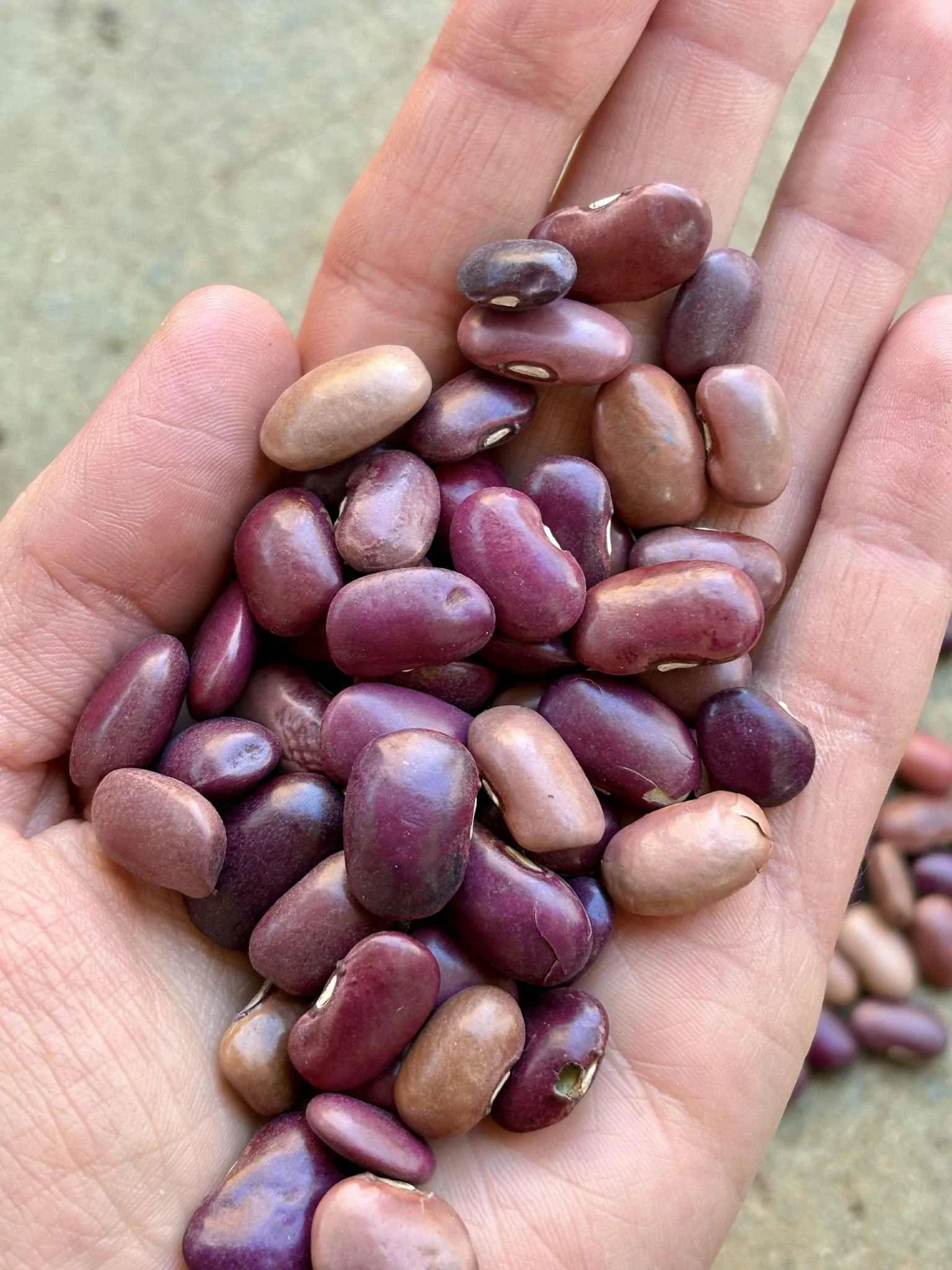 Image 2 of 2
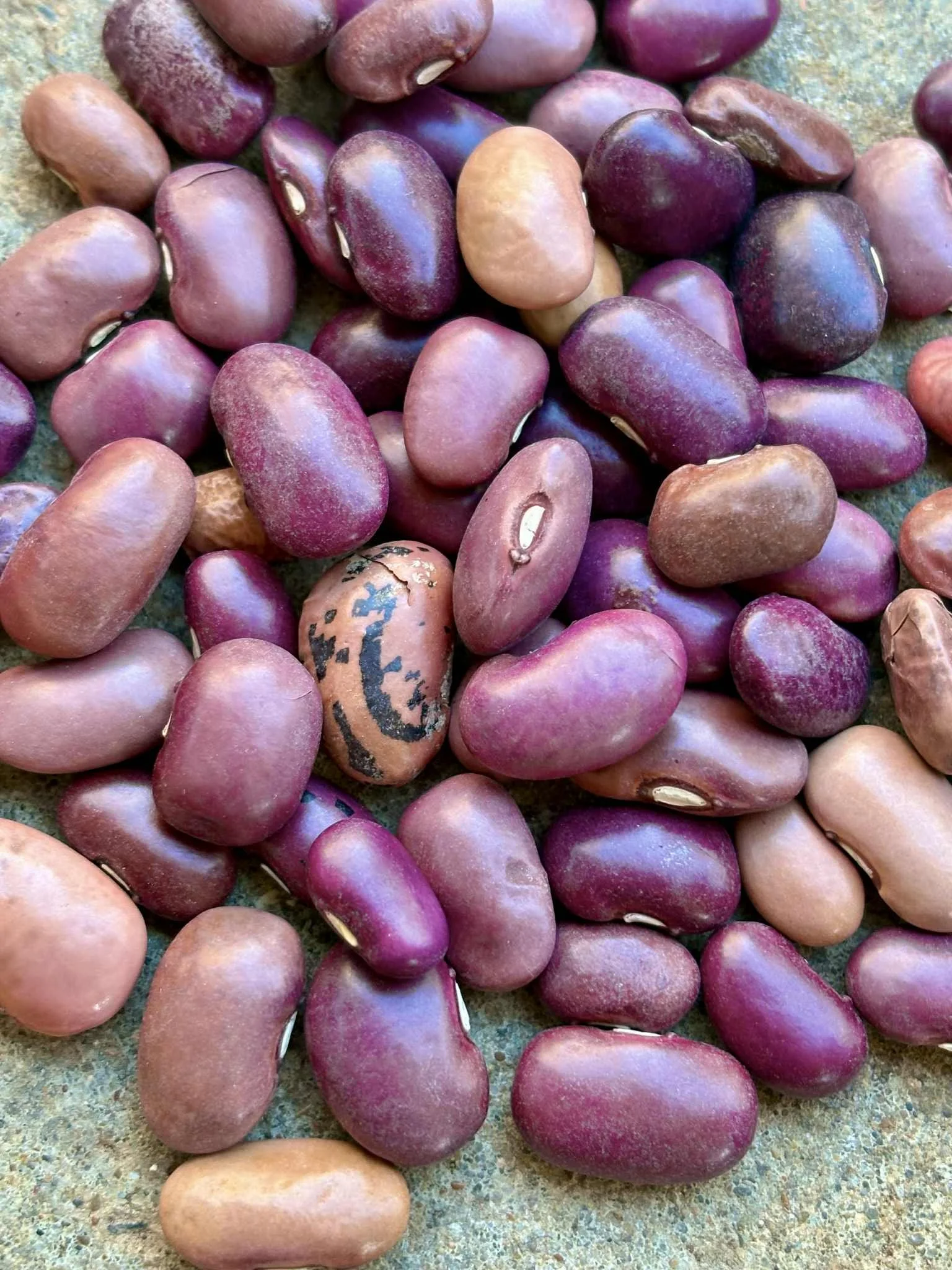
A vigorous, long-lived runner bean with varied deep violet seeds and striking magenta-to-scarlet flowers, Ayocote Morado is one of the oldest continuously cultivated bean lineages in Mesoamerica. This variety is traditionally grown in Tlaxcala, on the slopes of the Matlalcueitl volcano (also known as La Malinche), at an altitude of approximately 2,540 meters. The highland climate—cool nights, strong sun, and well-drained volcanic soils—has shaped the plant into a resilient and enduring food crop.
In pre-Columbian times, Ayocotes (a word derived from Nahuatl ayotl = gourd and cótl = bean) formed part of the Indigenous agricultural systems of central Mexico. Unlike common beans, runner beans can be perennial by nature and develop large, thick roots that can survive multiple seasons in frost-free or mild climates. Their vigorous climbing vines can reach 8–12 feet, bearing edible flowers, tender young pods, and eventually large, meaty seeds with a firm texture and rich, savory flavor.
The cooked beans hold their shape beautifully and lend themselves to slow-cooked dishes, soups, stews, and herb-infused broths. The flavor is earthy, full, and slightly sweet—an excellent pairing with roasted chiles, garlic, and native herbs.
Days to maturity: 90–110 (dry beans)
Seeds per pack: ~20-25
Germination rate: 90% 10/15/2025
Plant after final frost once the soil has warmed. Provide a strong trellis, fence, or pole system—these are true climbers. Sow seeds about 1 inch deep and space plants 8–12 inches apart. Ayocote Morado performs best in full sun with steady moisture, though, like many highland crops, it is more tolerant of cool conditions than common beans.
In frost-free climates, the large root system may overwinter and send up new vines for multiple seasons. In colder regions, treat as an annual but allow roots to grow deeply to support strong pod set.
Allow pods to dry fully on the vine until they become papery and seeds rattle within. Harvest before heavy rain to avoid mold. Shell by hand and allow seeds to cure another few days indoors before storage. Runner beans generally have low cross-pollination rates but may cross with other Phaseolus coccineus varieties; for purity, isolate by 20–50 feet or grow only one runner bean variety at a time. Properly stored seed remains viable for 4–6 years or longer if placed in the freezer.
A vigorous, long-lived runner bean with varied deep violet seeds and striking magenta-to-scarlet flowers, Ayocote Morado is one of the oldest continuously cultivated bean lineages in Mesoamerica. This variety is traditionally grown in Tlaxcala, on the slopes of the Matlalcueitl volcano (also known as La Malinche), at an altitude of approximately 2,540 meters. The highland climate—cool nights, strong sun, and well-drained volcanic soils—has shaped the plant into a resilient and enduring food crop.
In pre-Columbian times, Ayocotes (a word derived from Nahuatl ayotl = gourd and cótl = bean) formed part of the Indigenous agricultural systems of central Mexico. Unlike common beans, runner beans can be perennial by nature and develop large, thick roots that can survive multiple seasons in frost-free or mild climates. Their vigorous climbing vines can reach 8–12 feet, bearing edible flowers, tender young pods, and eventually large, meaty seeds with a firm texture and rich, savory flavor.
The cooked beans hold their shape beautifully and lend themselves to slow-cooked dishes, soups, stews, and herb-infused broths. The flavor is earthy, full, and slightly sweet—an excellent pairing with roasted chiles, garlic, and native herbs.
Days to maturity: 90–110 (dry beans)
Seeds per pack: ~20-25
Germination rate: 90% 10/15/2025
Plant after final frost once the soil has warmed. Provide a strong trellis, fence, or pole system—these are true climbers. Sow seeds about 1 inch deep and space plants 8–12 inches apart. Ayocote Morado performs best in full sun with steady moisture, though, like many highland crops, it is more tolerant of cool conditions than common beans.
In frost-free climates, the large root system may overwinter and send up new vines for multiple seasons. In colder regions, treat as an annual but allow roots to grow deeply to support strong pod set.
Allow pods to dry fully on the vine until they become papery and seeds rattle within. Harvest before heavy rain to avoid mold. Shell by hand and allow seeds to cure another few days indoors before storage. Runner beans generally have low cross-pollination rates but may cross with other Phaseolus coccineus varieties; for purity, isolate by 20–50 feet or grow only one runner bean variety at a time. Properly stored seed remains viable for 4–6 years or longer if placed in the freezer.