 Image 1 of 3
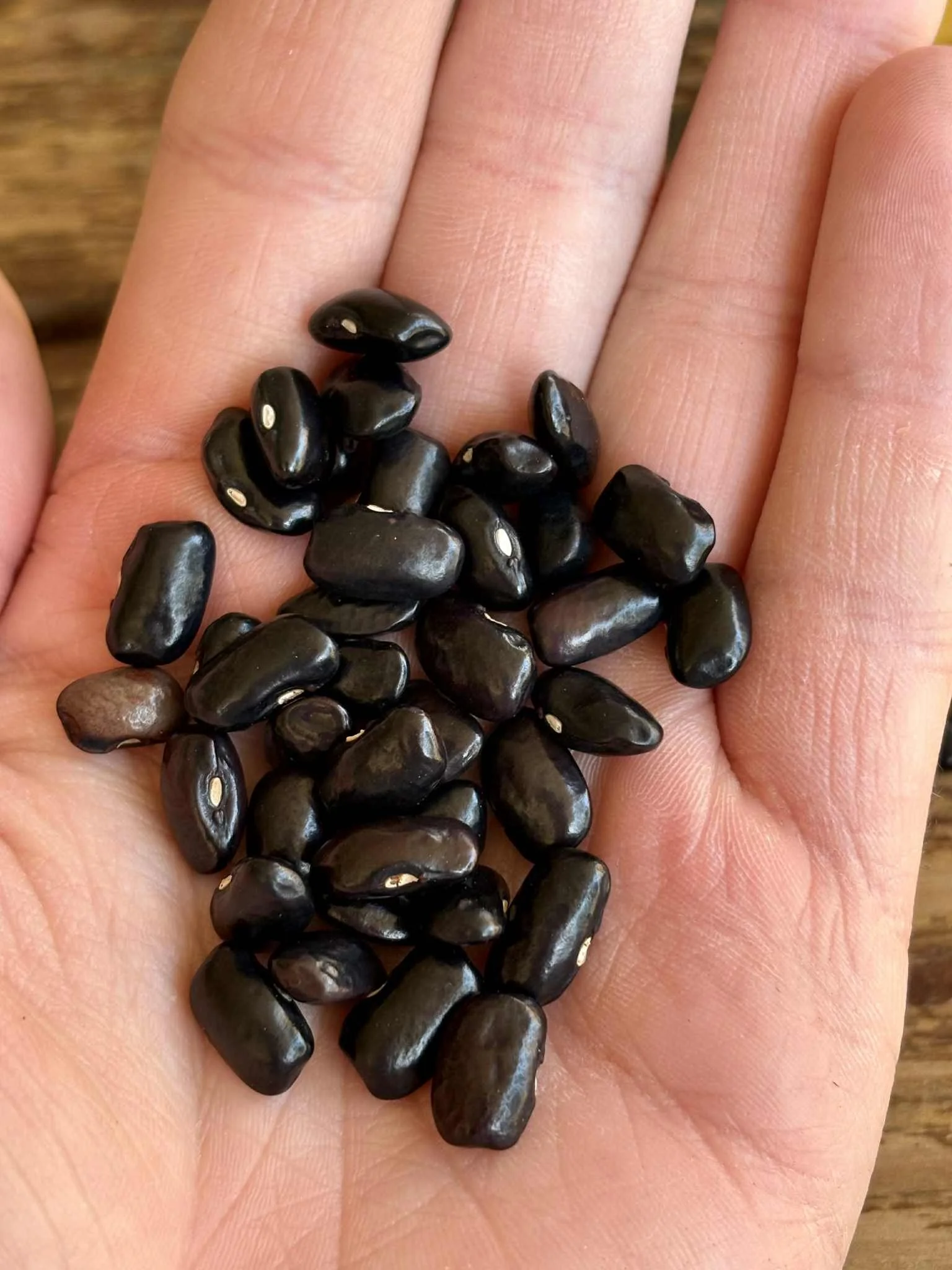 Image 2 of 3
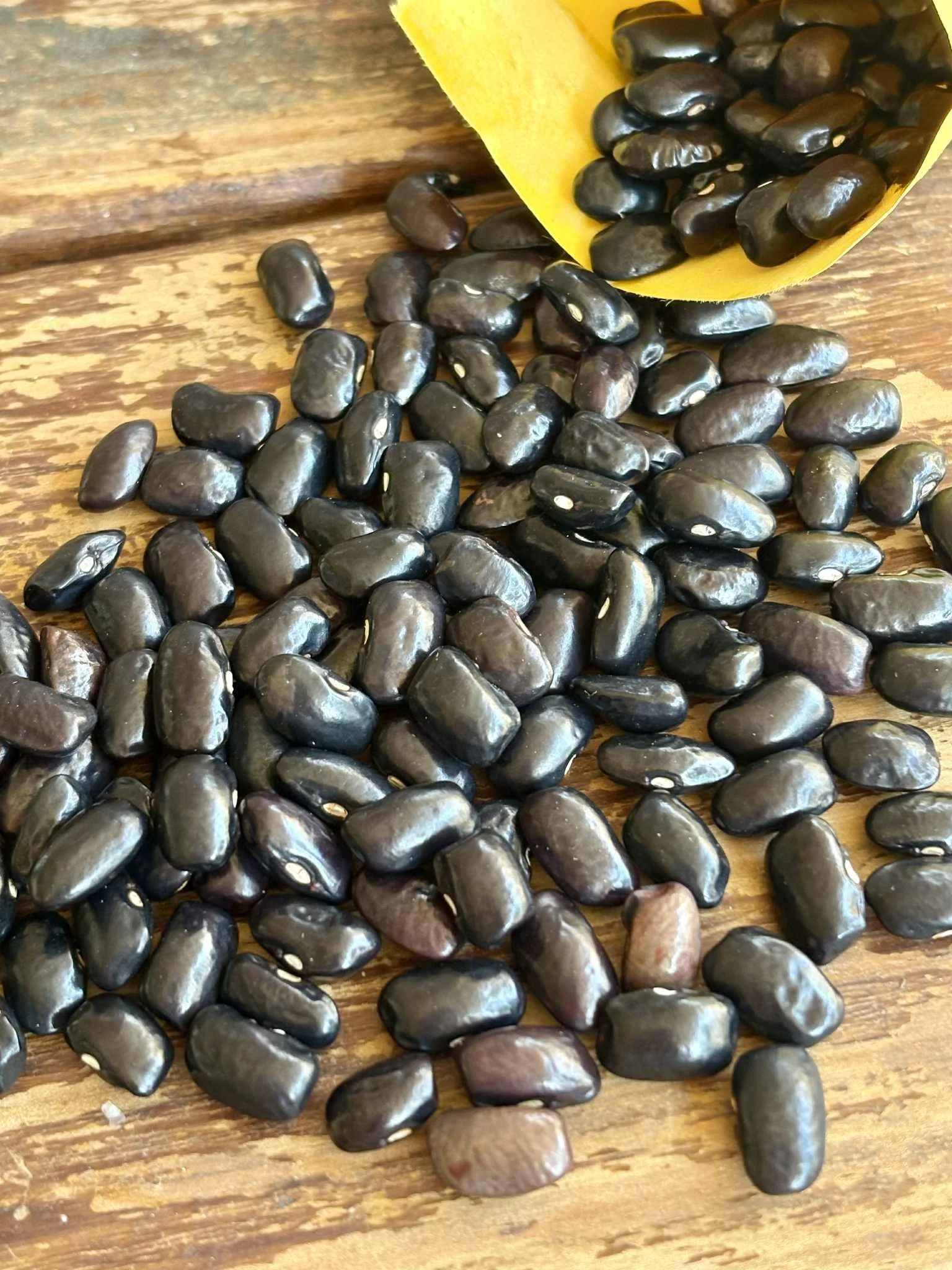 Image 3 of 3
A rare and vigorous Iroquoian heirloom climbing bean, the Little Blacksnake (Corn Hill) Pole Bean traces its lineage to the Cornplanter Seneca of western New York and northwestern Pennsylvania. The variety was preserved through the family of a Seneca seedkeeper whose name was Little Black Snake. This bean was later stewarded and documented by Theodore Hetzel of Kennett Square, Pennsylvania, who received it directly from Little Blacksnake of the Cornplanter Seneca growers. Hetzel was a Quaker engineer and professor at Haverford College who was deeply involved in Native American issues. He was a member of the American Friends Service Committee and other Quaker organizations focused on Native American rights, and he documented his work through extensive photography and field notes. His activism included opposing the Kinzua Dam project, which displaced the Seneca Nation, and visiting numerous Native American reservations and communities.
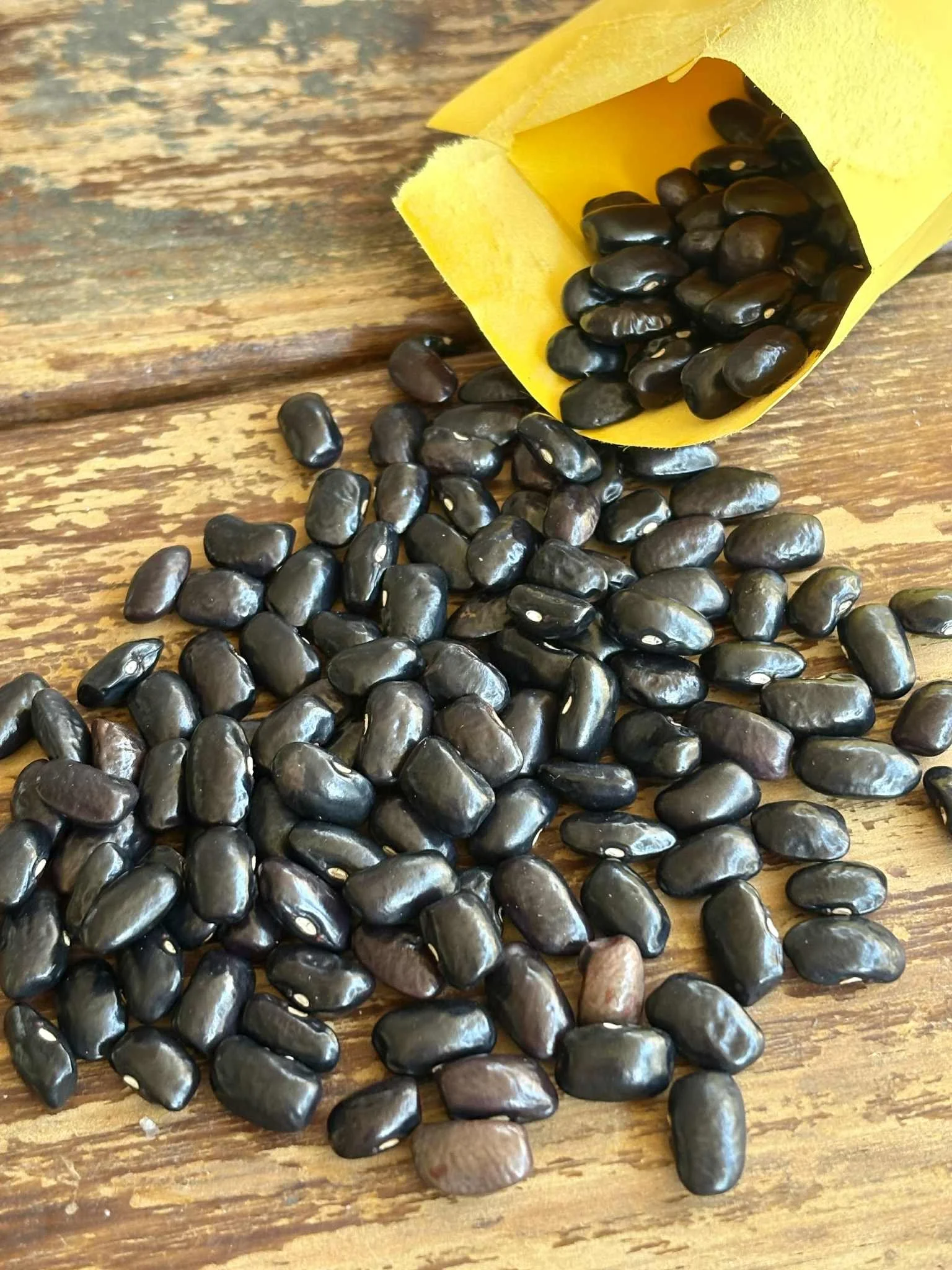
Vines are 10–12 feet tall, producing slender, curved pods. Each pod contains 7–8 small, flat, jet-black seeds. Plants are often exceptionally prolific, setting continuously through warm seasons. When dried, pods develop a subtle violet blush, signaling maturity.
A closely related strain, called the Black Corn Hill Bean, was recorded by ethnobotanist F.W. Waugh in 1916 among the Six Nations of the Grand River Reserve, Ontario—suggesting that this lineage once circulated widely through Haudenosaunee territories.
This bean embodies the heritage of Three Sisters agriculture, thriving when planted among corn for natural support. The cooked beans are tender, rich, and slightly nutty in flavor, making them excellent for soups, stews, and seed-renewal feasts.
Days to maturity: ~90–100 days (dry stage)
Seeds per pack: ~25
Germination rate: 90% 10/15/2025
Planting & Growth Notes
Sow after danger of frost in warm, well-drained soil. Provide tall poles, trellises, or corn stalks for climbing. Plant 1 inch deep, spacing 6–8 inches apart. This is a true pole bean, capable of climbing over 10 feet and producing heavy yields of dry seed. Flowers attract pollinators and can aid in mixed traditional plantings.
Allow pods to dry fully on the vine until papery and rattle with movement. Harvest before prolonged wet weather, shell carefully, and air-dry an additional week indoors. Isolate by at least 20 feet from other Phaseolus vulgaris varieties for purity. Properly dried seed remains viable 4–6 years or longer if frozen in the freezer.
A rare and vigorous Iroquoian heirloom climbing bean, the Little Blacksnake (Corn Hill) Pole Bean traces its lineage to the Cornplanter Seneca of western New York and northwestern Pennsylvania. The variety was preserved through the family of a Seneca seedkeeper whose name was Little Black Snake. This bean was later stewarded and documented by Theodore Hetzel of Kennett Square, Pennsylvania, who received it directly from Little Blacksnake of the Cornplanter Seneca growers. Hetzel was a Quaker engineer and professor at Haverford College who was deeply involved in Native American issues. He was a member of the American Friends Service Committee and other Quaker organizations focused on Native American rights, and he documented his work through extensive photography and field notes. His activism included opposing the Kinzua Dam project, which displaced the Seneca Nation, and visiting numerous Native American reservations and communities.
Vines are 10–12 feet tall, producing slender, curved pods. Each pod contains 7–8 small, flat, jet-black seeds. Plants are often exceptionally prolific, setting continuously through warm seasons. When dried, pods develop a subtle violet blush, signaling maturity.
A closely related strain, called the Black Corn Hill Bean, was recorded by ethnobotanist F.W. Waugh in 1916 among the Six Nations of the Grand River Reserve, Ontario—suggesting that this lineage once circulated widely through Haudenosaunee territories.
This bean embodies the heritage of Three Sisters agriculture, thriving when planted among corn for natural support. The cooked beans are tender, rich, and slightly nutty in flavor, making them excellent for soups, stews, and seed-renewal feasts.
Days to maturity: ~90–100 days (dry stage)
Seeds per pack: ~25
Germination rate: 90% 10/15/2025
Planting & Growth Notes
Sow after danger of frost in warm, well-drained soil. Provide tall poles, trellises, or corn stalks for climbing. Plant 1 inch deep, spacing 6–8 inches apart. This is a true pole bean, capable of climbing over 10 feet and producing heavy yields of dry seed. Flowers attract pollinators and can aid in mixed traditional plantings.
Allow pods to dry fully on the vine until papery and rattle with movement. Harvest before prolonged wet weather, shell carefully, and air-dry an additional week indoors. Isolate by at least 20 feet from other Phaseolus vulgaris varieties for purity. Properly dried seed remains viable 4–6 years or longer if frozen in the freezer.