 Image 1 of 5
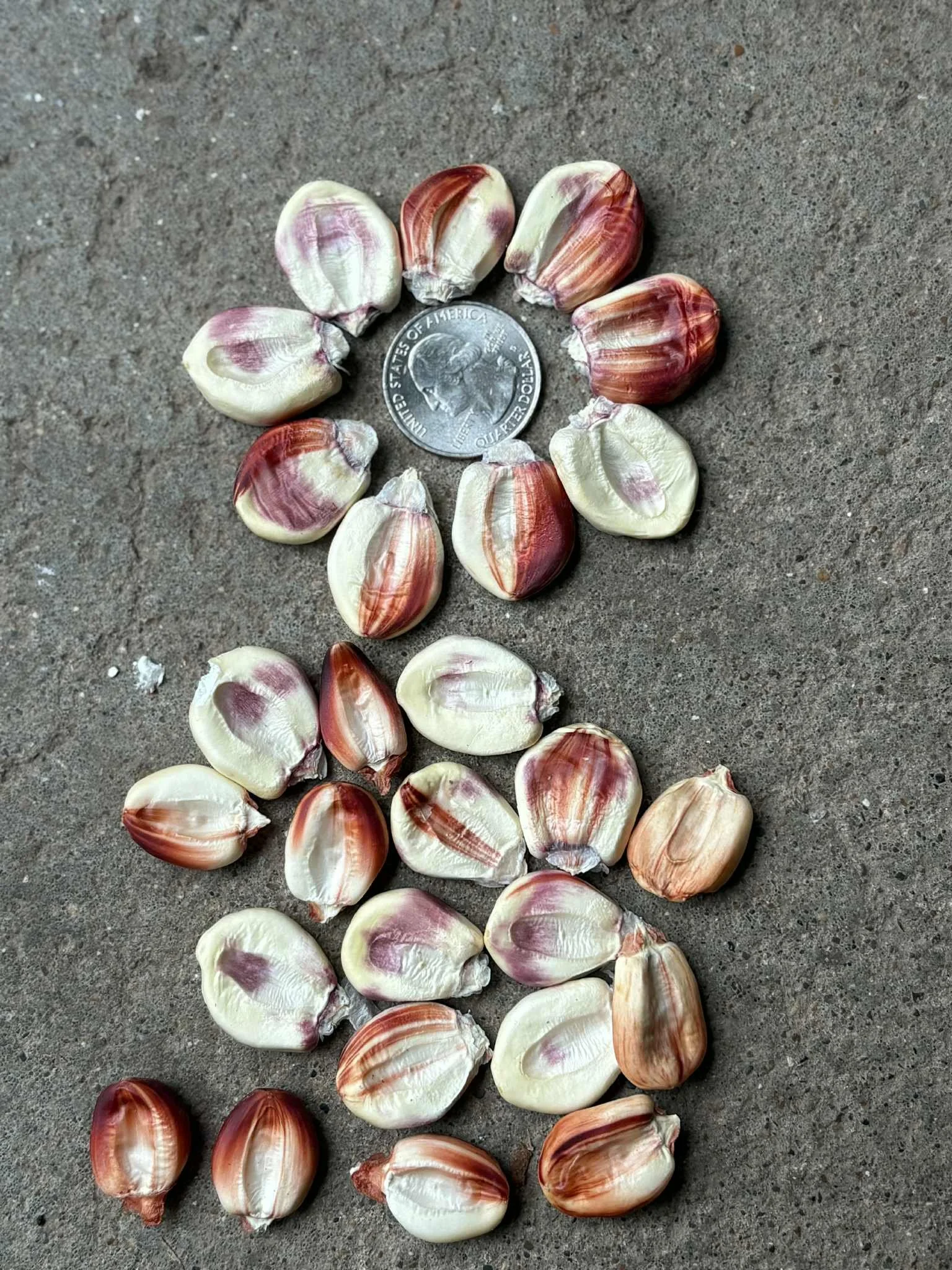 Image 2 of 5
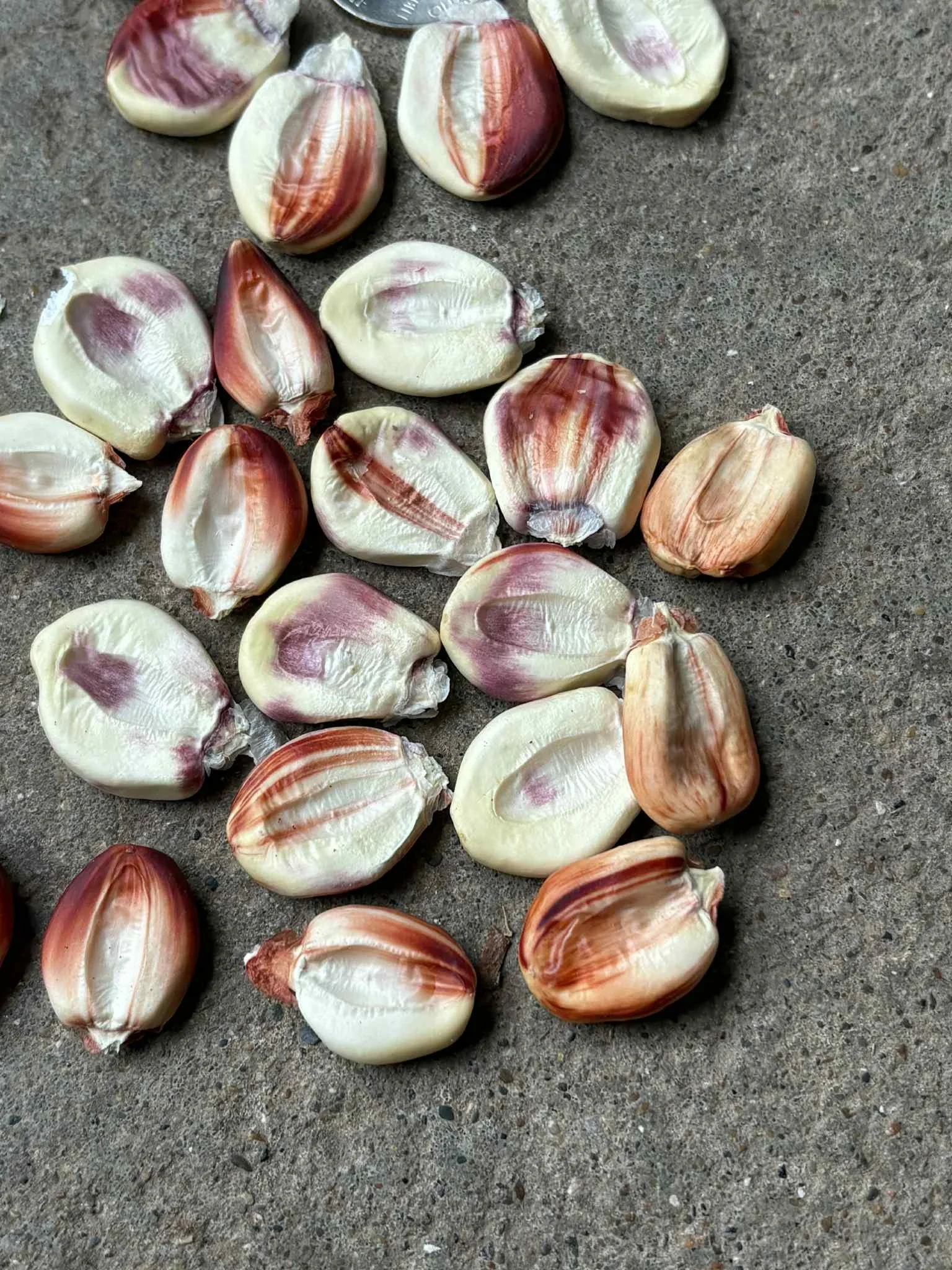 Image 3 of 5
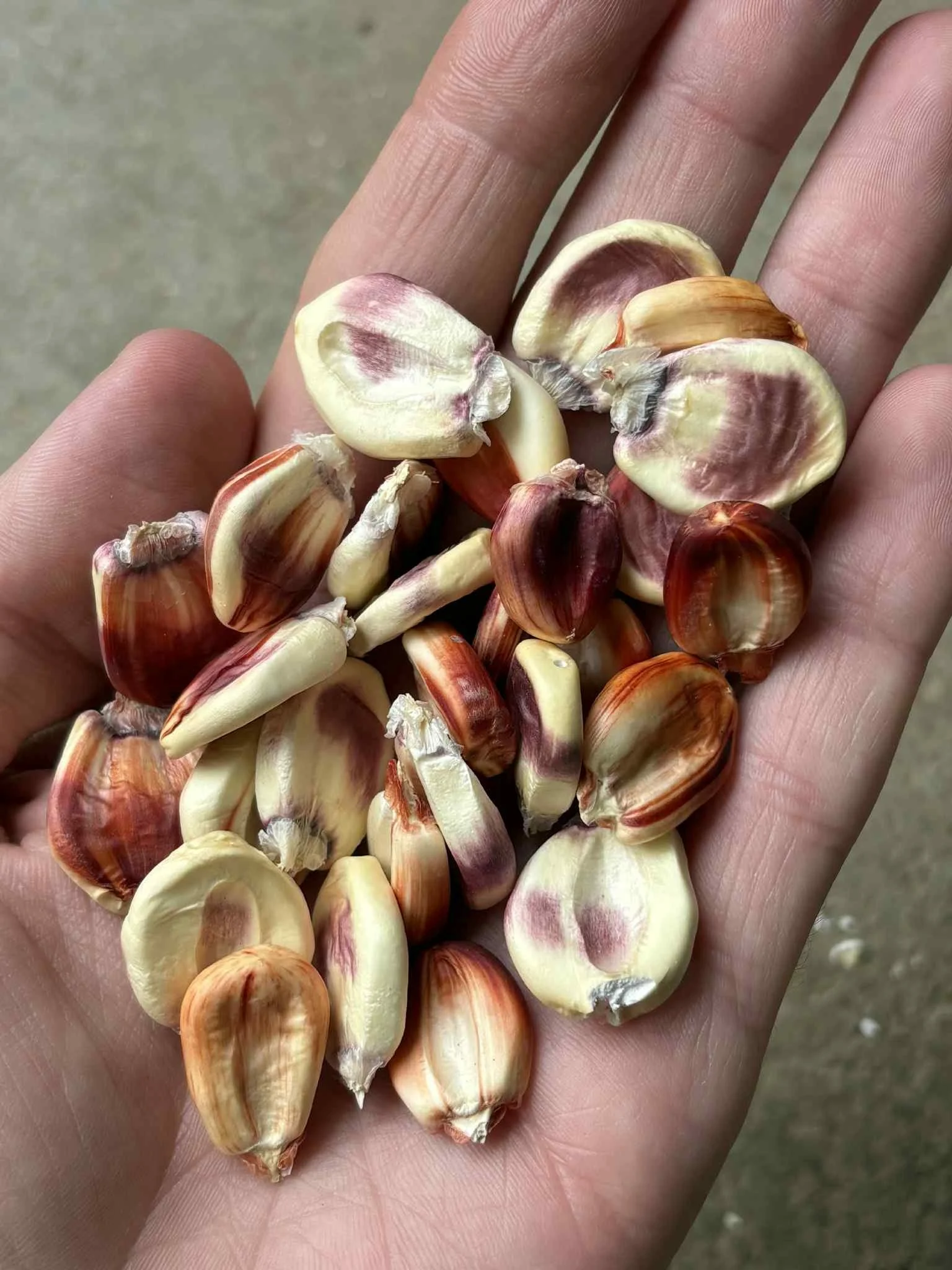 Image 4 of 5
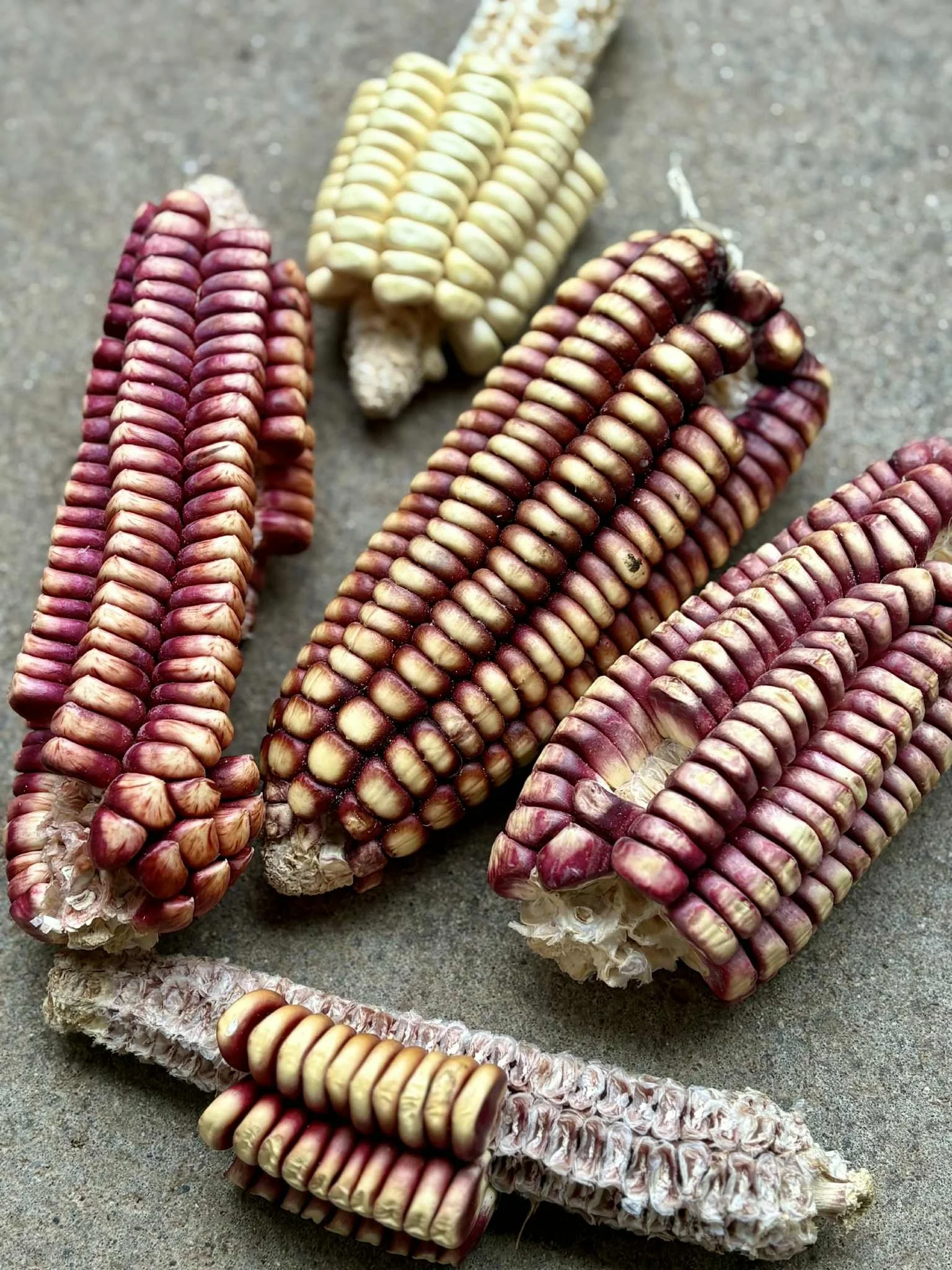 Image 5 of 5
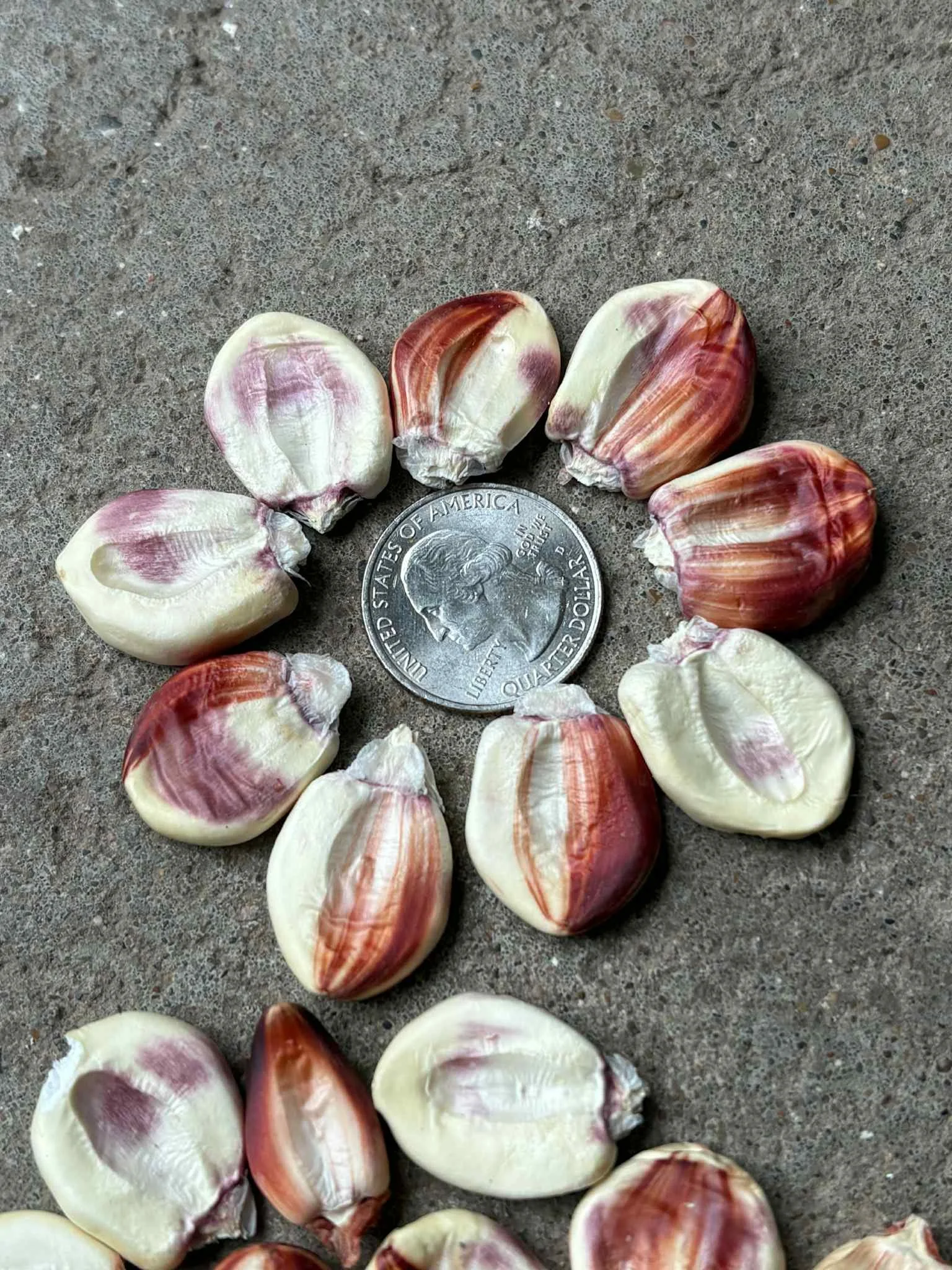
Among the most awe-inspiring maize varieties in the world, Cuzco Gigante hails from the Urubamba Valley of Peru, the heartland of the Incan Empire. Its kernels—massive and gleaming in shades of white, rose, candy-striped pink, and deep red—are unlike any other, each one a sculpted jewel of the Andes. These are not hybrid creations but the result of thousands of years of careful human selection, grown in the high-altitude valleys.
This is the corn that fed an empire. Revered by the Inca and their ancestors, maíz Cuzqueño was used in sacred feasts, chicha brewing, and offerings to Pachamama—the Earth Mother. Its large kernels were seen as a reflection of divine abundance, and its cultivation required both patience and reverence. Even today, it is grown on terraced fields surrounding Cusco and Urubamba, where the cool nights and bright Andean sun coax out its extraordinary size.
Each ear of Cuzco Gigante can reach lengths of 6-8 inches, with kernels so large that only a handful fill a palm. When parched or boiled, they become soft and floury, with a delicate sweetness. This batch comes directly from the Urubamba Valley—a mixed harvest of colors representing both the spiritual and genetic diversity of its homeland.
Please note: Cuzco Gigante is a true tropical, short-day corn, requiring 150–250 days to maturity and consistent warm, frost-free conditions. It rarely reaches full maturity in most of the continental United States, except in controlled environments or far southern latitudes. Its giant kernel size is genetically endemic to the Cuzco region and typically cannot be replicated elsewhere. For most growers, this is a cultural and botanical treasure to admire and preserve, rather than a reliable food crop. I do not guarantee a harvest.
Days to maturity: 150–250 (tropical, short-day)
Seeds per pack: ~15-20
Germination rate: 90% (10/15/2025)
Sow seeds only when soil temperatures remain above 70°F, ideally in late spring or early summer. Plant 1 inch deep, spacing 10–12 inches apart in blocks of at least 4 rows for adequate pollination. Provide full sun, ample fertility, and consistent moisture. In northern or temperate regions, Cuzco Gigante may tassel late or fail to set ears due to daylength sensitivity—it thrives best under tropical or equatorial light cycles.
If seed saving is attempted, isolate Cuzco Gigante by at least 1 mile from other maize to maintain purity. Allow ears to dry completely on the stalk before harvesting. In cooler climates, ears can be finished indoors in a well-ventilated area. Once fully dry, shell by hand to preserve kernel integrity. Store in a cool, dry, and dark place. With care, these seeds will retain viability for 3–5 years.
Among the most awe-inspiring maize varieties in the world, Cuzco Gigante hails from the Urubamba Valley of Peru, the heartland of the Incan Empire. Its kernels—massive and gleaming in shades of white, rose, candy-striped pink, and deep red—are unlike any other, each one a sculpted jewel of the Andes. These are not hybrid creations but the result of thousands of years of careful human selection, grown in the high-altitude valleys.
This is the corn that fed an empire. Revered by the Inca and their ancestors, maíz Cuzqueño was used in sacred feasts, chicha brewing, and offerings to Pachamama—the Earth Mother. Its large kernels were seen as a reflection of divine abundance, and its cultivation required both patience and reverence. Even today, it is grown on terraced fields surrounding Cusco and Urubamba, where the cool nights and bright Andean sun coax out its extraordinary size.
Each ear of Cuzco Gigante can reach lengths of 6-8 inches, with kernels so large that only a handful fill a palm. When parched or boiled, they become soft and floury, with a delicate sweetness. This batch comes directly from the Urubamba Valley—a mixed harvest of colors representing both the spiritual and genetic diversity of its homeland.
Please note: Cuzco Gigante is a true tropical, short-day corn, requiring 150–250 days to maturity and consistent warm, frost-free conditions. It rarely reaches full maturity in most of the continental United States, except in controlled environments or far southern latitudes. Its giant kernel size is genetically endemic to the Cuzco region and typically cannot be replicated elsewhere. For most growers, this is a cultural and botanical treasure to admire and preserve, rather than a reliable food crop. I do not guarantee a harvest.
Days to maturity: 150–250 (tropical, short-day)
Seeds per pack: ~15-20
Germination rate: 90% (10/15/2025)
Sow seeds only when soil temperatures remain above 70°F, ideally in late spring or early summer. Plant 1 inch deep, spacing 10–12 inches apart in blocks of at least 4 rows for adequate pollination. Provide full sun, ample fertility, and consistent moisture. In northern or temperate regions, Cuzco Gigante may tassel late or fail to set ears due to daylength sensitivity—it thrives best under tropical or equatorial light cycles.
If seed saving is attempted, isolate Cuzco Gigante by at least 1 mile from other maize to maintain purity. Allow ears to dry completely on the stalk before harvesting. In cooler climates, ears can be finished indoors in a well-ventilated area. Once fully dry, shell by hand to preserve kernel integrity. Store in a cool, dry, and dark place. With care, these seeds will retain viability for 3–5 years.