 Image 1 of 2
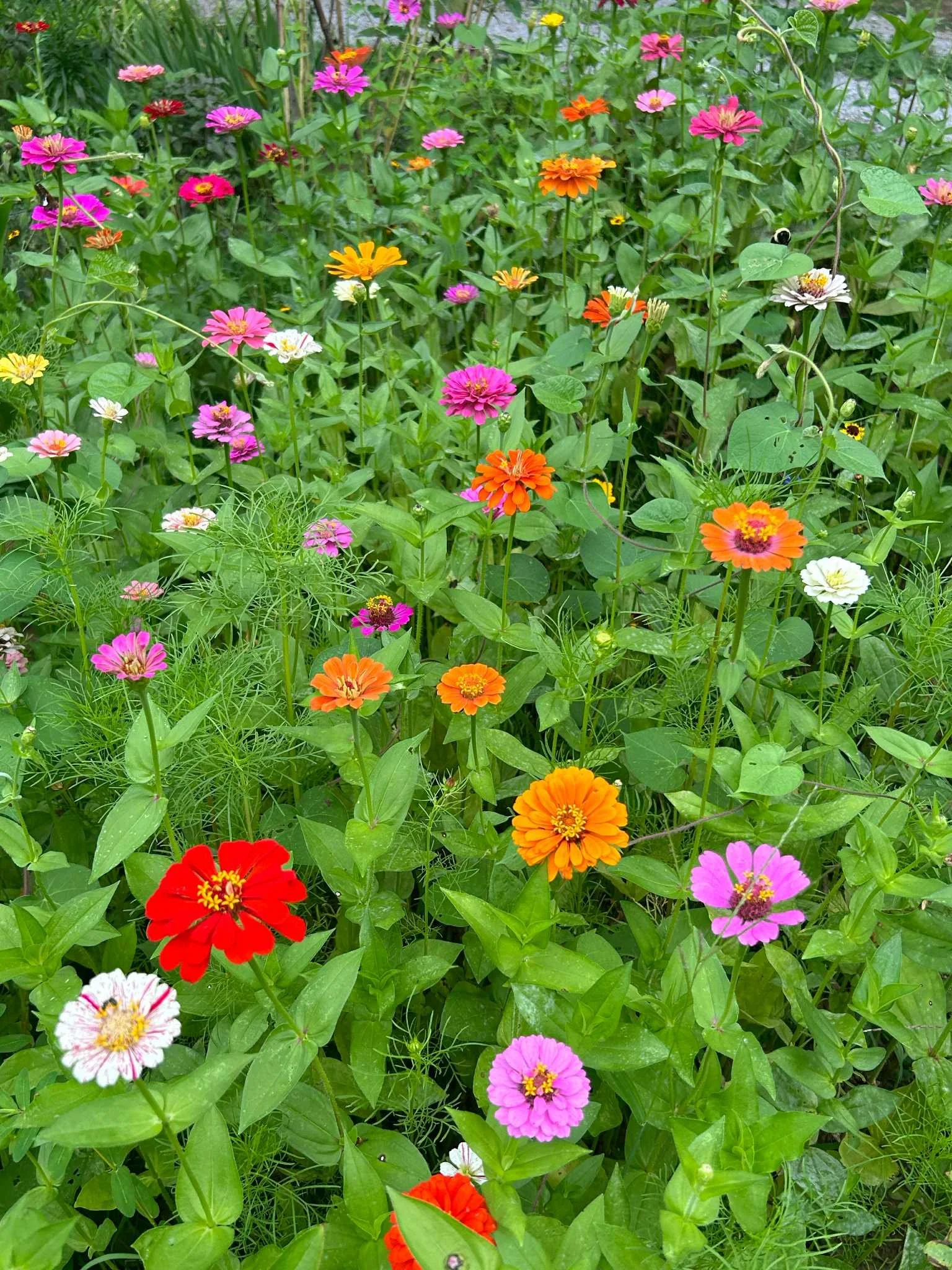 Image 2 of 2
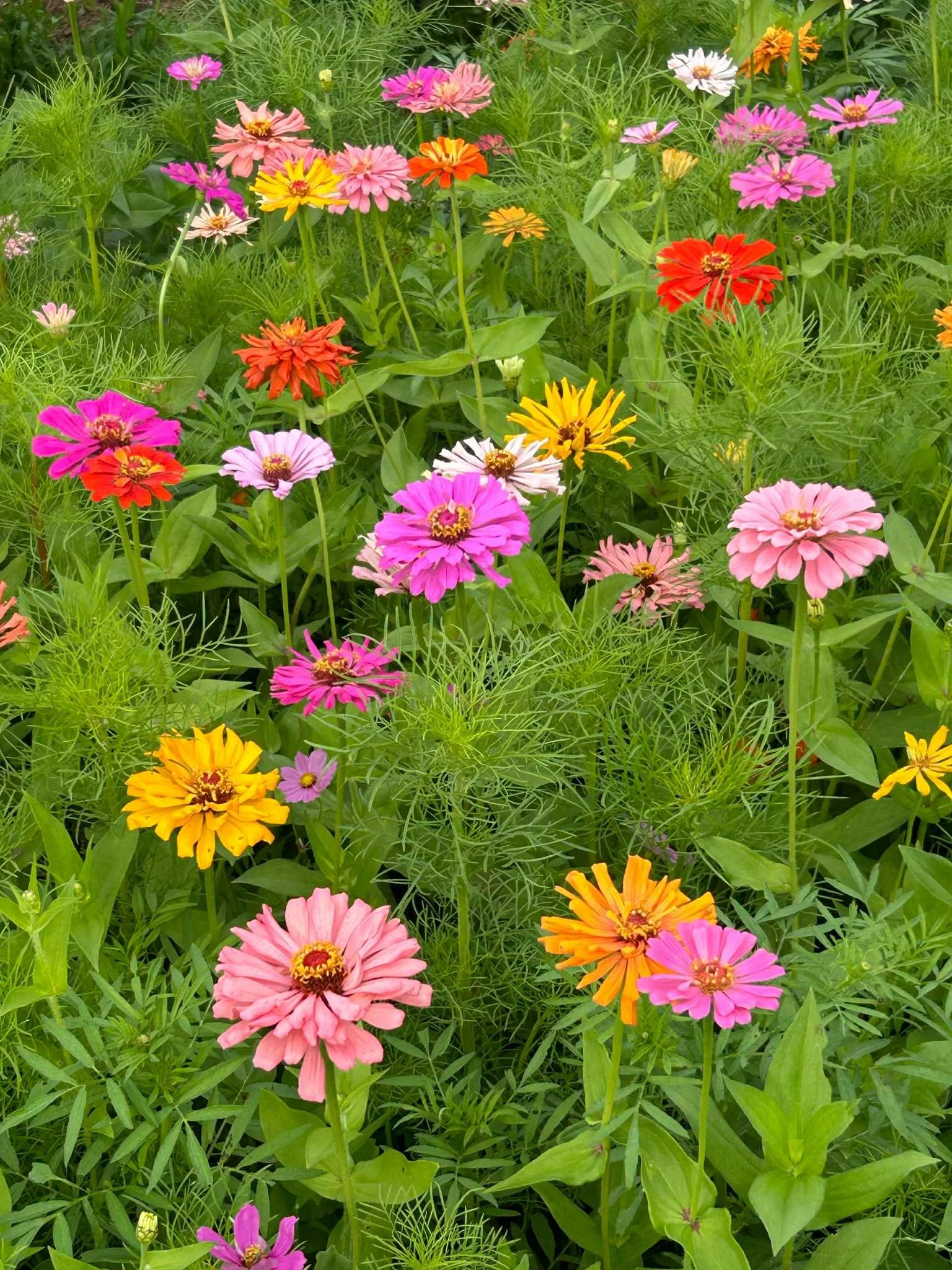
A joyful, long-blooming garden staple, zinnias are beloved for their dazzling range of colors, generous flowering habit, and unfailing ability to draw butterflies, bees, and beneficial insects all season long. This is a genetically diverse open-pollinated mix, meaning every bloom is an act of possibility—double and semi-double forms, rich jewel tones, soft pastels, and occasional unexpected color notes.
Originally native to the upland grasslands of central Mexico, Zinnia elegans was cultivated in Indigenous gardens long before it was introduced to European horticulture in the late 18th century. Over the centuries, gardeners and seed stewards have expanded its forms and colors, yet zinnias remain close to their wild ancestry in one important way: they thrive in heat, sun, and summer intensity.
These plants bloom profusely from early summer until frost, especially when regularly cut for bouquets. The more you harvest, the more they flower—making them one of the most dependable annuals for both garden and vase.
Days to maturity: 65–75
Seeds per pack: ~100 seeds
Germination rate: 90% (10/15/2025))
Direct-sow after frost in full sun, or start indoors 3–4 weeks early and transplant once weather is settled. Plant seeds ¼ inch deep and space 9–12 inches apart. These plants love heat and benefit from good air flow to prevent mildew.
For the longest vase life, harvest flowers when 3/4 open and stems feel firm when gently shaken—this is known to growers as the “wiggle test.”
Deadheading or regular cutting ensures constant bloom renewal.
Zinnias are insect-pollinated, and in a mixed planting, the flowers will cross with one another naturally—which is part of their charm. To save seed:
Allow blooms to dry completely on the plant until petals fade and seed heads feel crisp.
Remove, crumble gently, and separate chaff from seed.
If you want to maintain a particular color or form, save seed only from those plants and grow them slightly separated from the rest. Properly dried zinnia seed stays viable 3–5 years.
A joyful, long-blooming garden staple, zinnias are beloved for their dazzling range of colors, generous flowering habit, and unfailing ability to draw butterflies, bees, and beneficial insects all season long. This is a genetically diverse open-pollinated mix, meaning every bloom is an act of possibility—double and semi-double forms, rich jewel tones, soft pastels, and occasional unexpected color notes.
Originally native to the upland grasslands of central Mexico, Zinnia elegans was cultivated in Indigenous gardens long before it was introduced to European horticulture in the late 18th century. Over the centuries, gardeners and seed stewards have expanded its forms and colors, yet zinnias remain close to their wild ancestry in one important way: they thrive in heat, sun, and summer intensity.
These plants bloom profusely from early summer until frost, especially when regularly cut for bouquets. The more you harvest, the more they flower—making them one of the most dependable annuals for both garden and vase.
Days to maturity: 65–75
Seeds per pack: ~100 seeds
Germination rate: 90% (10/15/2025))
Direct-sow after frost in full sun, or start indoors 3–4 weeks early and transplant once weather is settled. Plant seeds ¼ inch deep and space 9–12 inches apart. These plants love heat and benefit from good air flow to prevent mildew.
For the longest vase life, harvest flowers when 3/4 open and stems feel firm when gently shaken—this is known to growers as the “wiggle test.”
Deadheading or regular cutting ensures constant bloom renewal.
Zinnias are insect-pollinated, and in a mixed planting, the flowers will cross with one another naturally—which is part of their charm. To save seed:
Allow blooms to dry completely on the plant until petals fade and seed heads feel crisp.
Remove, crumble gently, and separate chaff from seed.
If you want to maintain a particular color or form, save seed only from those plants and grow them slightly separated from the rest. Properly dried zinnia seed stays viable 3–5 years.