 Image 1 of 3
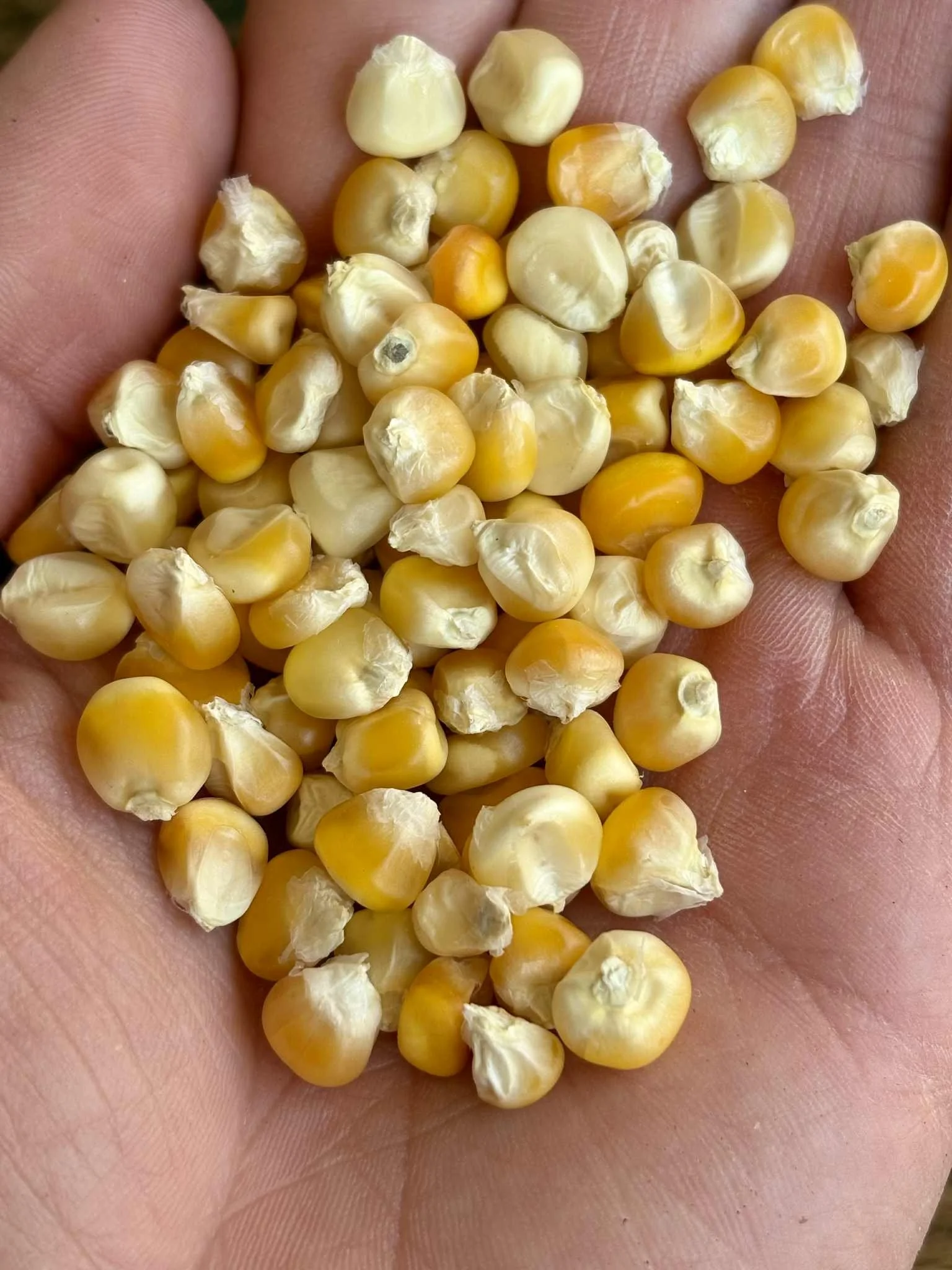 Image 2 of 3
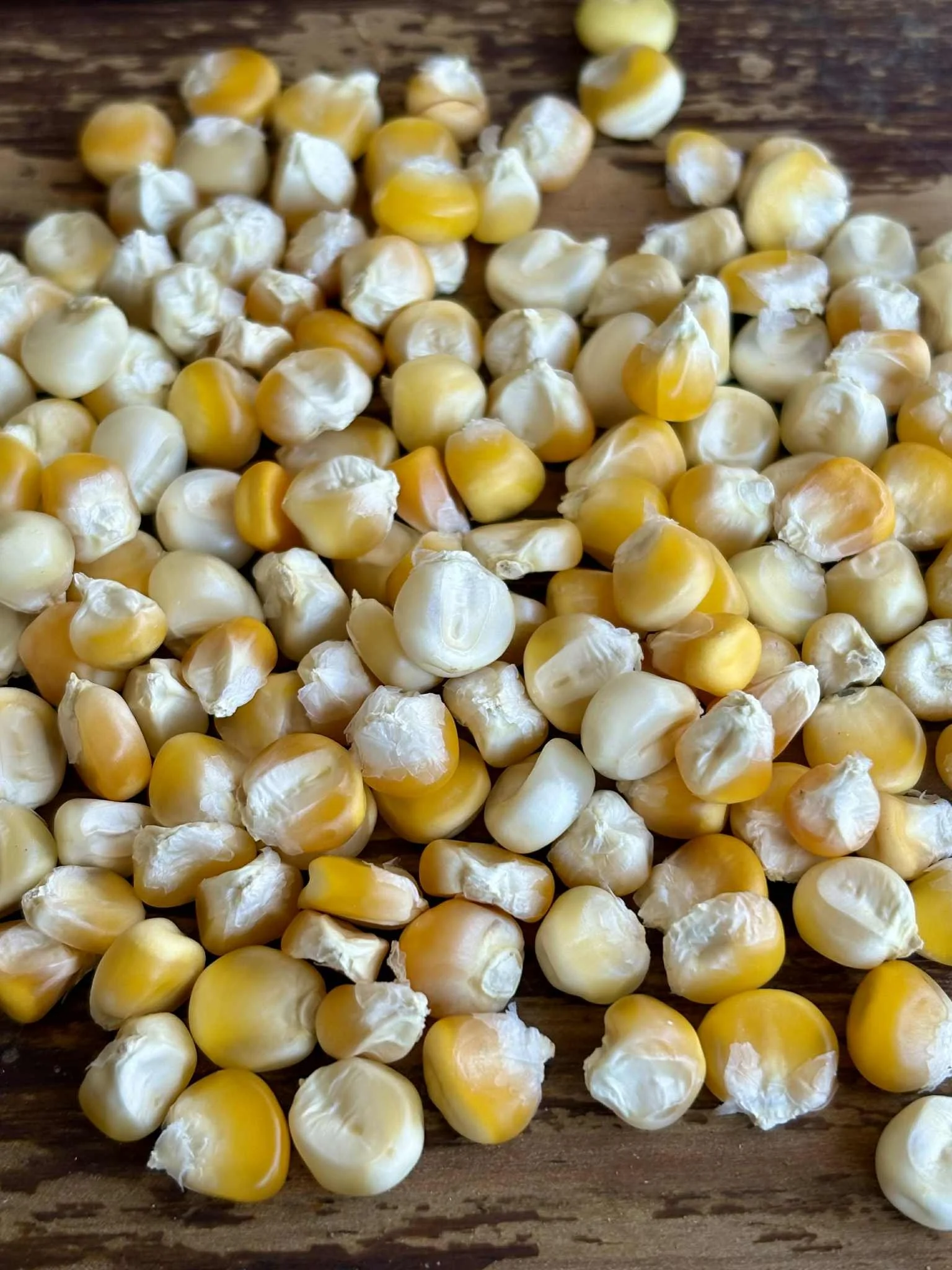 Image 3 of 3
Zea mays
FIRST TIME EVER BEING OFFERED FOR SALE IN THE U.S.A.!
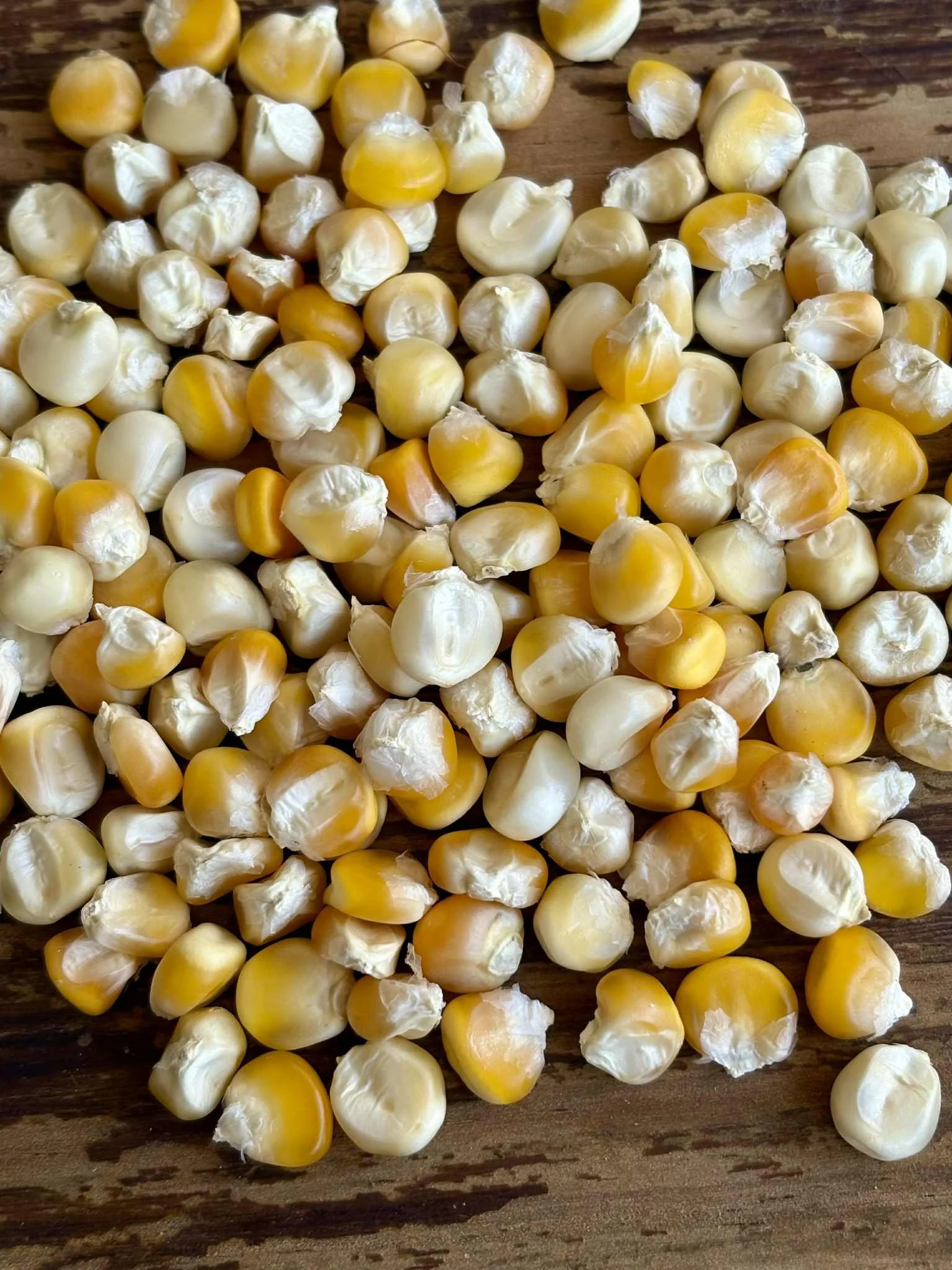
One of the oldest known Mesoamerican corns, Nal-Tel Amarillo Tierra Baja is a rare, early tropical flint originally grown in the lowland valleys of Guatemala at elevations of roughly 1,500–3,650 feet. In its homeland, this race is compact, precocious, and adapted to warm climates with abundant summer rainfall.
In the United States, however, this variety behaves quite differently. The longer summer days and temperate latitudes trigger extra vegetative growth—plants that reach 4½ feet in Guatemala may stretch to 6–15 feet here, depending on region and heat units. Flowering time also extends, often reaching 90+ days to tassel, and total maturity may run well over 100–120 days, especially in northern states. In southern and central regions, it may still finish respectably early, but growers should expect a considerably longer season than its tropical homeland suggests.
Nal-Tel is part of one of the oldest maize lineages in Mesoamerica, related to the Nal-Tel–Chapalote–Pollo genetic complex. It historically influenced many Central American races and spread widely through Guatemala’s lowlands. The Amarillo Tierra Baja sub-race represents the yellow-seeded, early, low-elevation form.
In Guatemala, Nal-Tel Amarillo was and still is, prized as a fast, early flint ideal for nixtamal and tortilla flour, producing a light, aromatic masa and early-season food security in traditional milpa systems. In the U.S., it remains valuable as a source of heat-tolerant, drought-adapted, and early-tropical genetics and a breeding resource for improving resilience in short-day or transitional lines.
Days to maturity: ~100-130 days
Seeds per pack: ~50 seeds
Germination rate: 90% 10/15/2025
Sow seeds in warm soil (≥ 65 °F) after frost risk has passed. Plant about 1 inch deep, spacing seeds ~3-4 inches apart and thin plants to ~8-12 inches apart; rows may be spaced 24-30 inches. For best pollination, plant in a block of at least 3-4 rows.
Corn is wind-pollinated. To maintain the purity, isolate by at least ¼ mile (or use temporal isolation) from other corn varieties. Select ears characteristic of best kernels and good fill. Let ears fully dry on the stalk until husks are papery and kernels hard. Finish drying indoors if needed, then shell carefully and store in a cool, dry, dark place. Properly stored seed remains viable for 3-5 years.
Zea mays
FIRST TIME EVER BEING OFFERED FOR SALE IN THE U.S.A.!
One of the oldest known Mesoamerican corns, Nal-Tel Amarillo Tierra Baja is a rare, early tropical flint originally grown in the lowland valleys of Guatemala at elevations of roughly 1,500–3,650 feet. In its homeland, this race is compact, precocious, and adapted to warm climates with abundant summer rainfall.
In the United States, however, this variety behaves quite differently. The longer summer days and temperate latitudes trigger extra vegetative growth—plants that reach 4½ feet in Guatemala may stretch to 6–15 feet here, depending on region and heat units. Flowering time also extends, often reaching 90+ days to tassel, and total maturity may run well over 100–120 days, especially in northern states. In southern and central regions, it may still finish respectably early, but growers should expect a considerably longer season than its tropical homeland suggests.
Nal-Tel is part of one of the oldest maize lineages in Mesoamerica, related to the Nal-Tel–Chapalote–Pollo genetic complex. It historically influenced many Central American races and spread widely through Guatemala’s lowlands. The Amarillo Tierra Baja sub-race represents the yellow-seeded, early, low-elevation form.
In Guatemala, Nal-Tel Amarillo was and still is, prized as a fast, early flint ideal for nixtamal and tortilla flour, producing a light, aromatic masa and early-season food security in traditional milpa systems. In the U.S., it remains valuable as a source of heat-tolerant, drought-adapted, and early-tropical genetics and a breeding resource for improving resilience in short-day or transitional lines.
Days to maturity: ~100-130 days
Seeds per pack: ~50 seeds
Germination rate: 90% 10/15/2025
Sow seeds in warm soil (≥ 65 °F) after frost risk has passed. Plant about 1 inch deep, spacing seeds ~3-4 inches apart and thin plants to ~8-12 inches apart; rows may be spaced 24-30 inches. For best pollination, plant in a block of at least 3-4 rows.
Corn is wind-pollinated. To maintain the purity, isolate by at least ¼ mile (or use temporal isolation) from other corn varieties. Select ears characteristic of best kernels and good fill. Let ears fully dry on the stalk until husks are papery and kernels hard. Finish drying indoors if needed, then shell carefully and store in a cool, dry, dark place. Properly stored seed remains viable for 3-5 years.