 Image 1 of 1
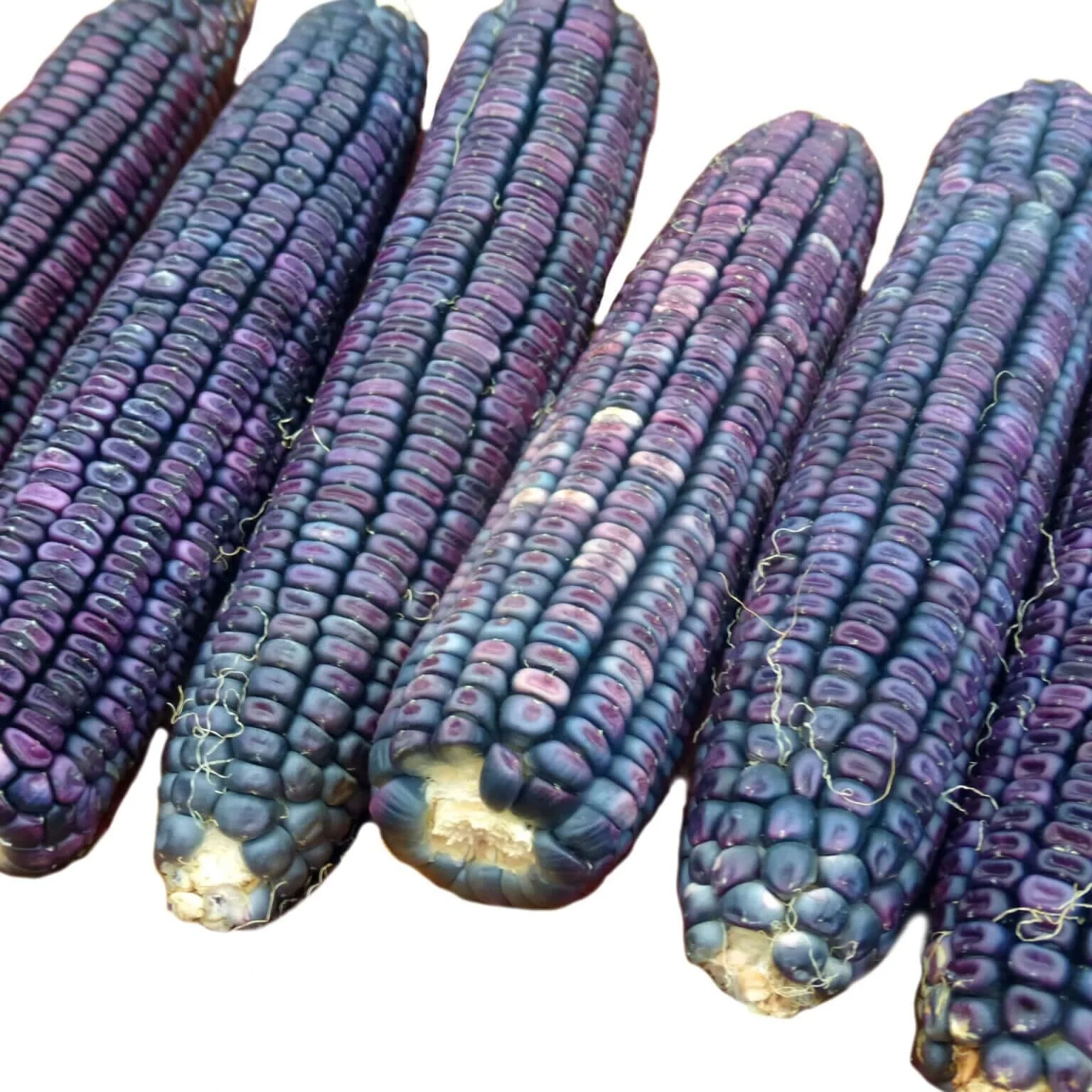
An heirloom field/dent corn with deep indigo kernels, Ohio Blue Clarage rose to prominence in the Ohio River Valley and neighboring West Virginia. It appears in seed catalogs by the early 1920s—W. N. Scarff’s 1924 listing is an early example—and culinary historian David S. Shields notes the variety was essentially stabilized around World War I. out of Rotten Clarage, which has Cherokee White Eagle in its parentage.
Blue Clarage’s kernels begin pale and sweet, gaining their signature blue as they mature—farmers historically sold immature ears as “roasting corn,” while dried ears were ground for meal, grits, and flour. Modern millers prize it for its nutty, slightly sweet flavor and the way cooked products take on a blue-violet hue from anthocyanins. It’s also found favor with craft distillers for earthy, rounded spirits.
Plants reach about 7 ft., typically bearing one substantial, well-filled ear (8–10") per stalk; some plants will set a second ear. Expect a speckled blue-and-white meal when milled; if bran is sifted, the flour trends pale.
Days to maturity: ~100–120 days
Seeds per pack: ~ 60 seeds
Germination rate: 90% 10/15/2025
Direct-sow after frost when soil is ≥ 60–65 °F. Plant 1" deep; space 8–12" in rows 30–36" apart, or in blocks of 3–4 rows for strong pollination. Provide full sun, steady moisture, and moderate fertility. Harvest at the milk stage for roasting ears (sweeter than many dents), or allow to dry fully on the stalk for meal/grits.
Corn is wind-pollinated. Isolate by at least ¼–½ mile (or time-isolate) from other Zea mays to preserve color and type. Select uniform, deeply blue, well-filled ears; dry on the plant until husks are papery, then finish curing indoors if needed. Shell carefully and store cool, dark, and dry. Properly stored seed remains viable ~3–5 years or 10+ if stored in the freezer.
An heirloom field/dent corn with deep indigo kernels, Ohio Blue Clarage rose to prominence in the Ohio River Valley and neighboring West Virginia. It appears in seed catalogs by the early 1920s—W. N. Scarff’s 1924 listing is an early example—and culinary historian David S. Shields notes the variety was essentially stabilized around World War I. out of Rotten Clarage, which has Cherokee White Eagle in its parentage.
Blue Clarage’s kernels begin pale and sweet, gaining their signature blue as they mature—farmers historically sold immature ears as “roasting corn,” while dried ears were ground for meal, grits, and flour. Modern millers prize it for its nutty, slightly sweet flavor and the way cooked products take on a blue-violet hue from anthocyanins. It’s also found favor with craft distillers for earthy, rounded spirits.
Plants reach about 7 ft., typically bearing one substantial, well-filled ear (8–10") per stalk; some plants will set a second ear. Expect a speckled blue-and-white meal when milled; if bran is sifted, the flour trends pale.
Days to maturity: ~100–120 days
Seeds per pack: ~ 60 seeds
Germination rate: 90% 10/15/2025
Direct-sow after frost when soil is ≥ 60–65 °F. Plant 1" deep; space 8–12" in rows 30–36" apart, or in blocks of 3–4 rows for strong pollination. Provide full sun, steady moisture, and moderate fertility. Harvest at the milk stage for roasting ears (sweeter than many dents), or allow to dry fully on the stalk for meal/grits.
Corn is wind-pollinated. Isolate by at least ¼–½ mile (or time-isolate) from other Zea mays to preserve color and type. Select uniform, deeply blue, well-filled ears; dry on the plant until husks are papery, then finish curing indoors if needed. Shell carefully and store cool, dark, and dry. Properly stored seed remains viable ~3–5 years or 10+ if stored in the freezer.