 Image 1 of 3
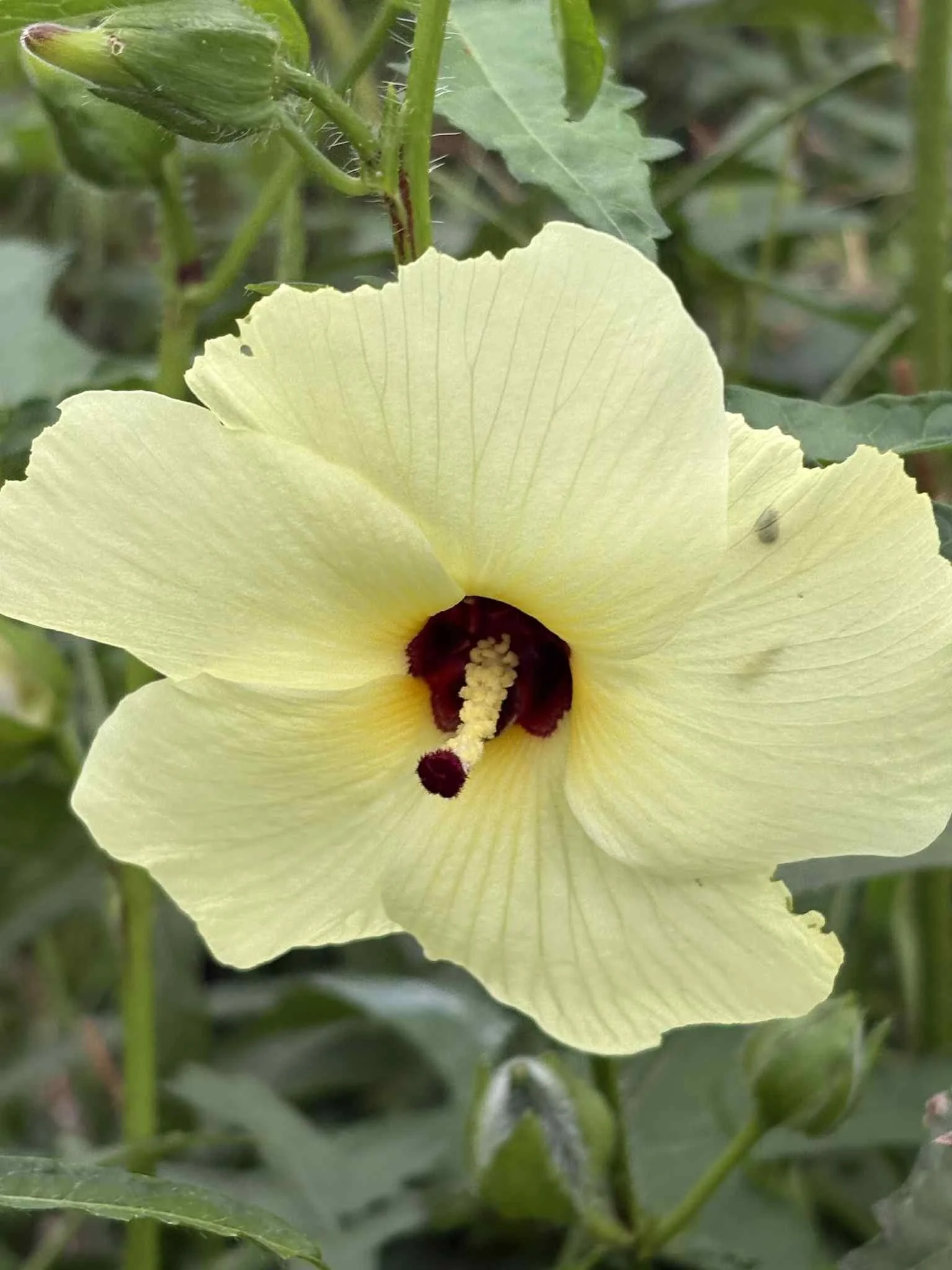 Image 2 of 3
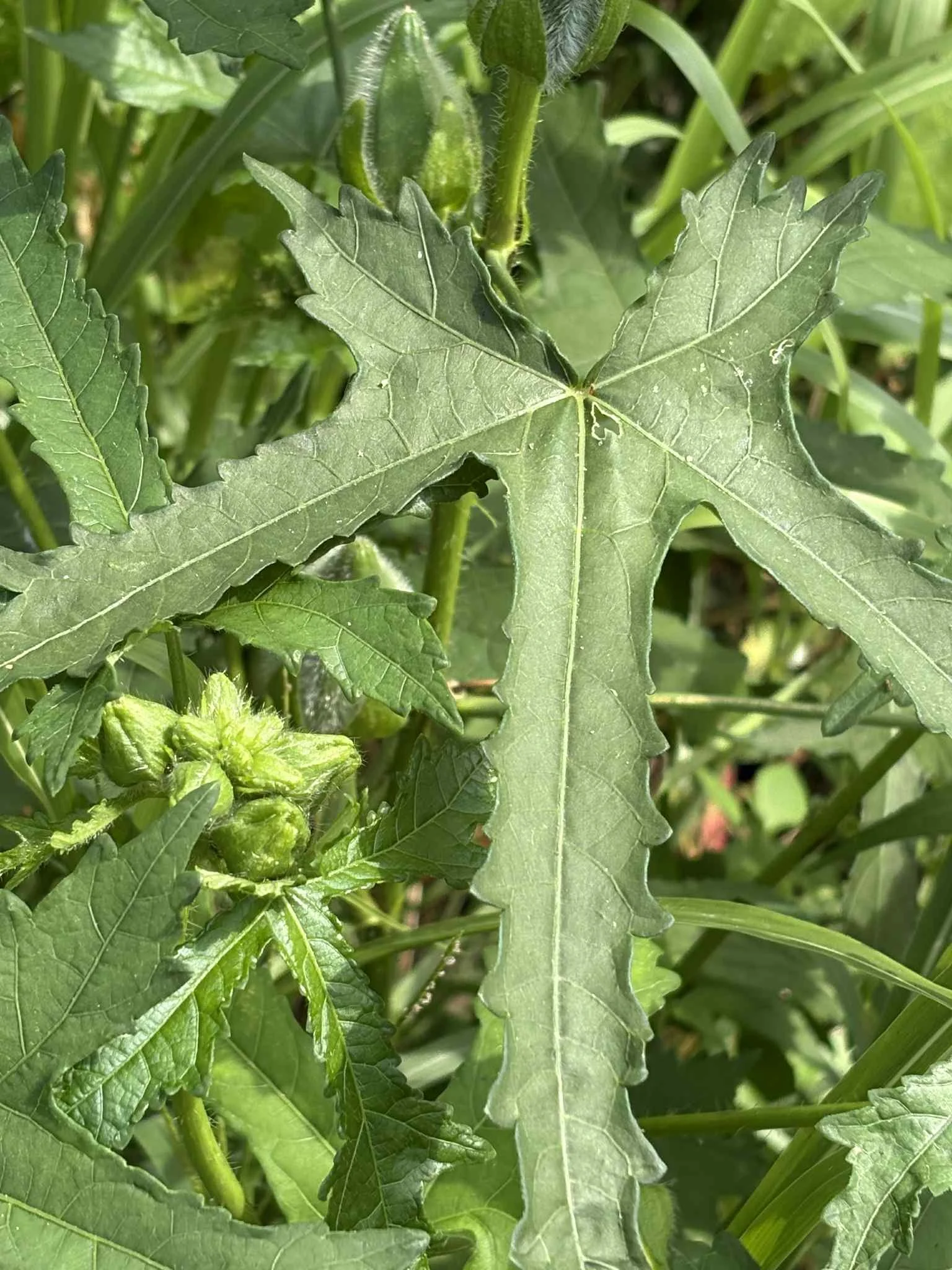 Image 3 of 3
Cultivated across Asia for its edible leaves and luminous yellow blooms, Abelmoschus manihot—often called Sunset Hibiscus or Aibika—has found an unlikely and enduring home here in Tennessee. This strain has been carefully selected and stabilized over four years for hardiness, adaptability, and reliable return after winter dormancy, forming the foundation of a true temperate perennial line of this otherwise tropical species.
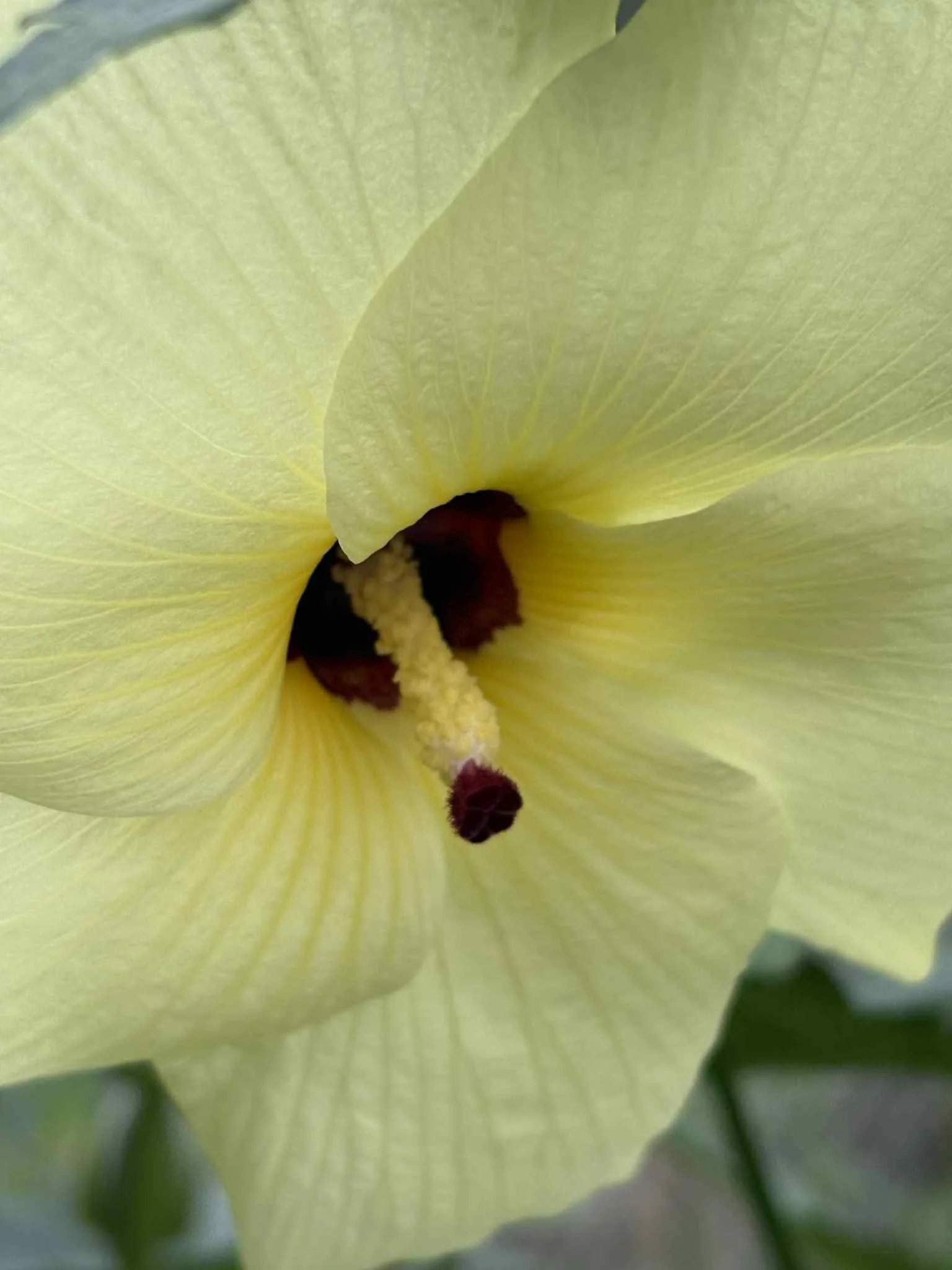
In its native range, A. manihot is revered for its delicate, deeply lobed leaves—used as a spinach-like green rich in protein, calcium, and mucilage—and for its large, luminous blooms, buttery yellow with dark plum throats, which open at dawn and fade by dusk. The flowers are also favored by pollinators, while the plant’s tender leaves are used in traditional medicine as a tonic and cooling food.
This Tennessee-adapted selection grows 4–6 feet tall with an upright, bushy habit. After dying back in winter, the root crown overwinters reliably (so far in Zone 7B) in well-drained soils and reemerges in late spring, often more vigorous with each passing year. With proper care, plants can persist and flower for four years or longer—rare among temperate-grown members of the hibiscus and okra family.
Days to maturity (first year): 120–150
Seeds per pack: ~25 seeds
Germination rate: 90% (tested 10/15/2025)
Start seeds indoors 4–6 weeks before last frost or direct sow once the soil has warmed. Scarify or soak seeds in warm water for 12–24 hours prior to planting to enhance germination. Plant ¼ inch deep in rich, well-drained soil with full sun exposure. Space plants 24–36 inches apart. In cooler climates, mulch heavily over the root zone in late fall to protect against deep freezes. In warm regions or microclimates, it may remain semi-evergreen.
The leaves are tender and mild when young, making an excellent steamed or lightly sautéed green. Flowers may be used fresh in salads or as a garnish.
Allow pods to mature fully on the plant until dry and brittle, typically late in the growing season. Harvest carefully before frost and complete drying indoors if necessary. The papery pods will split naturally when ready; store the black seeds in a cool, dry place. To maintain genetic integrity, isolate from other Abelmoschus species (such as okra) by at least 500 feet if saving seed. Properly stored seed remains viable for 3–5 years.
Cultivated across Asia for its edible leaves and luminous yellow blooms, Abelmoschus manihot—often called Sunset Hibiscus or Aibika—has found an unlikely and enduring home here in Tennessee. This strain has been carefully selected and stabilized over four years for hardiness, adaptability, and reliable return after winter dormancy, forming the foundation of a true temperate perennial line of this otherwise tropical species.
In its native range, A. manihot is revered for its delicate, deeply lobed leaves—used as a spinach-like green rich in protein, calcium, and mucilage—and for its large, luminous blooms, buttery yellow with dark plum throats, which open at dawn and fade by dusk. The flowers are also favored by pollinators, while the plant’s tender leaves are used in traditional medicine as a tonic and cooling food.
This Tennessee-adapted selection grows 4–6 feet tall with an upright, bushy habit. After dying back in winter, the root crown overwinters reliably (so far in Zone 7B) in well-drained soils and reemerges in late spring, often more vigorous with each passing year. With proper care, plants can persist and flower for four years or longer—rare among temperate-grown members of the hibiscus and okra family.
Days to maturity (first year): 120–150
Seeds per pack: ~25 seeds
Germination rate: 90% (tested 10/15/2025)
Start seeds indoors 4–6 weeks before last frost or direct sow once the soil has warmed. Scarify or soak seeds in warm water for 12–24 hours prior to planting to enhance germination. Plant ¼ inch deep in rich, well-drained soil with full sun exposure. Space plants 24–36 inches apart. In cooler climates, mulch heavily over the root zone in late fall to protect against deep freezes. In warm regions or microclimates, it may remain semi-evergreen.
The leaves are tender and mild when young, making an excellent steamed or lightly sautéed green. Flowers may be used fresh in salads or as a garnish.
Allow pods to mature fully on the plant until dry and brittle, typically late in the growing season. Harvest carefully before frost and complete drying indoors if necessary. The papery pods will split naturally when ready; store the black seeds in a cool, dry place. To maintain genetic integrity, isolate from other Abelmoschus species (such as okra) by at least 500 feet if saving seed. Properly stored seed remains viable for 3–5 years.