Zea mays
A striking heirloom of deep violet and indigo kernels, Purple Minquas Flour Corn stands six to seven feet tall, producing two cobs per plant, with occasional side shoots bearing smaller ears when grown on mounded hills. Each cob glows is filled with hues of midnight blue to soft purple, sometimes flecked with white. Plants with red tassels also bear red roots—an ancestral echo in the soil. Ears average five to six inches long, typically eight to nine rows around, with kernels that form in the distinct spiraled pattern characteristic of the old Seneca types. Another variety from Quaker activist Theodore Hetzel.
This corn traces back to the Cornplanter Senecas of northwestern Pennsylvania, a lineage rooted in the Indigenous agricultural legacy of the Iroquoian nations. Its name honors the Minquas—a Lenape word meaning “treacherous,” historically used for the Susquehannocks, an Iroquoian-speaking people who inhabited central and northern Pennsylvania and parts of Maryland and Virginia before European disease and colonization decimated their population. This variety is believed to have been grown in that region under both Seneca and Susquehannock stewardship, connecting it to centuries of treaty agriculture, survival, and exchange.
The kernels grind into a soft, richly flavored flour that yields a cake-like texture in cornbread and hominy. When freshly parched or boiled, it carries a mild, nutty sweetness. Plants are sturdy, upright, and resilient—ideally suited to the northeastern and Appalachian growing season, maturing in about 110–120 days.
Days to maturity: 110–120
Seeds per pack: ~50-60
Germination rate: 93% 10/15/2025
Planting & Harvest Notes
Sow directly in warm soil after frost, spacing seeds 8–10 inches apart in blocks of four rows for full pollination. Plants grow 6–7 feet tall and prefer full sun, fertile ground, and even moisture. Cobs appear at 10–18 inches from the ground, with occasional side ears. For optimal seed color, select solid violet ears rather than mixed or white-flecked ones.
Seed-Saving Notes
Allow cobs to dry fully on the stalk until husks turn papery and kernels dent slightly under pressure. Harvest before heavy frost and finish drying in a warm, ventilated place. Once cured, shell carefully by hand to preserve kernel coats. Store seed in a cool, dry, dark space. Isolate from other Zea mays varieties by at least 1 mile to maintain genetic integrity. White-kernel ears may be saved separately for rare hominy or treaty-type flour. Properly stored seed remains viable for 3–5 years.
Zea mays
A striking heirloom of deep violet and indigo kernels, Purple Minquas Flour Corn stands six to seven feet tall, producing two cobs per plant, with occasional side shoots bearing smaller ears when grown on mounded hills. Each cob glows is filled with hues of midnight blue to soft purple, sometimes flecked with white. Plants with red tassels also bear red roots—an ancestral echo in the soil. Ears average five to six inches long, typically eight to nine rows around, with kernels that form in the distinct spiraled pattern characteristic of the old Seneca types. Another variety from Quaker activist Theodore Hetzel.
This corn traces back to the Cornplanter Senecas of northwestern Pennsylvania, a lineage rooted in the Indigenous agricultural legacy of the Iroquoian nations. Its name honors the Minquas—a Lenape word meaning “treacherous,” historically used for the Susquehannocks, an Iroquoian-speaking people who inhabited central and northern Pennsylvania and parts of Maryland and Virginia before European disease and colonization decimated their population. This variety is believed to have been grown in that region under both Seneca and Susquehannock stewardship, connecting it to centuries of treaty agriculture, survival, and exchange.
The kernels grind into a soft, richly flavored flour that yields a cake-like texture in cornbread and hominy. When freshly parched or boiled, it carries a mild, nutty sweetness. Plants are sturdy, upright, and resilient—ideally suited to the northeastern and Appalachian growing season, maturing in about 110–120 days.
Days to maturity: 110–120
Seeds per pack: ~50-60
Germination rate: 93% 10/15/2025
Planting & Harvest Notes
Sow directly in warm soil after frost, spacing seeds 8–10 inches apart in blocks of four rows for full pollination. Plants grow 6–7 feet tall and prefer full sun, fertile ground, and even moisture. Cobs appear at 10–18 inches from the ground, with occasional side ears. For optimal seed color, select solid violet ears rather than mixed or white-flecked ones.
Seed-Saving Notes
Allow cobs to dry fully on the stalk until husks turn papery and kernels dent slightly under pressure. Harvest before heavy frost and finish drying in a warm, ventilated place. Once cured, shell carefully by hand to preserve kernel coats. Store seed in a cool, dry, dark space. Isolate from other Zea mays varieties by at least 1 mile to maintain genetic integrity. White-kernel ears may be saved separately for rare hominy or treaty-type flour. Properly stored seed remains viable for 3–5 years.
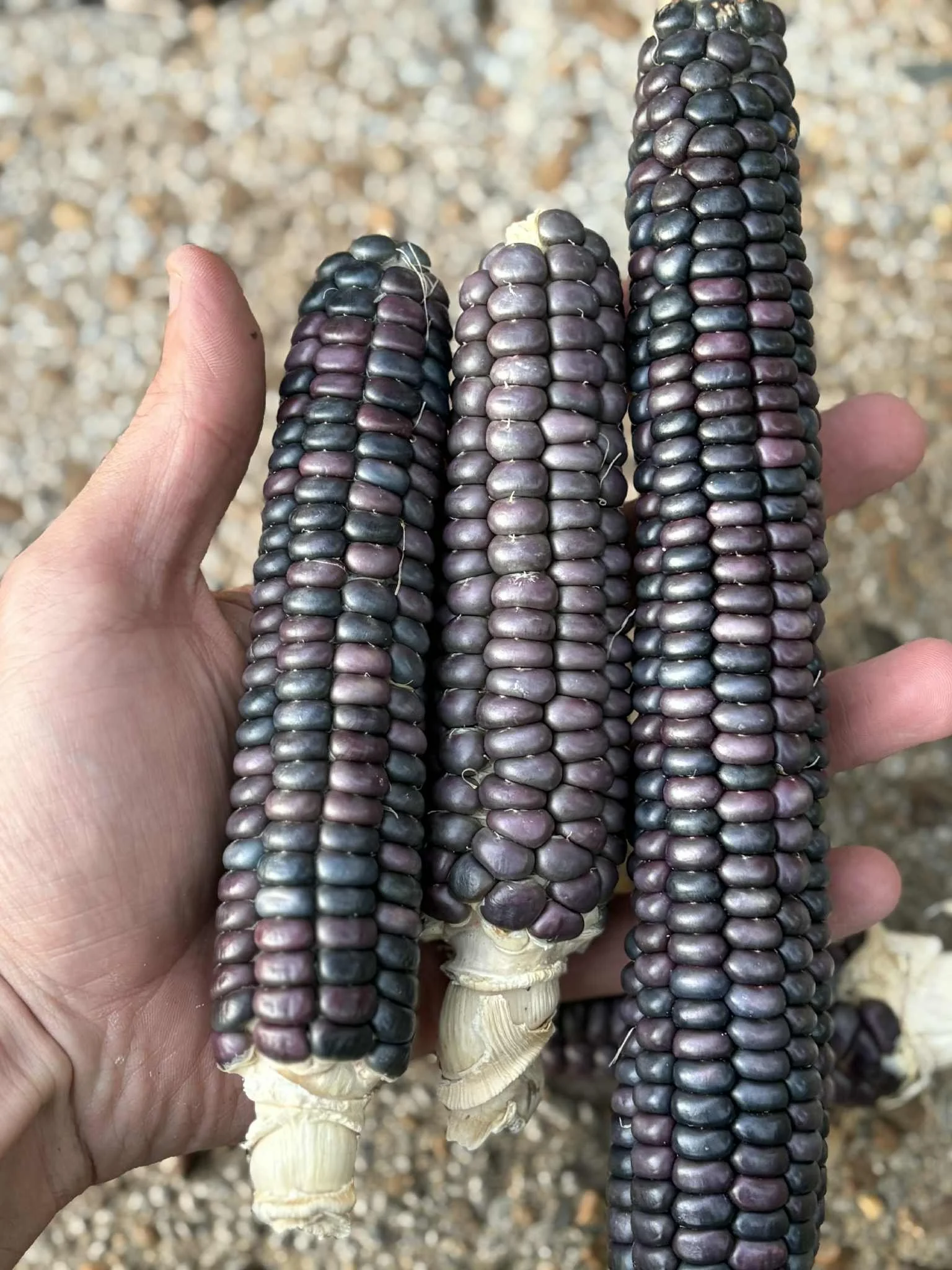 Image 1 of 6
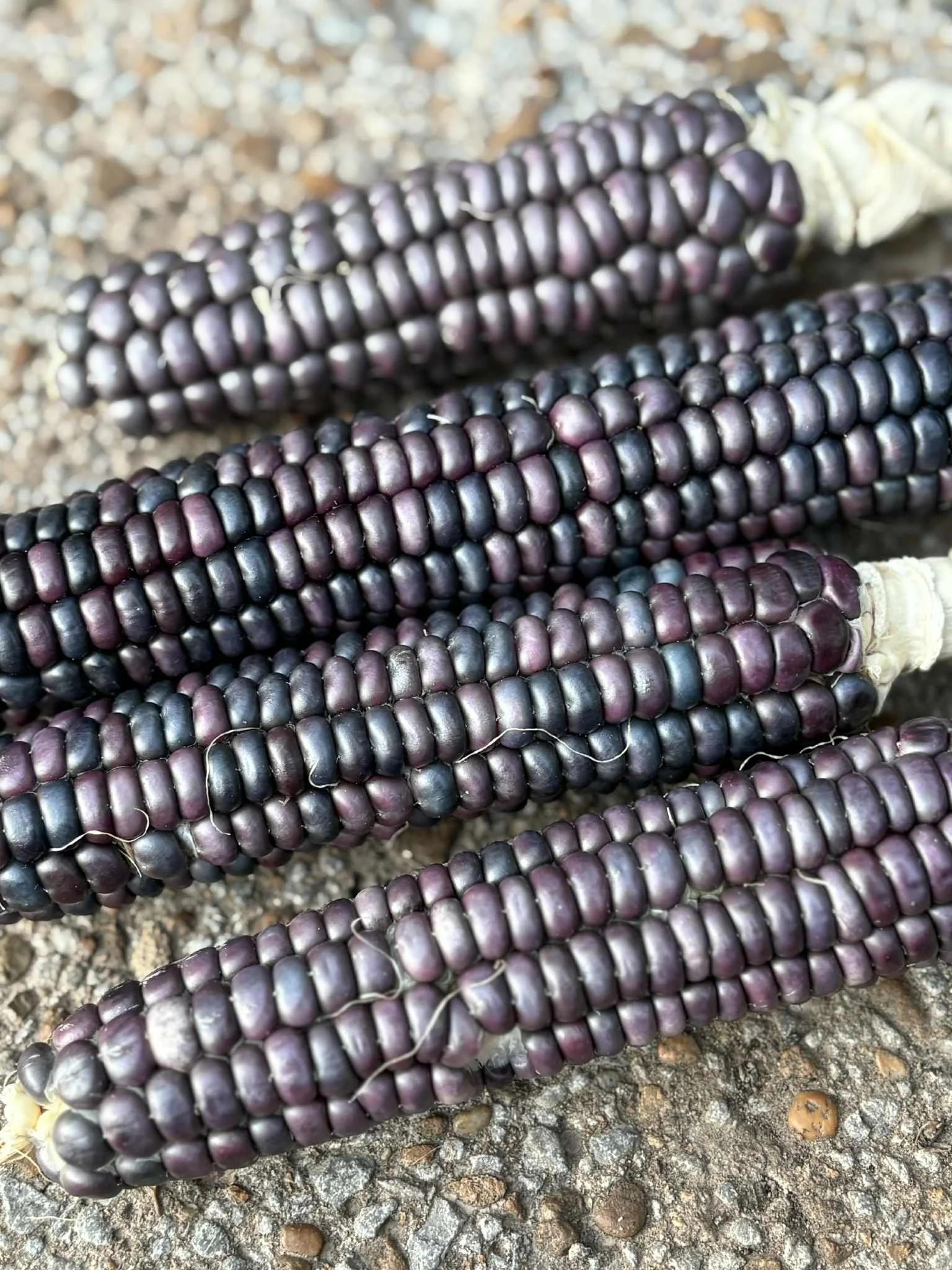 Image 2 of 6
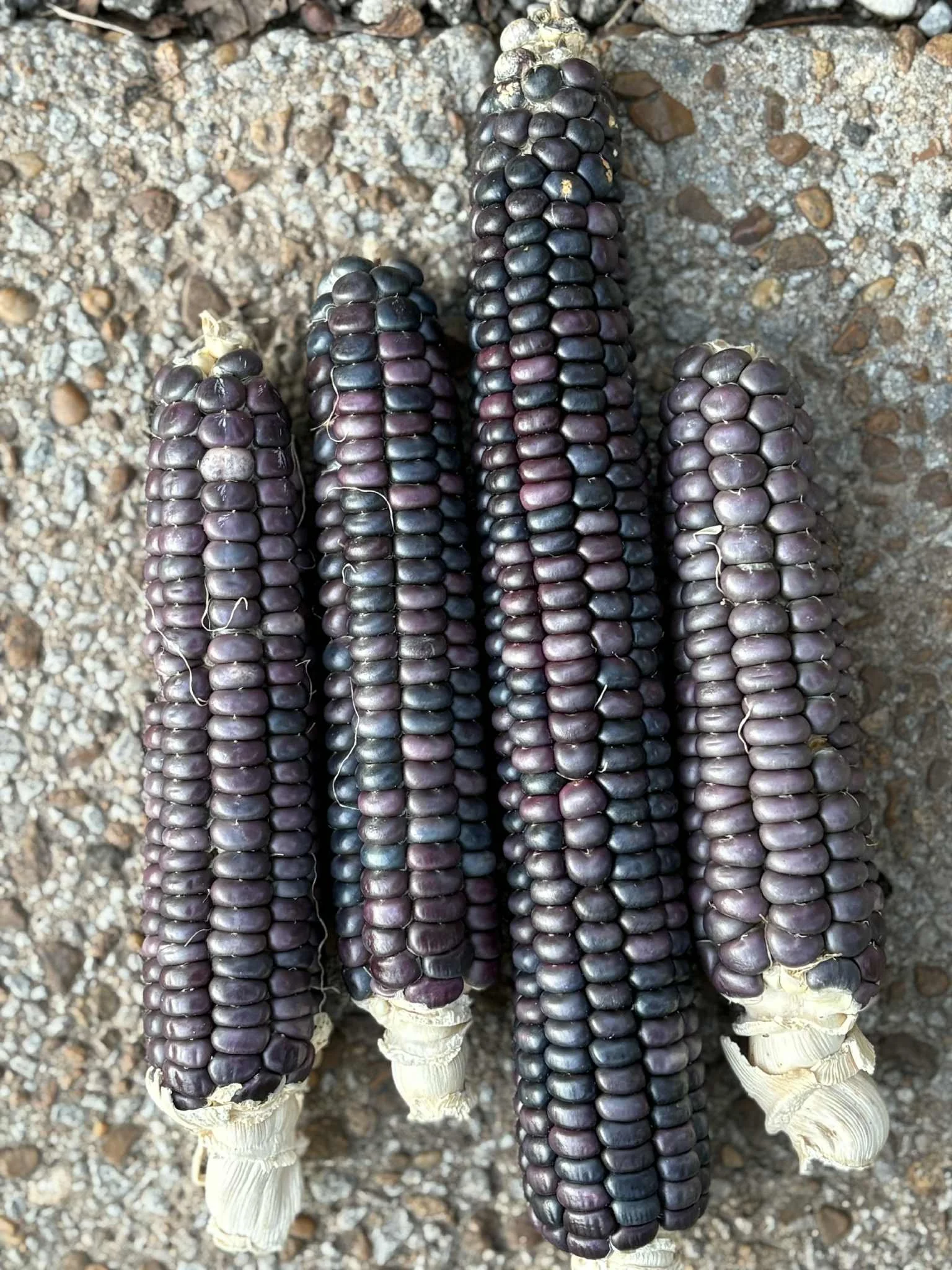 Image 3 of 6
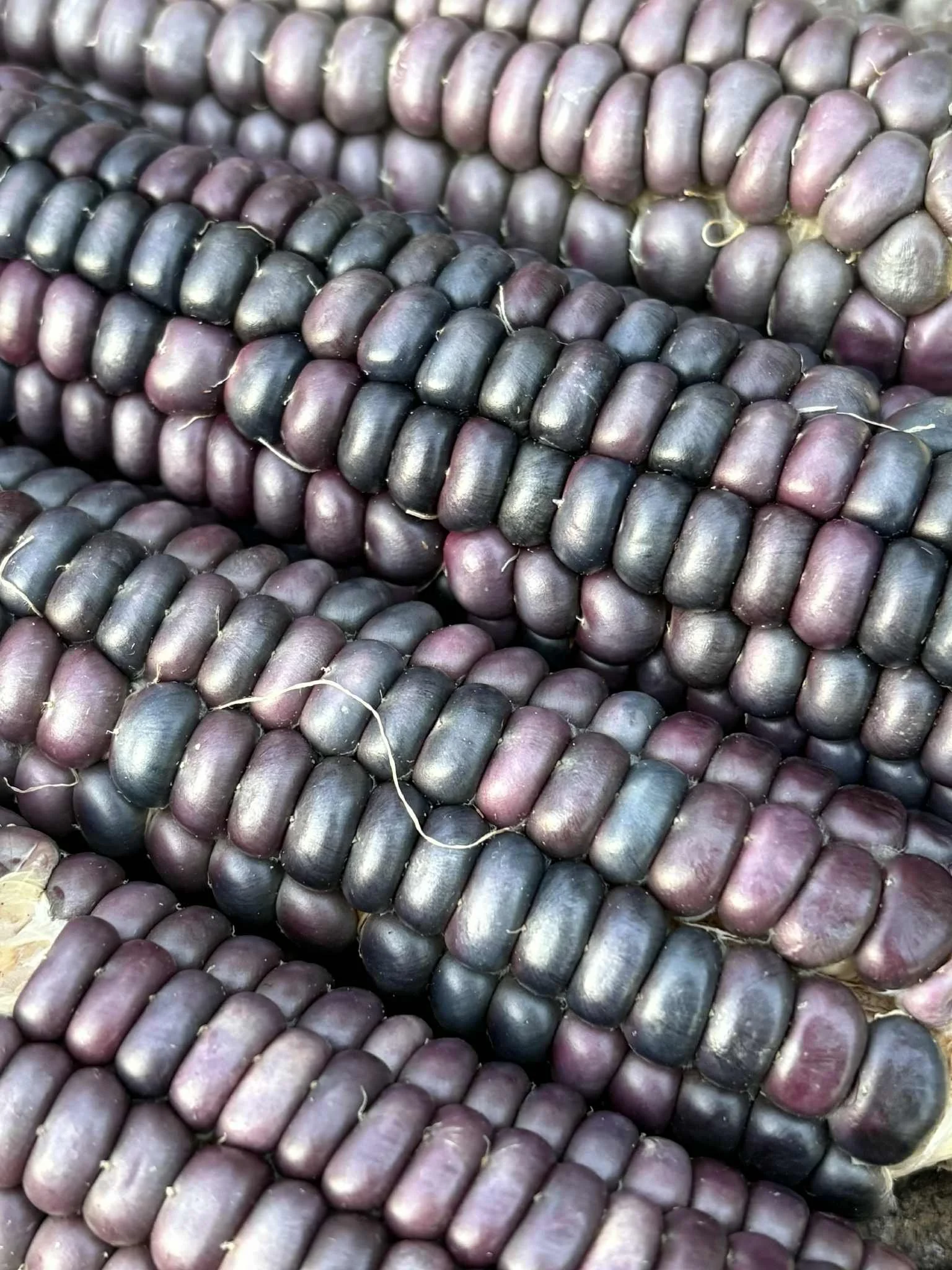 Image 4 of 6
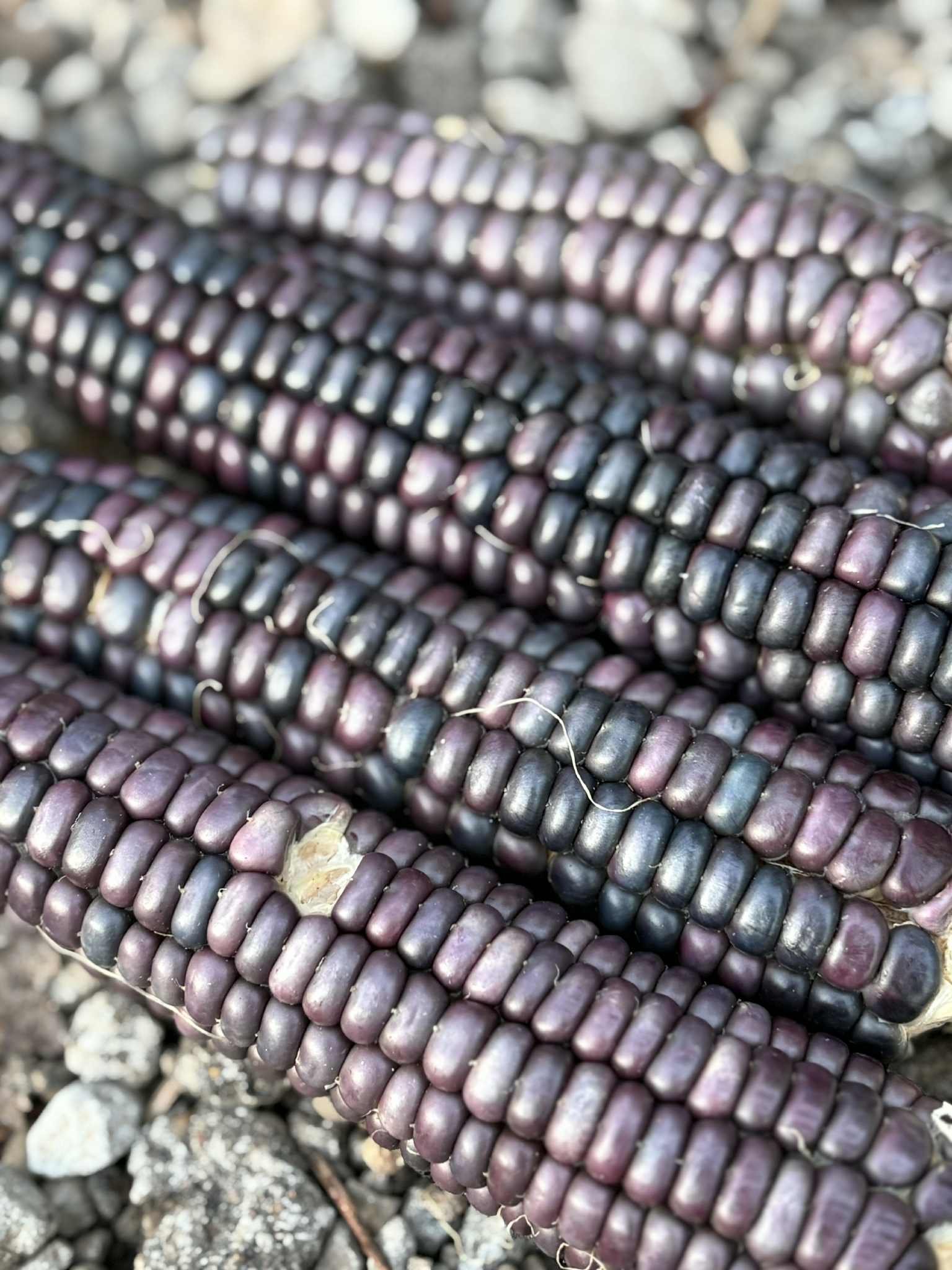 Image 5 of 6
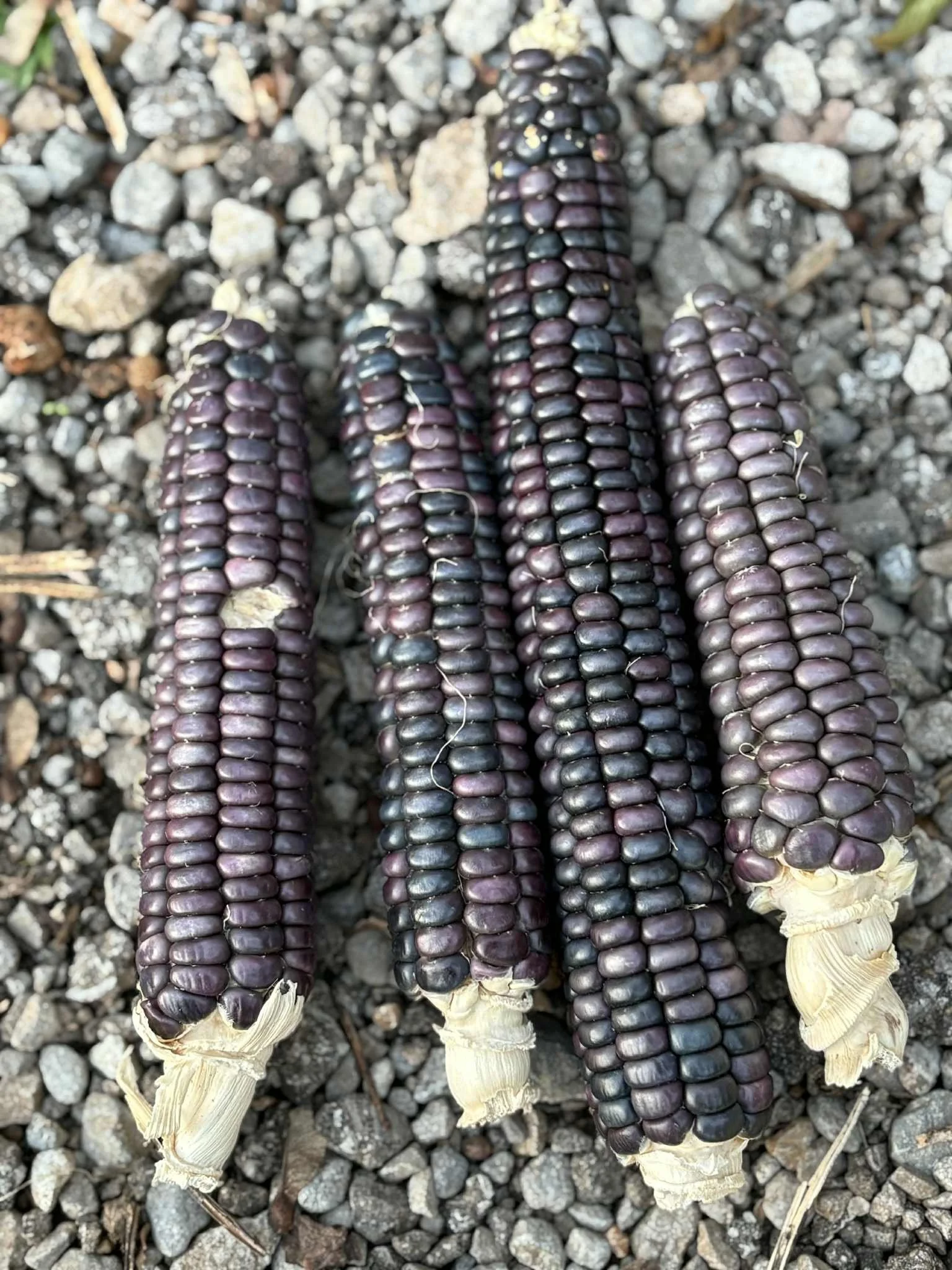 Image 6 of 6