A resilient, cold-hardy prickly pear cactus that has been in my garden for years now here in Kentucky/Tennessee for more than a decade, this lineage comes from a plant originally gifted to my uncle in the early 2010s. The source before that was a colleague of his in the Montgomery County / Clarksville Street Department — a man originally from Russia, who brought this hardy Opuntia with him at some unknown date.
Over years of natural selection through winter freeze, summer heat, and the clay-loam soils, this cactus has proven itself exceptionally durable. It forms upright, tall pads with a strong, architectural presence, and bears large, solid yellow blooms in late spring to early summer — flowers wide and luminous enough to stop you in your tracks.
Fruits ripen to a deep magenta-red, sweet and floral when fully mature, suitable for fresh eating (with care removing spines and glochids), jellies, syrups, and beverages.
Seeds per pack: ~30
Germination test: 70-80% (10/15/2025 after scarification)
Planting & Growth Notes
Plant in full sun and well-drained soil — rocky, sandy, or lean ground suits it best. Avoid rich soil and overwatering, especially in the first year. Pads root readily if pressed gently into soil and left to establish with minimal disturbance.
Plants will spread slowly by pads and clump thickly with age.
Expect very high drought tolerance once established.
Germination & Seed Scarification Notes
Opuntia seeds possess a natural dormancy due to their thick, hard seed coat. For best germination:
Scarify seeds by lightly nicking the seed coat with a file or rubbing briefly on sandpaper.
Soak in warm water for 12–24 hours.
Stratify if possible:
Sow seeds on the soil surface and lightly cover — warmth (~75–85°F) encourages sprouting.
Germination may be slow and staggered — a natural trait of the species — but seedlings are extremely hardy once established.
Pads (if propagated) root easily in dry conditions: allow cut pads to callus 7–14 days before planting.
Seed-Saving Notes
Allow fruits to fully ripen to deep red-purple before harvesting.
Remove seeds from the pulp, rinse, and dry thoroughly to prevent mold.
Store in a cool, dry place. Seeds remain viable for many years, especially if kept dry and cool.
A resilient, cold-hardy prickly pear cactus that has been in my garden for years now here in Kentucky/Tennessee for more than a decade, this lineage comes from a plant originally gifted to my uncle in the early 2010s. The source before that was a colleague of his in the Montgomery County / Clarksville Street Department — a man originally from Russia, who brought this hardy Opuntia with him at some unknown date.
Over years of natural selection through winter freeze, summer heat, and the clay-loam soils, this cactus has proven itself exceptionally durable. It forms upright, tall pads with a strong, architectural presence, and bears large, solid yellow blooms in late spring to early summer — flowers wide and luminous enough to stop you in your tracks.
Fruits ripen to a deep magenta-red, sweet and floral when fully mature, suitable for fresh eating (with care removing spines and glochids), jellies, syrups, and beverages.
Seeds per pack: ~30
Germination test: 70-80% (10/15/2025 after scarification)
Planting & Growth Notes
Plant in full sun and well-drained soil — rocky, sandy, or lean ground suits it best. Avoid rich soil and overwatering, especially in the first year. Pads root readily if pressed gently into soil and left to establish with minimal disturbance.
Plants will spread slowly by pads and clump thickly with age.
Expect very high drought tolerance once established.
Germination & Seed Scarification Notes
Opuntia seeds possess a natural dormancy due to their thick, hard seed coat. For best germination:
Scarify seeds by lightly nicking the seed coat with a file or rubbing briefly on sandpaper.
Soak in warm water for 12–24 hours.
Stratify if possible:
Sow seeds on the soil surface and lightly cover — warmth (~75–85°F) encourages sprouting.
Germination may be slow and staggered — a natural trait of the species — but seedlings are extremely hardy once established.
Pads (if propagated) root easily in dry conditions: allow cut pads to callus 7–14 days before planting.
Seed-Saving Notes
Allow fruits to fully ripen to deep red-purple before harvesting.
Remove seeds from the pulp, rinse, and dry thoroughly to prevent mold.
Store in a cool, dry place. Seeds remain viable for many years, especially if kept dry and cool.
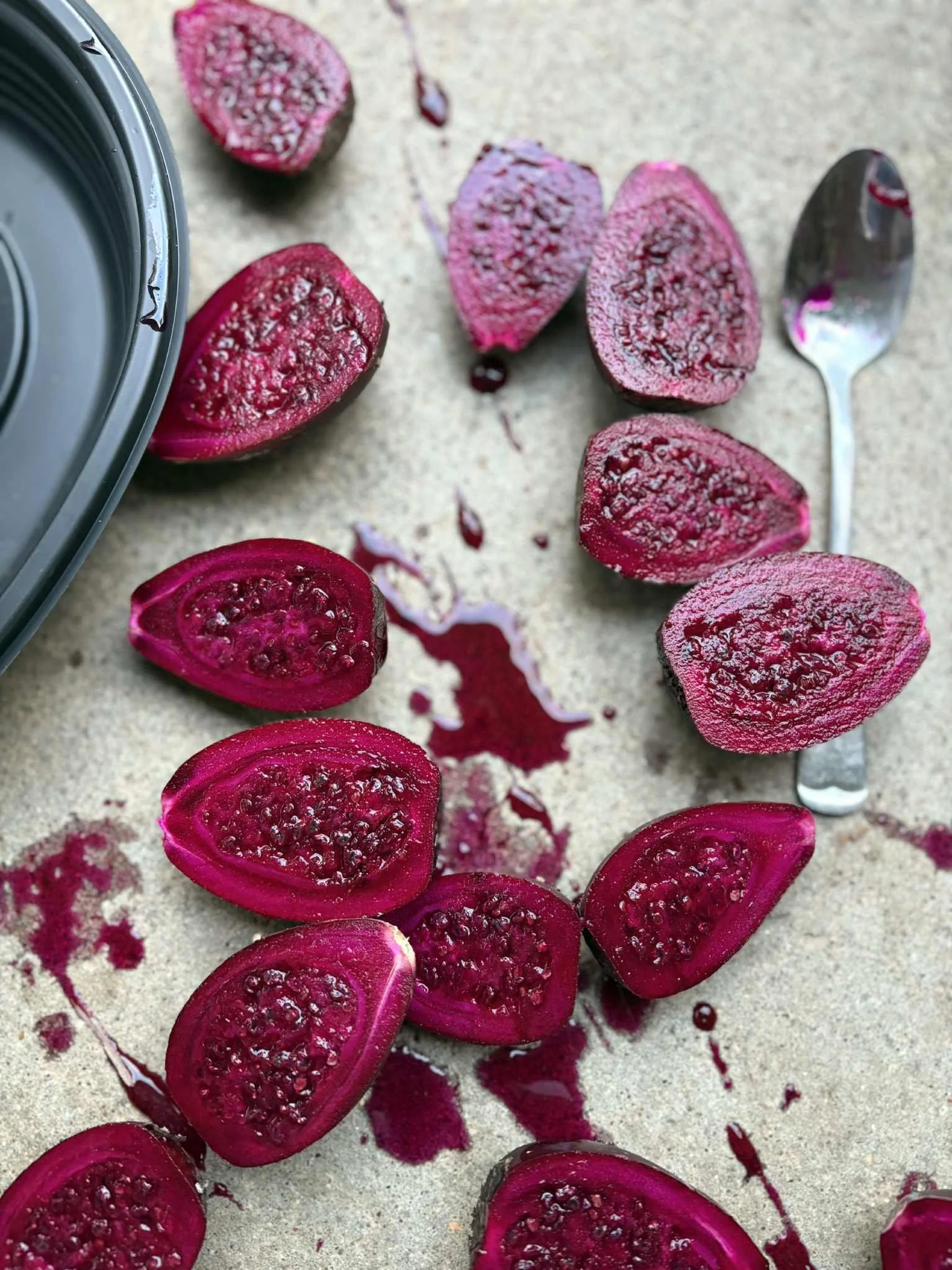 Image 1 of 7
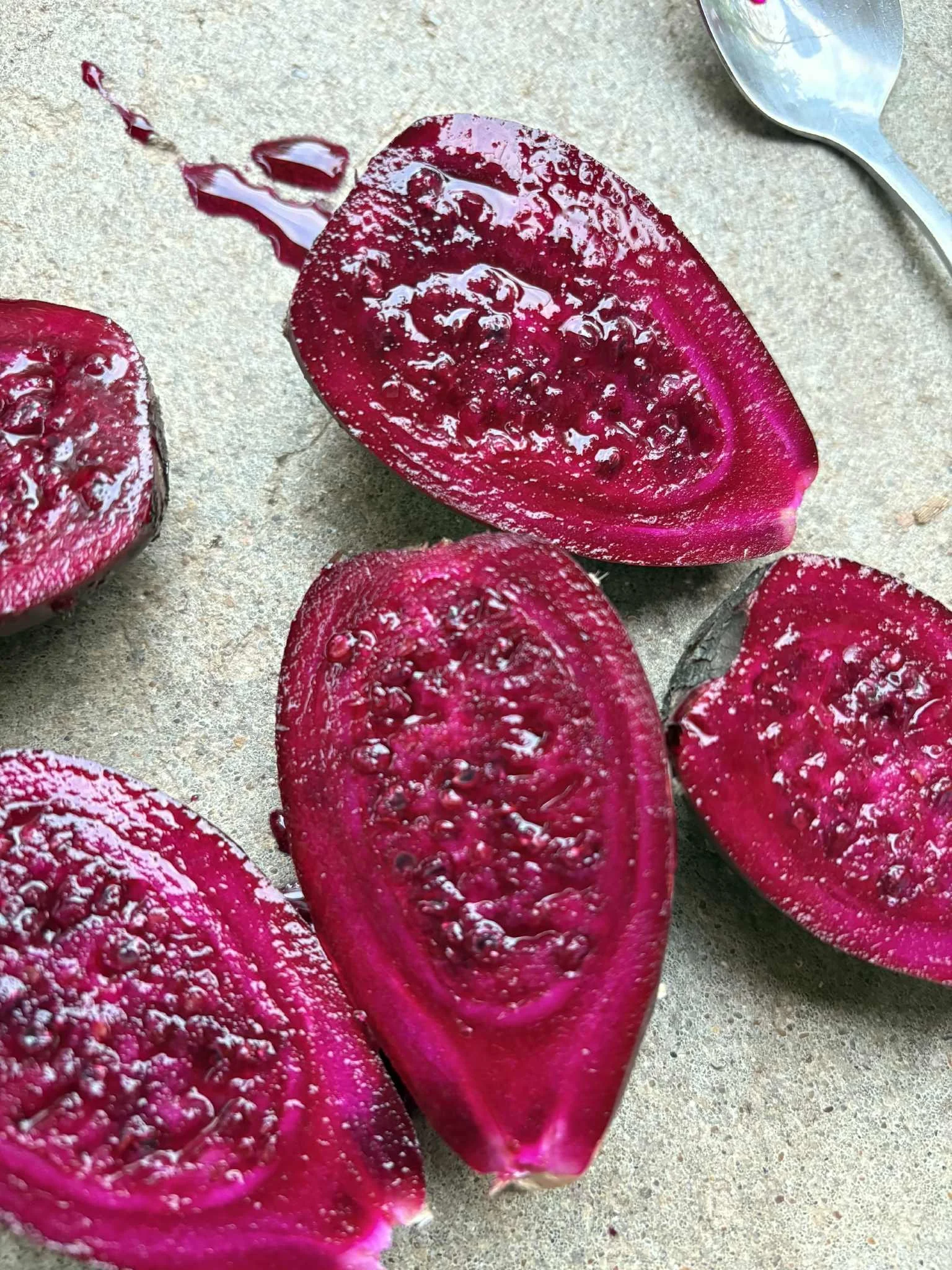 Image 2 of 7
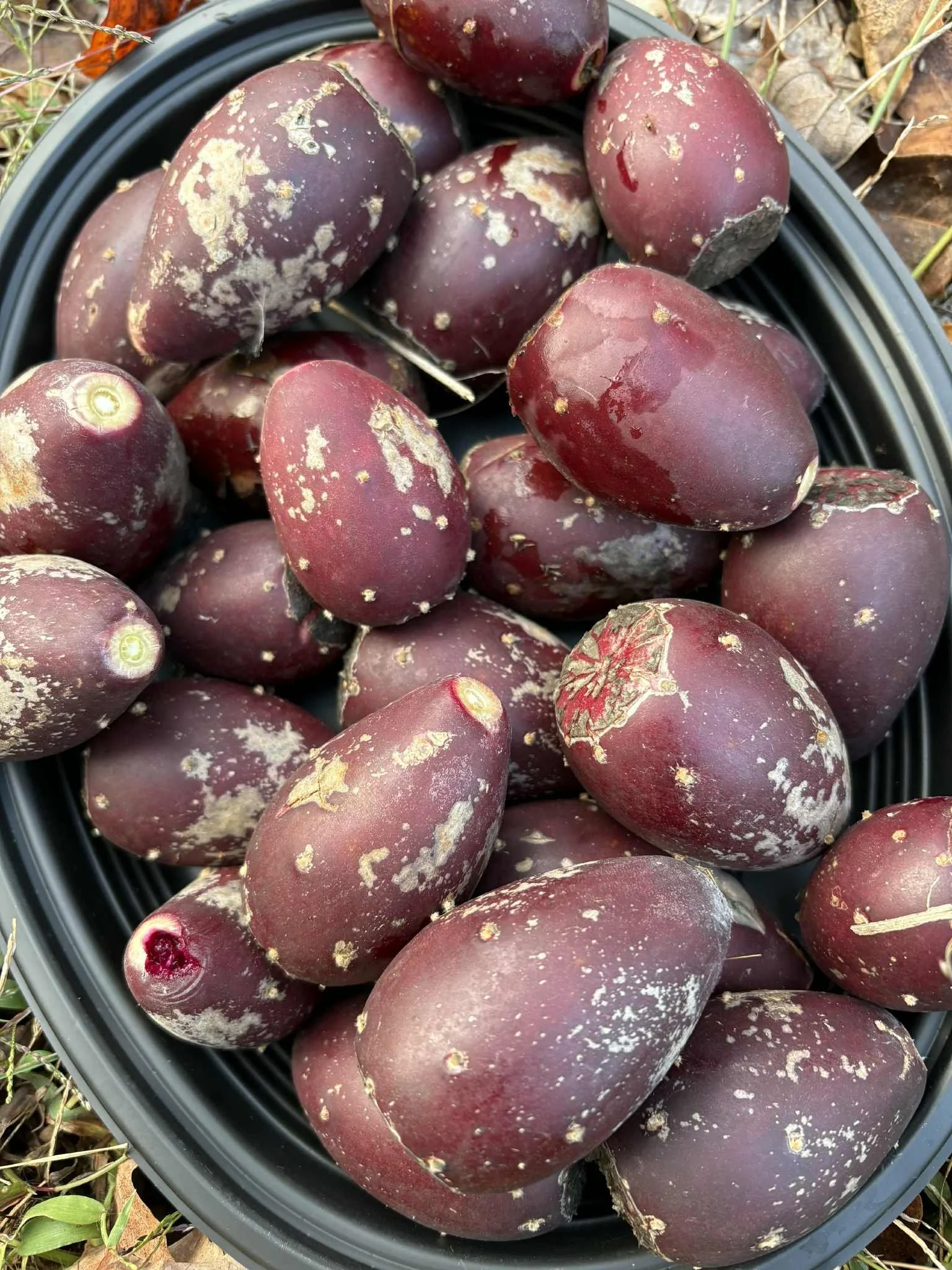 Image 3 of 7
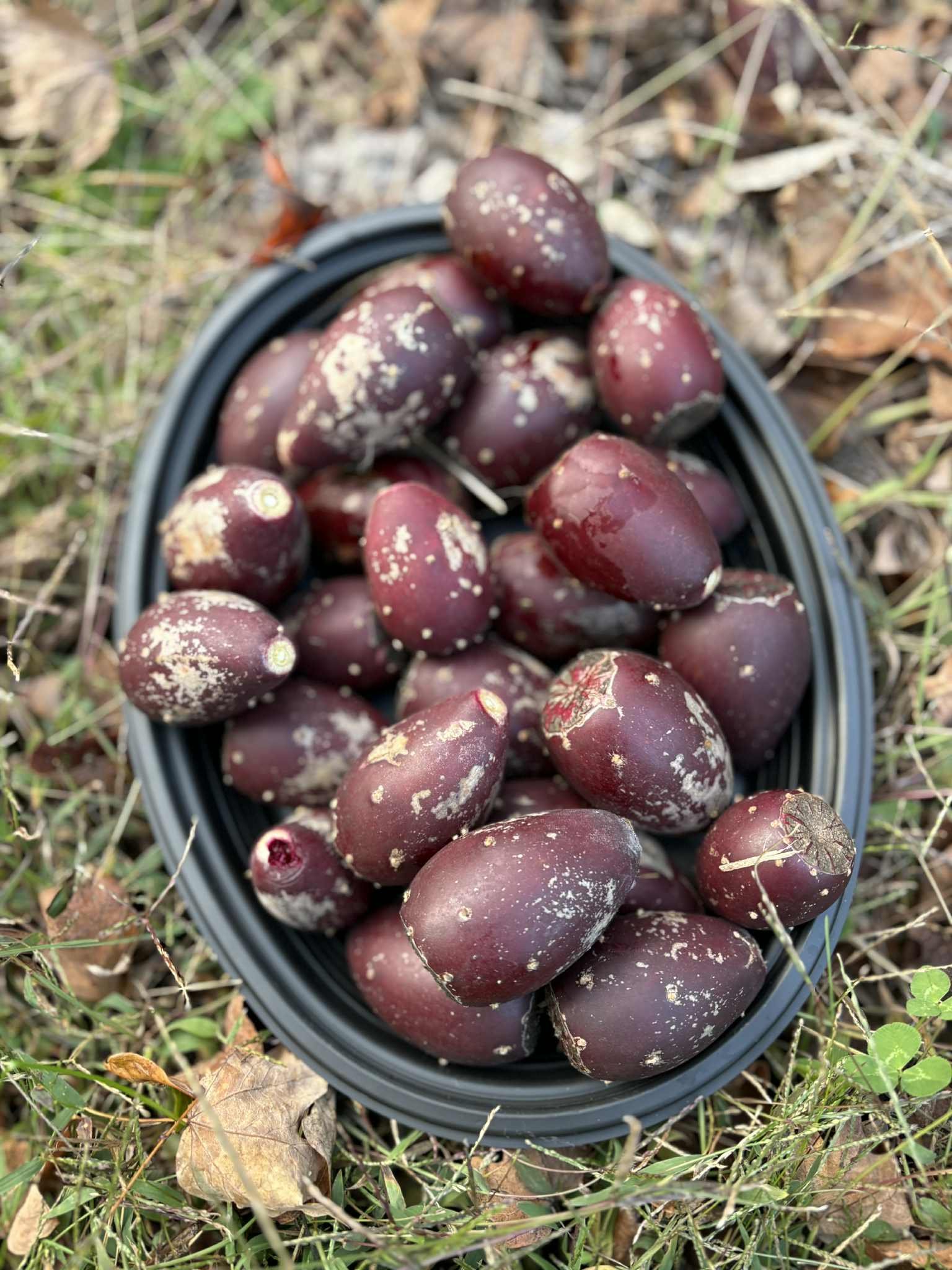 Image 4 of 7
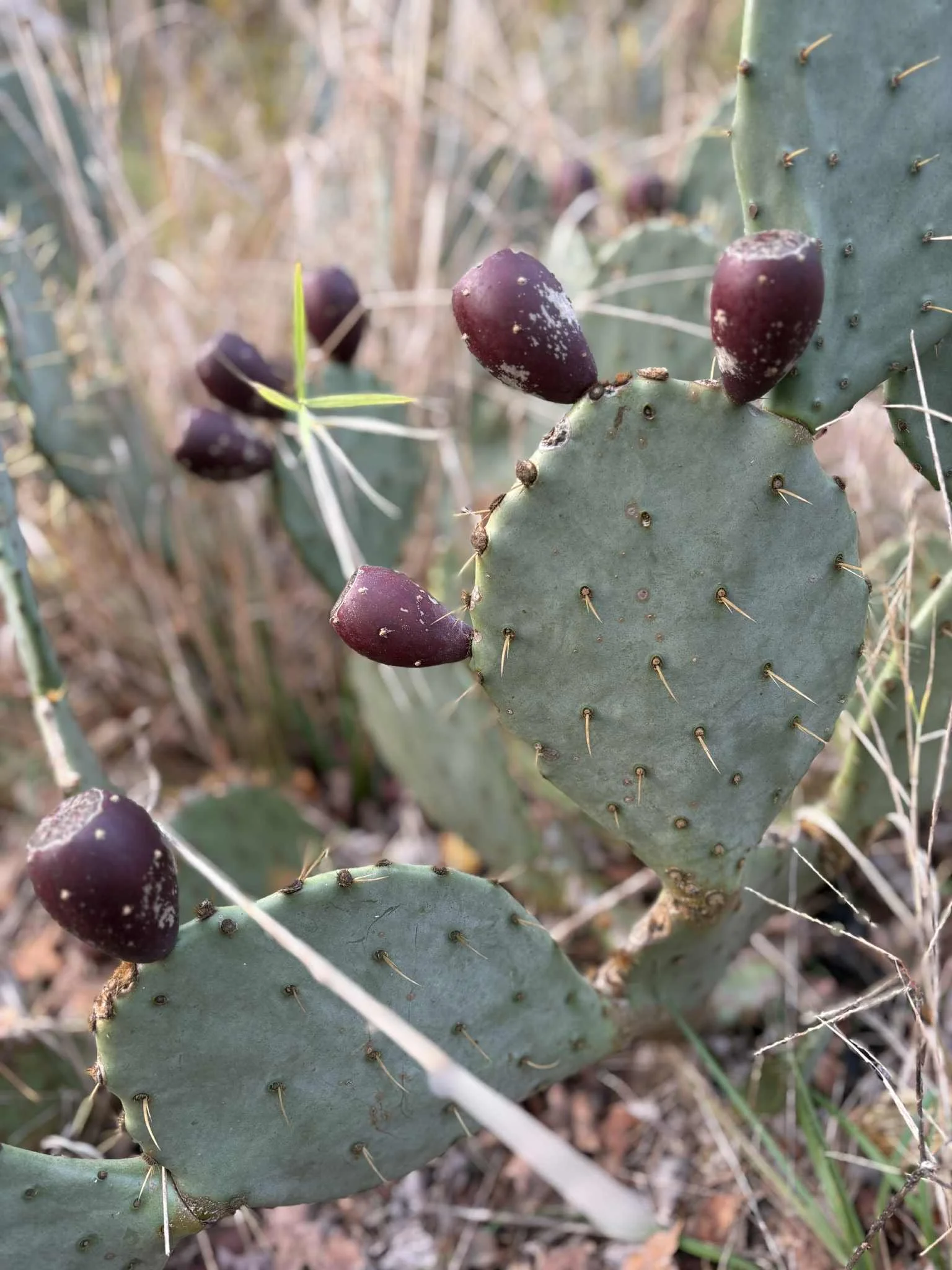 Image 5 of 7
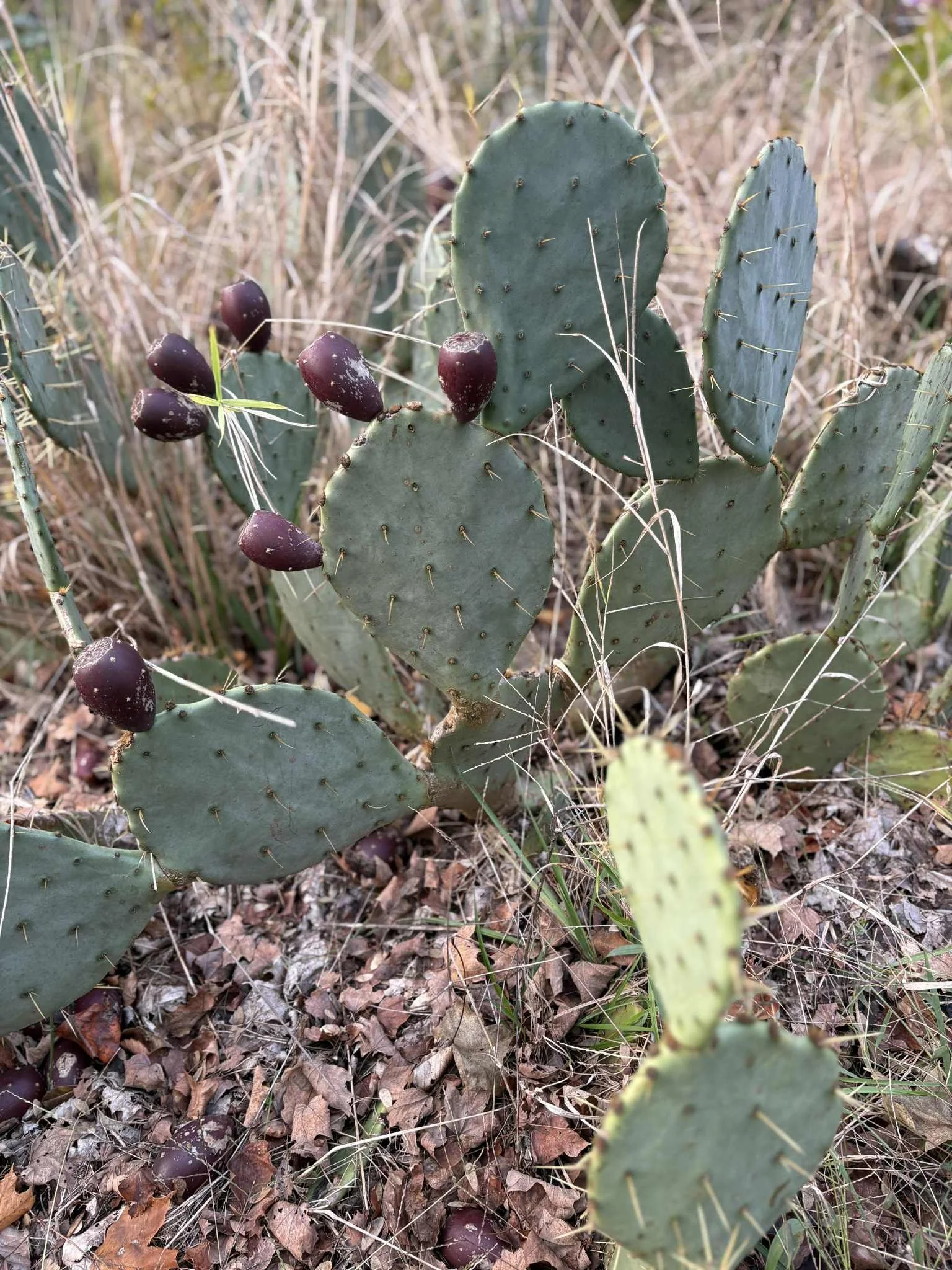 Image 6 of 7
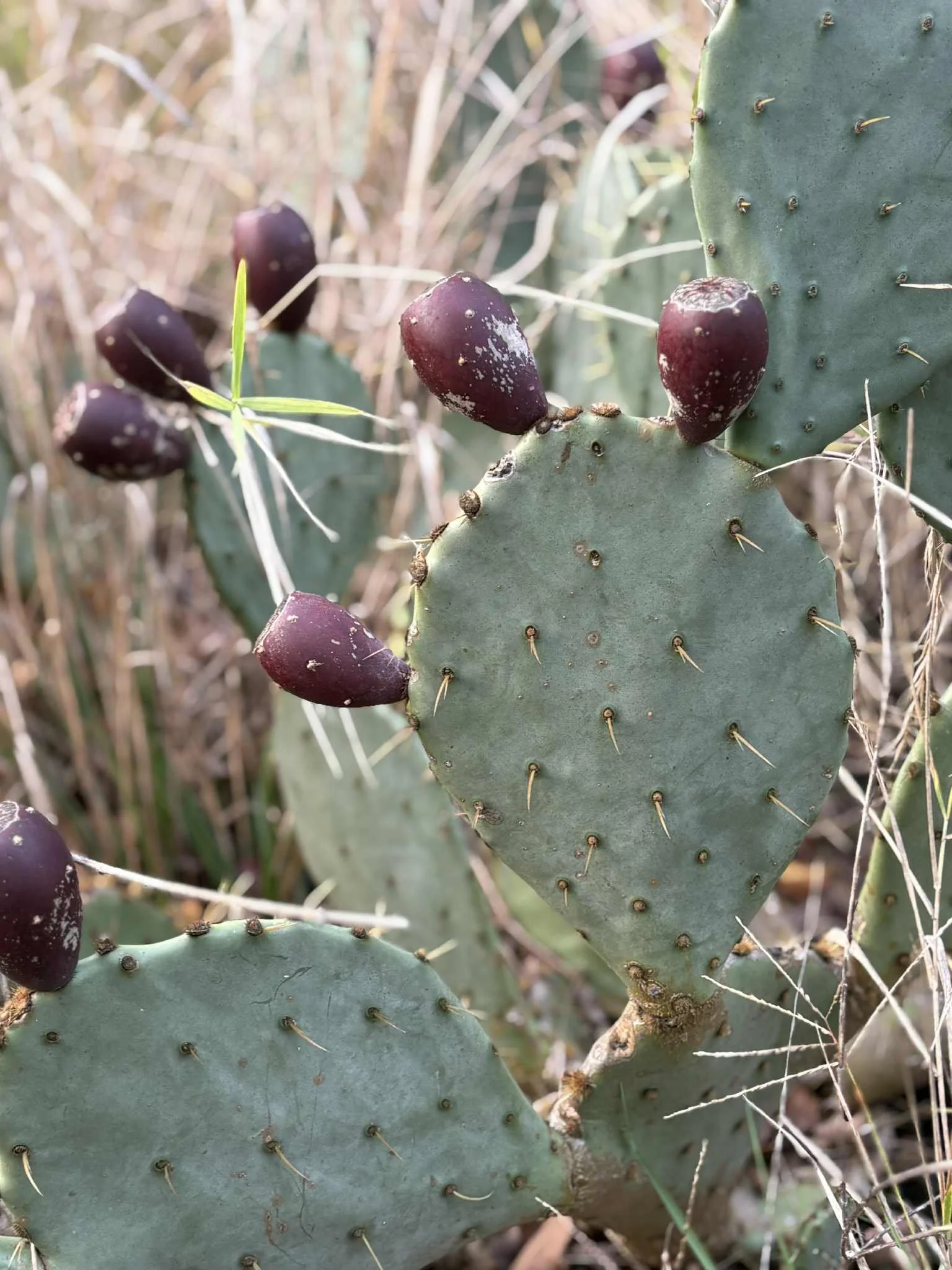 Image 7 of 7