 Image 1 of 5
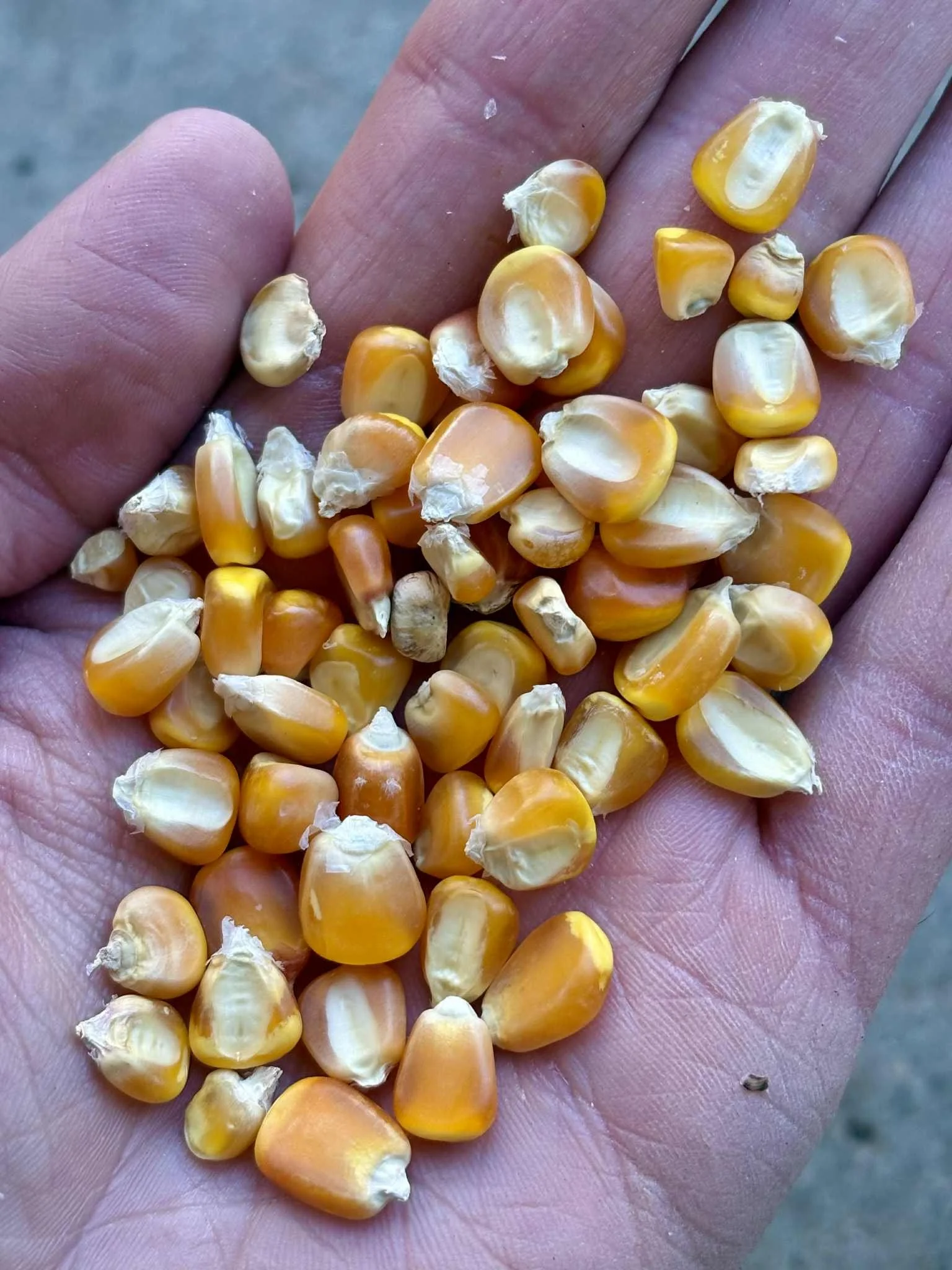 Image 2 of 5
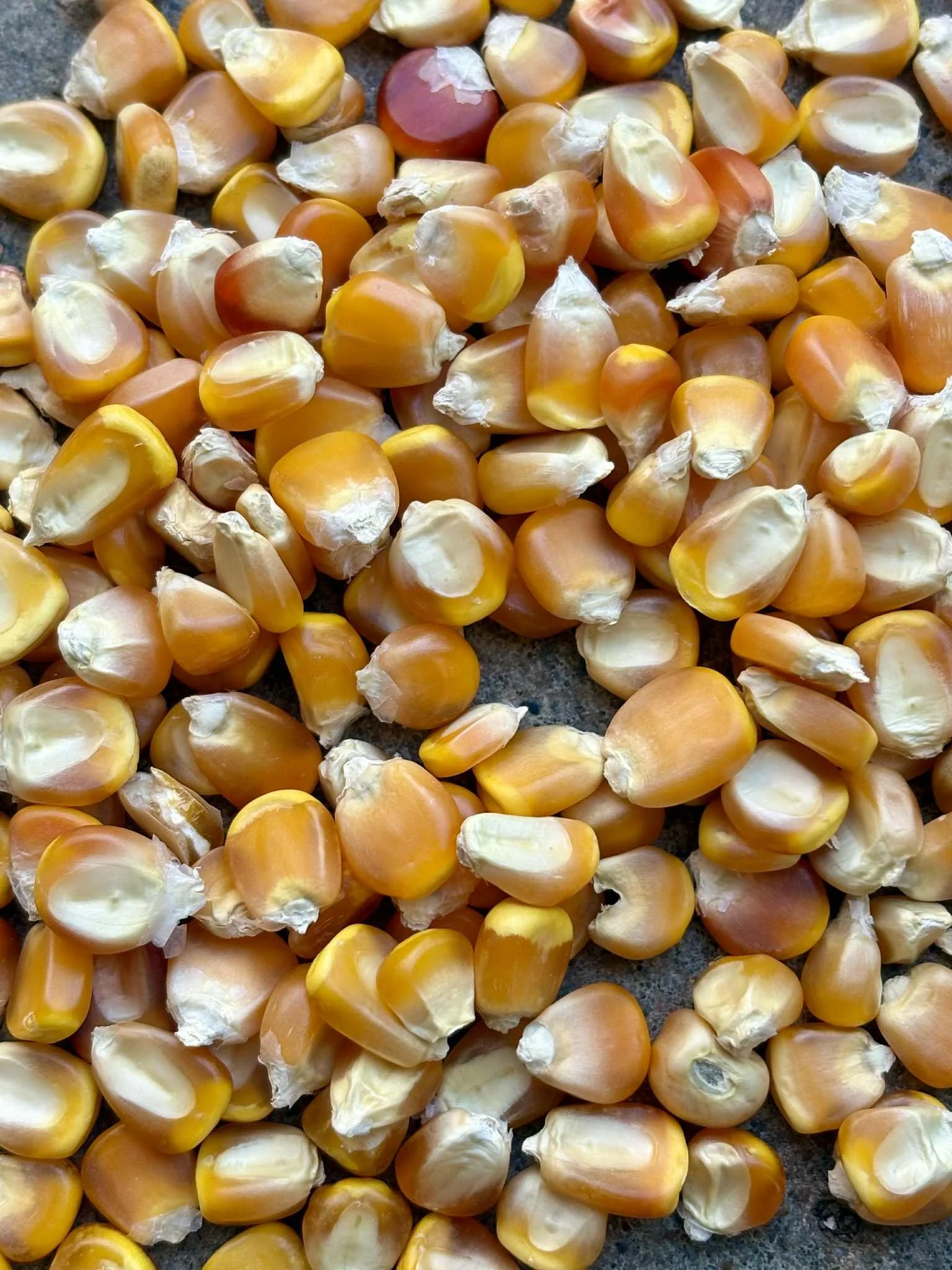 Image 3 of 5
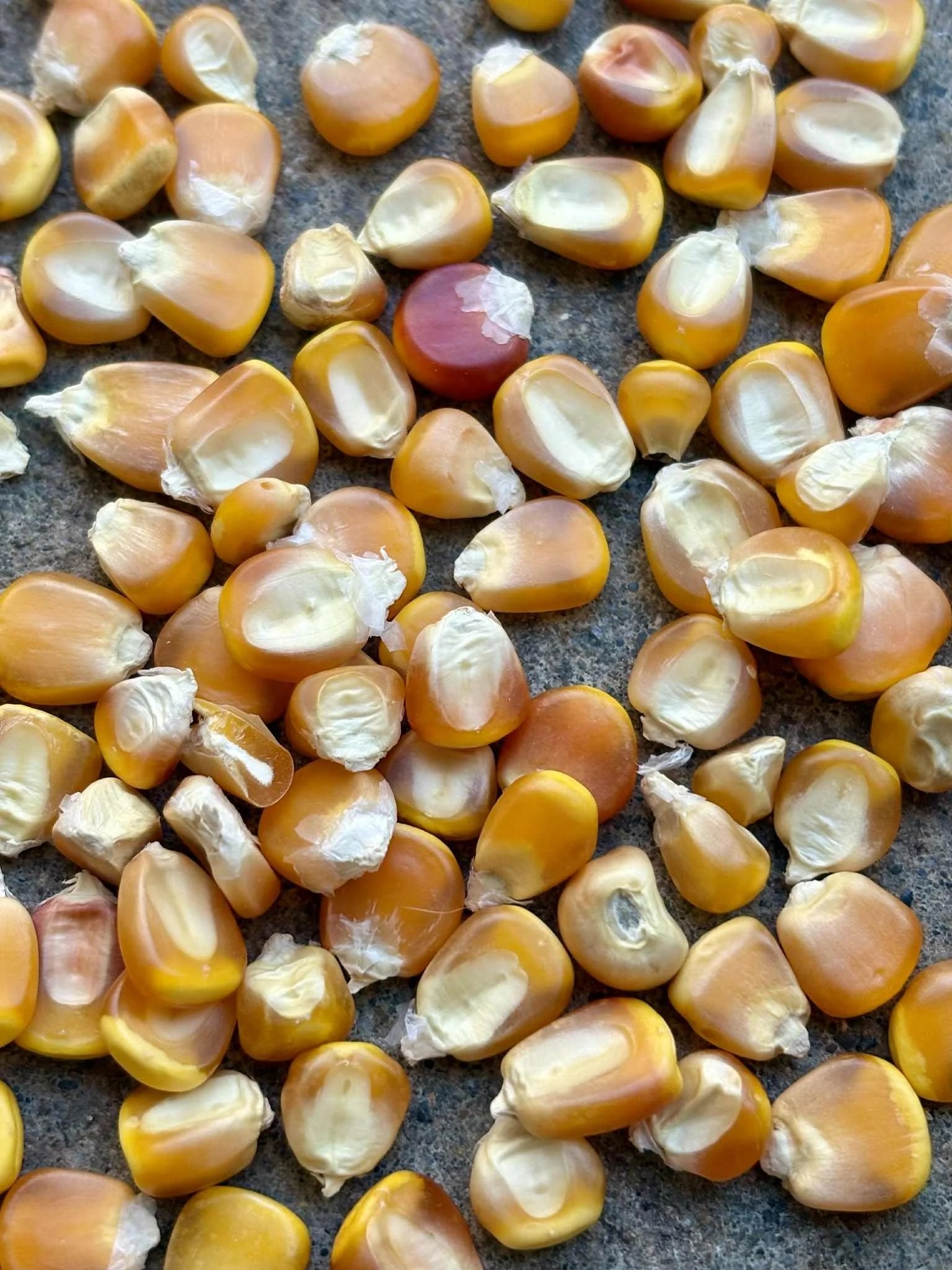 Image 4 of 5
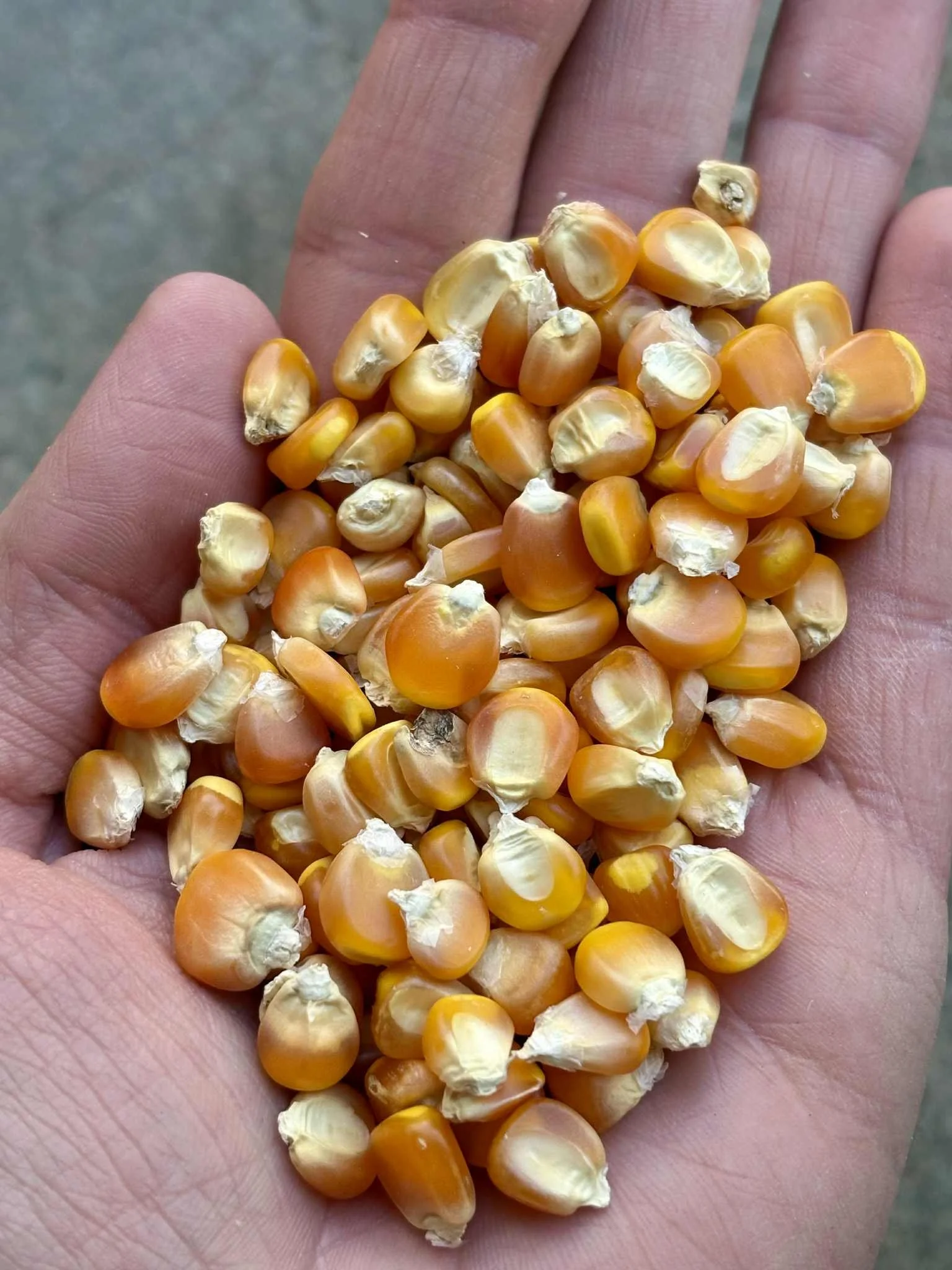 Image 5 of 5
Among the most influential races of maize in the modern world, Maíz Tuxpeño originates from the Gulf Coast lowlands of Mexico, where it has been cultivated for centuries in warm, humid climates from sea level to about 500 meters in elevation. Known for its robust, cylindrical ears and broad adaptability, this variety has not only nourished generations along Mexico’s coastal plains but also provided the genetic foundation for countless improved corn lines across the Americas.
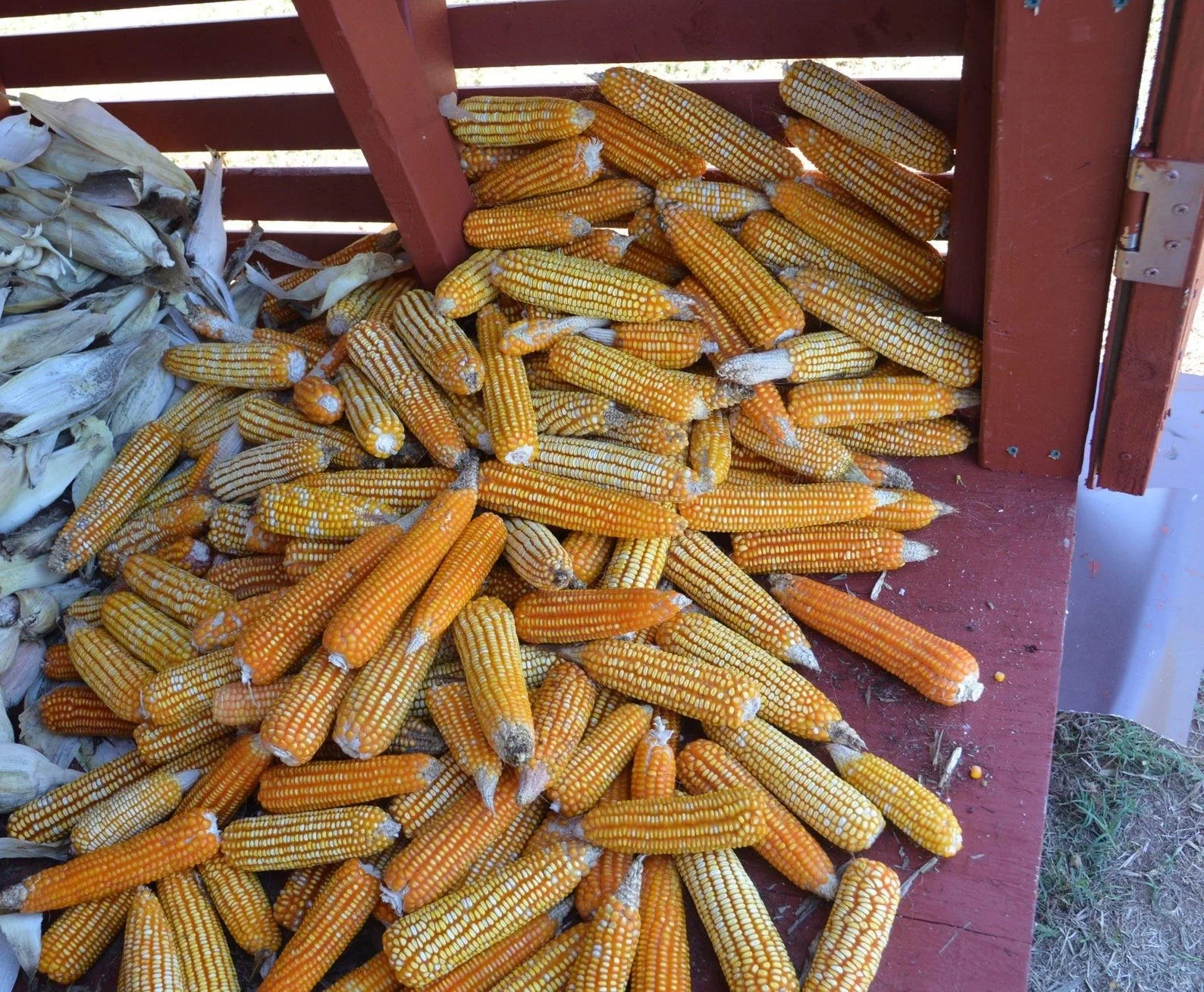
Botanically, Tuxpeño is a dent-type maize, bearing thick, many-rowed ears averaging 44–48 mm in diameter and kernels that are wide, deep, and heavily dented. The endosperm is hard and white, with a generally colorless pericarp and aleurone. Plants are tall and vigorous, thriving under the long, hot growing seasons typical of the Gulf region. The variety is remarkably uniform in appearance—dense, cylindrical ears and thick cobs reflecting its evolutionary adaptation to fertile, alluvial soils.
Historically, Tuxpeño is believed to have arisen through natural hybridization between two ancestral maize races: Olotillo and Tepecintle, both native to Mesoamerica’s lowlands. Its intermediate ear and kernel characteristics provide compelling evidence of this ancient union. Over time, it became the dominant maize race along the Gulf Coast, stretching from Yucatán to northeastern Mexico, and later expanded into Sonora, Chihuahua, and Coahuila, where it adapted to higher elevations through genetic introgression.
The influence of Tuxpeño extends far beyond Mexico’s borders. It has served as one of the principal genetic sources for modern Southern Dents in the United States—forming the backbone of industrial maize breeding. Archaeological findings even suggest its ancient counterparts once reached as far north as Arkansas, where similar dented maize was recovered in pre-Columbian contexts.
Days to maturity: 100–130
Seeds per pack: ~60
Germination rate: 90-91% 10/15/2025
Planting & Growth Notes
Sow directly in warm soil once the risk of frost has passed. Tuxpeño thrives in full sun and rich, well-drained ground. Plant 1 inch deep, spacing 10–12 inches apart with rows 30–36 inches wide. The tall plants (often exceeding 8 feet) require consistent moisture during ear development. This race is adapted to long growing seasons and coastal humidity but can perform well in inland gardens with similar heat and rainfall.
Tuxpeño is open-pollinated and wind-fertilized. To preserve purity, isolate by at least ½ mile from other maize varieties or stagger planting dates to prevent overlap in pollination. Select the most uniform, thick-cobbed ears with deep, symmetrical denting for seed. Allow ears to dry completely on the stalk before harvesting. Store clean, fully dried kernels in a cool, dark, and dry place. Properly handled seed remains viable for 3–5 years or more if frozen in the freezer.
Among the most influential races of maize in the modern world, Maíz Tuxpeño originates from the Gulf Coast lowlands of Mexico, where it has been cultivated for centuries in warm, humid climates from sea level to about 500 meters in elevation. Known for its robust, cylindrical ears and broad adaptability, this variety has not only nourished generations along Mexico’s coastal plains but also provided the genetic foundation for countless improved corn lines across the Americas.
Botanically, Tuxpeño is a dent-type maize, bearing thick, many-rowed ears averaging 44–48 mm in diameter and kernels that are wide, deep, and heavily dented. The endosperm is hard and white, with a generally colorless pericarp and aleurone. Plants are tall and vigorous, thriving under the long, hot growing seasons typical of the Gulf region. The variety is remarkably uniform in appearance—dense, cylindrical ears and thick cobs reflecting its evolutionary adaptation to fertile, alluvial soils.
Historically, Tuxpeño is believed to have arisen through natural hybridization between two ancestral maize races: Olotillo and Tepecintle, both native to Mesoamerica’s lowlands. Its intermediate ear and kernel characteristics provide compelling evidence of this ancient union. Over time, it became the dominant maize race along the Gulf Coast, stretching from Yucatán to northeastern Mexico, and later expanded into Sonora, Chihuahua, and Coahuila, where it adapted to higher elevations through genetic introgression.
The influence of Tuxpeño extends far beyond Mexico’s borders. It has served as one of the principal genetic sources for modern Southern Dents in the United States—forming the backbone of industrial maize breeding. Archaeological findings even suggest its ancient counterparts once reached as far north as Arkansas, where similar dented maize was recovered in pre-Columbian contexts.
Days to maturity: 100–130
Seeds per pack: ~60
Germination rate: 90-91% 10/15/2025
Planting & Growth Notes
Sow directly in warm soil once the risk of frost has passed. Tuxpeño thrives in full sun and rich, well-drained ground. Plant 1 inch deep, spacing 10–12 inches apart with rows 30–36 inches wide. The tall plants (often exceeding 8 feet) require consistent moisture during ear development. This race is adapted to long growing seasons and coastal humidity but can perform well in inland gardens with similar heat and rainfall.
Tuxpeño is open-pollinated and wind-fertilized. To preserve purity, isolate by at least ½ mile from other maize varieties or stagger planting dates to prevent overlap in pollination. Select the most uniform, thick-cobbed ears with deep, symmetrical denting for seed. Allow ears to dry completely on the stalk before harvesting. Store clean, fully dried kernels in a cool, dark, and dry place. Properly handled seed remains viable for 3–5 years or more if frozen in the freezer.