 Image 1 of 4
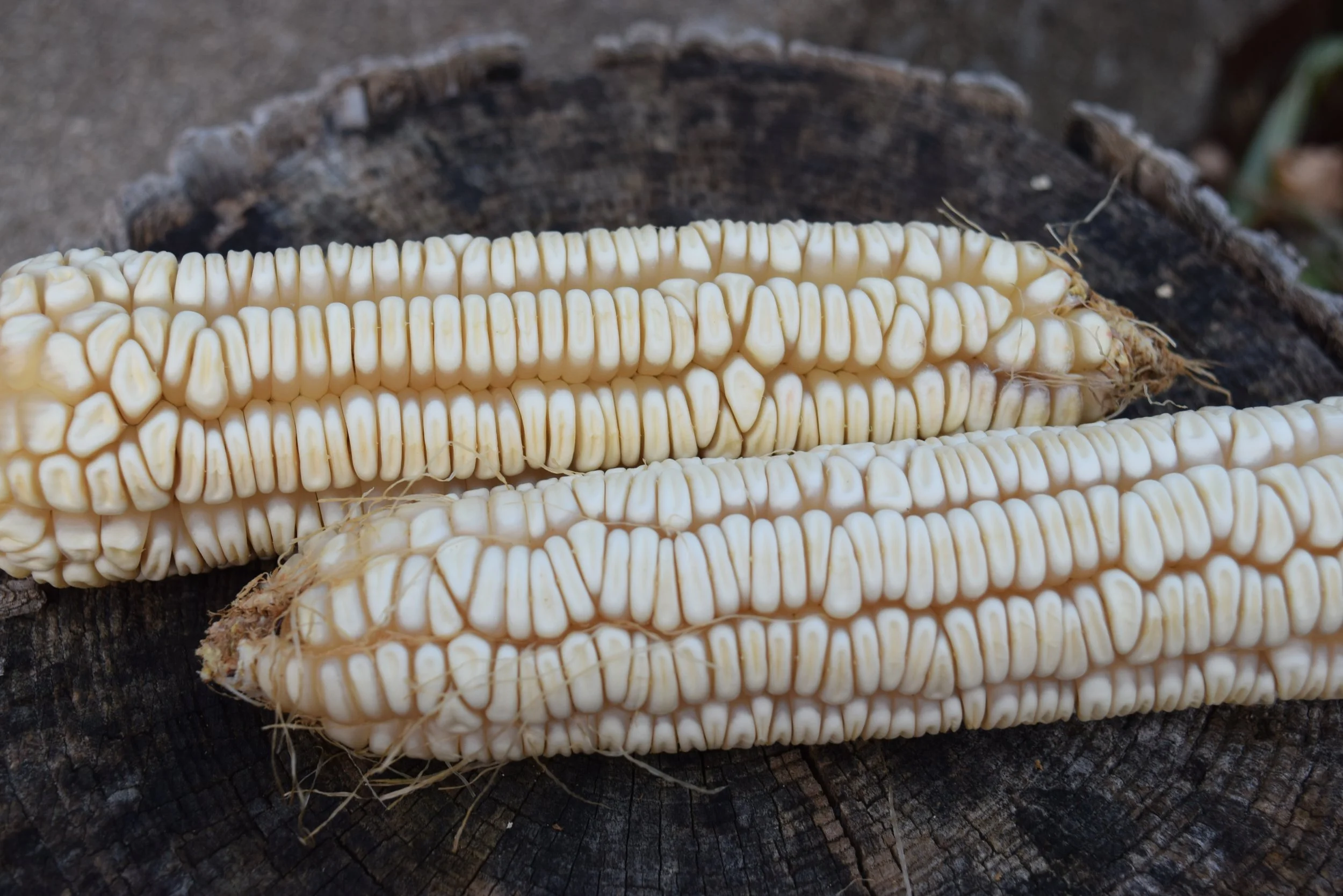 Image 2 of 4
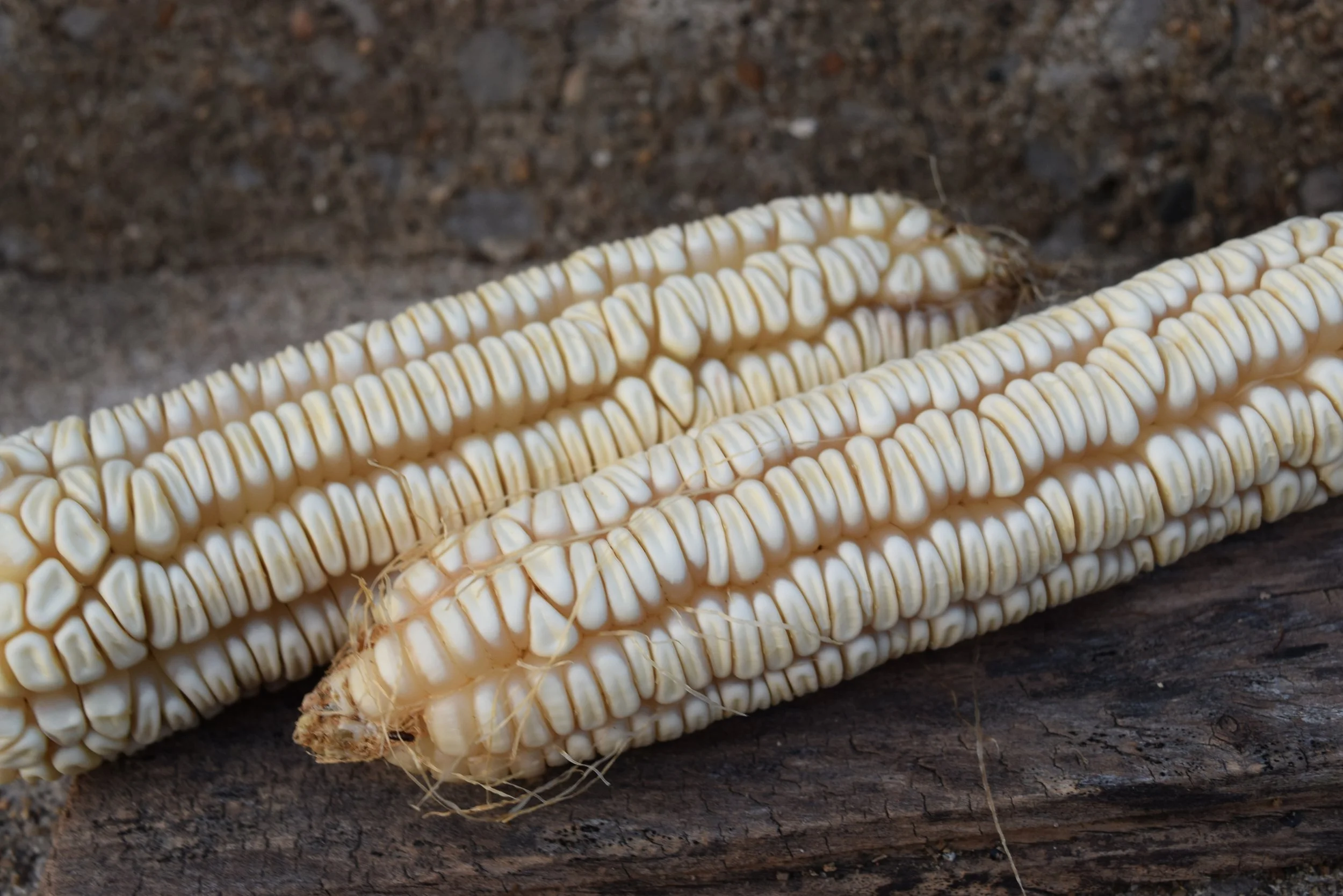 Image 3 of 4
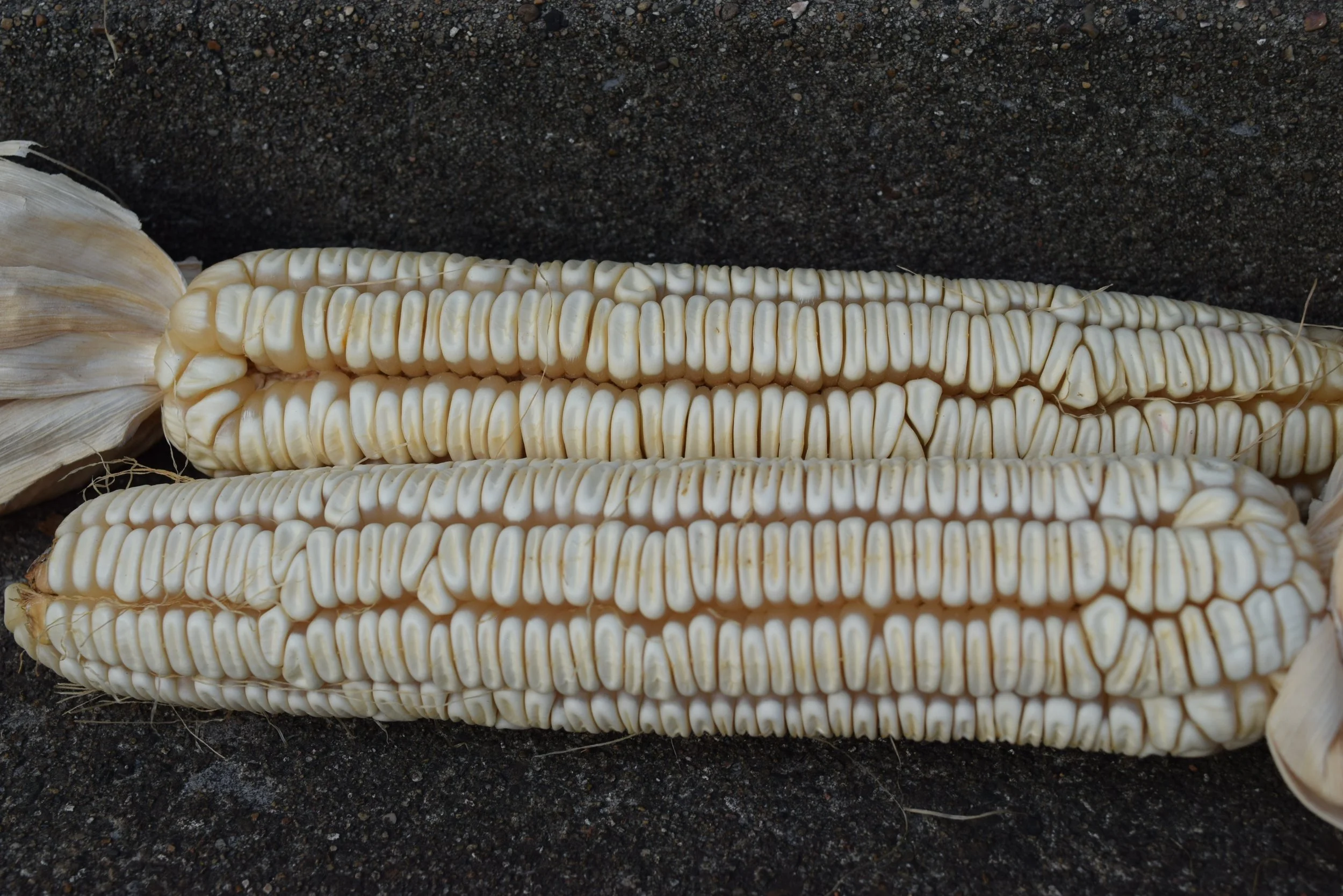 Image 4 of 4
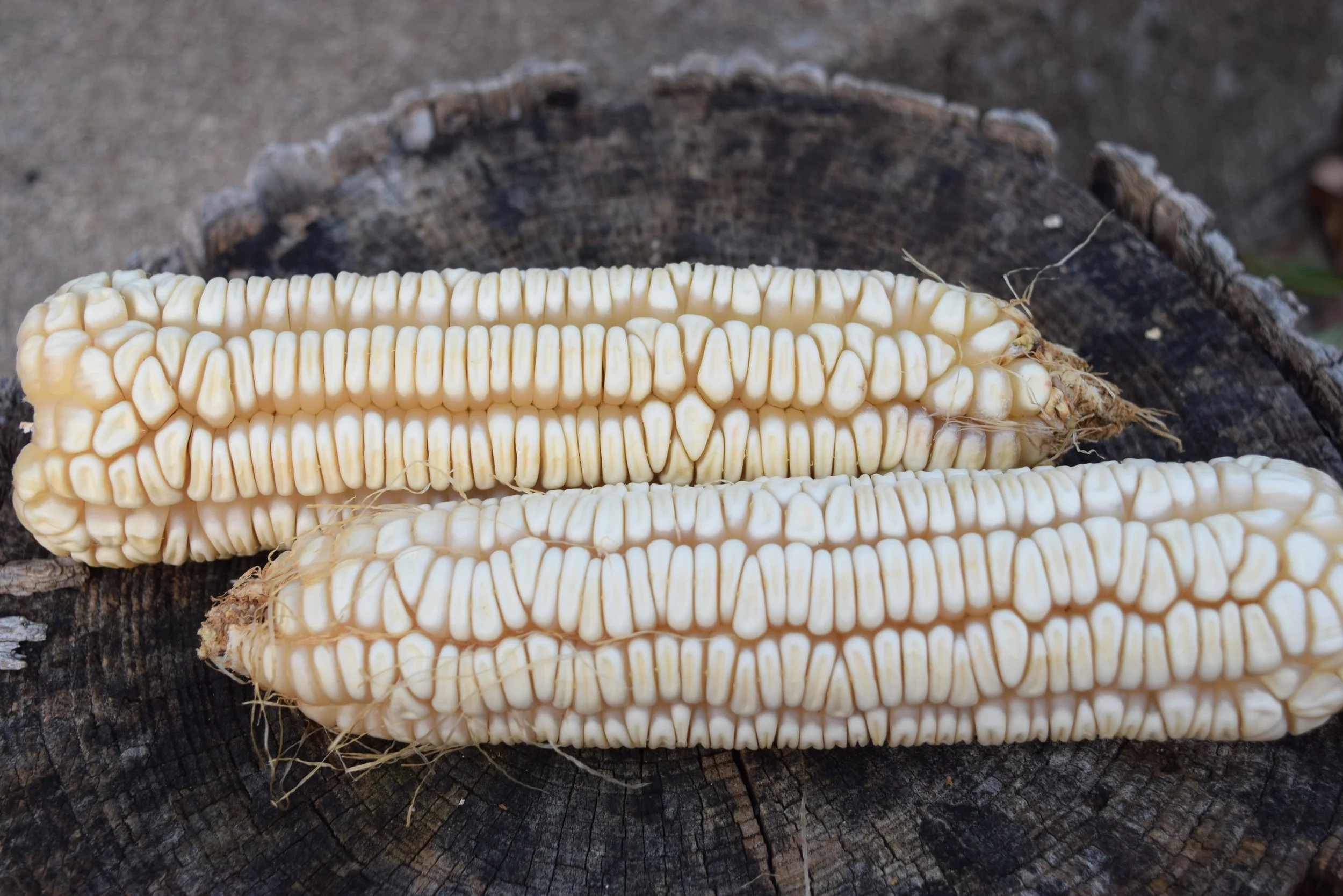
White Hickory King is one of the classic American dent corns—an old Southern variety with roots that reach back to the Mexican race Tabloncillo, from which it was derived. First appearing in U.S. seed catalogs in the late 1800s, Hickory King quickly became a staple of Southern farms because of its extremely large, nearly square white kernels and dependable yields in hot, humid climates.
Hickory King grows as a tall, stately, late-season corn. Plants flower early for their height, with relatively low ear placement and broad, long leaves. Tassels are long and sparsely branched, producing heavy pollen. Ears are long and typically 8-rowed, with big, blocky kernels of a true dent endosperm.
Hickory King represents one of the older Southern Dent varieties and is a direct descendant of the Mexican Tabloncillo race. Introductions into Brazil were documented in the early 20th century as well, and it appears occasionally in the northern and southern U.S., though rarely as far north as the Corn Belt. In the early 20th century, Hickory King was valued for its white endosperm, consistent kernel size, and performance in muggy Southeastern conditions. Many traditional Southern grits mills specifically sought out Hickory King for its flavor and grind quality.
White Hickory King is prized for:
Nixtamal / hominy
Stone-ground grits (large, rich, full-bodied)
Cornbread, mush, dumplings
Roasting ears at early milk stage
Animal feed (high-quality dent)
The large kernels soften beautifully during nixtamalization and produce exceptionally fragrant masa or hominy.
Days to maturity: ~100–120 days
Seeds per pack: ~ 60 seeds
Germination rate: 90% 10/15/2025
Direct-sow after frost when soil is ≥ 60–65 °F. Plant 1" deep; space 8–12" in rows 30–36" apart, or in blocks of 3–4 rows for strong pollination. Provide full sun, steady moisture, and moderate fertility. Harvest at the milk stage for roasting ears (sweeter than many dents), or allow to dry fully on the stalk for meal/grits.
Corn is wind-pollinated. Isolate by at least ¼–½ mile (or time-isolate) from other Zea mays to preserve color and type. Select uniform, deeply blue, well-filled ears; dry on the plant until husks are papery, then finish curing indoors if needed. Shell carefully and store cool, dark, and dry. Properly stored seed remains viable ~3–5 years or 10+ if stored in the freezer.
White Hickory King is one of the classic American dent corns—an old Southern variety with roots that reach back to the Mexican race Tabloncillo, from which it was derived. First appearing in U.S. seed catalogs in the late 1800s, Hickory King quickly became a staple of Southern farms because of its extremely large, nearly square white kernels and dependable yields in hot, humid climates.
Hickory King grows as a tall, stately, late-season corn. Plants flower early for their height, with relatively low ear placement and broad, long leaves. Tassels are long and sparsely branched, producing heavy pollen. Ears are long and typically 8-rowed, with big, blocky kernels of a true dent endosperm.
Hickory King represents one of the older Southern Dent varieties and is a direct descendant of the Mexican Tabloncillo race. Introductions into Brazil were documented in the early 20th century as well, and it appears occasionally in the northern and southern U.S., though rarely as far north as the Corn Belt. In the early 20th century, Hickory King was valued for its white endosperm, consistent kernel size, and performance in muggy Southeastern conditions. Many traditional Southern grits mills specifically sought out Hickory King for its flavor and grind quality.
White Hickory King is prized for:
Nixtamal / hominy
Stone-ground grits (large, rich, full-bodied)
Cornbread, mush, dumplings
Roasting ears at early milk stage
Animal feed (high-quality dent)
The large kernels soften beautifully during nixtamalization and produce exceptionally fragrant masa or hominy.
Days to maturity: ~100–120 days
Seeds per pack: ~ 60 seeds
Germination rate: 90% 10/15/2025
Direct-sow after frost when soil is ≥ 60–65 °F. Plant 1" deep; space 8–12" in rows 30–36" apart, or in blocks of 3–4 rows for strong pollination. Provide full sun, steady moisture, and moderate fertility. Harvest at the milk stage for roasting ears (sweeter than many dents), or allow to dry fully on the stalk for meal/grits.
Corn is wind-pollinated. Isolate by at least ¼–½ mile (or time-isolate) from other Zea mays to preserve color and type. Select uniform, deeply blue, well-filled ears; dry on the plant until husks are papery, then finish curing indoors if needed. Shell carefully and store cool, dark, and dry. Properly stored seed remains viable ~3–5 years or 10+ if stored in the freezer.