 Image 1 of 4
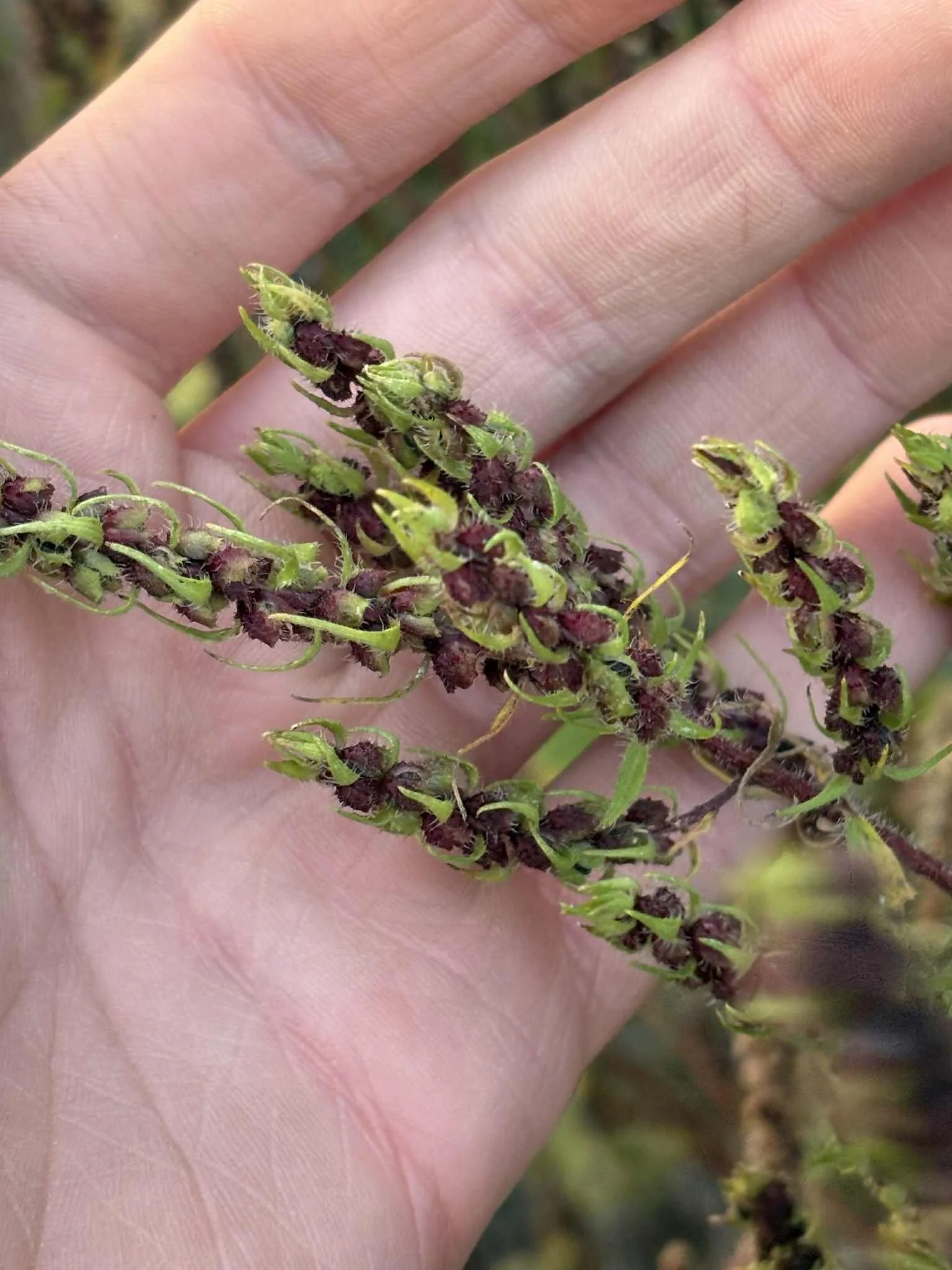 Image 2 of 4
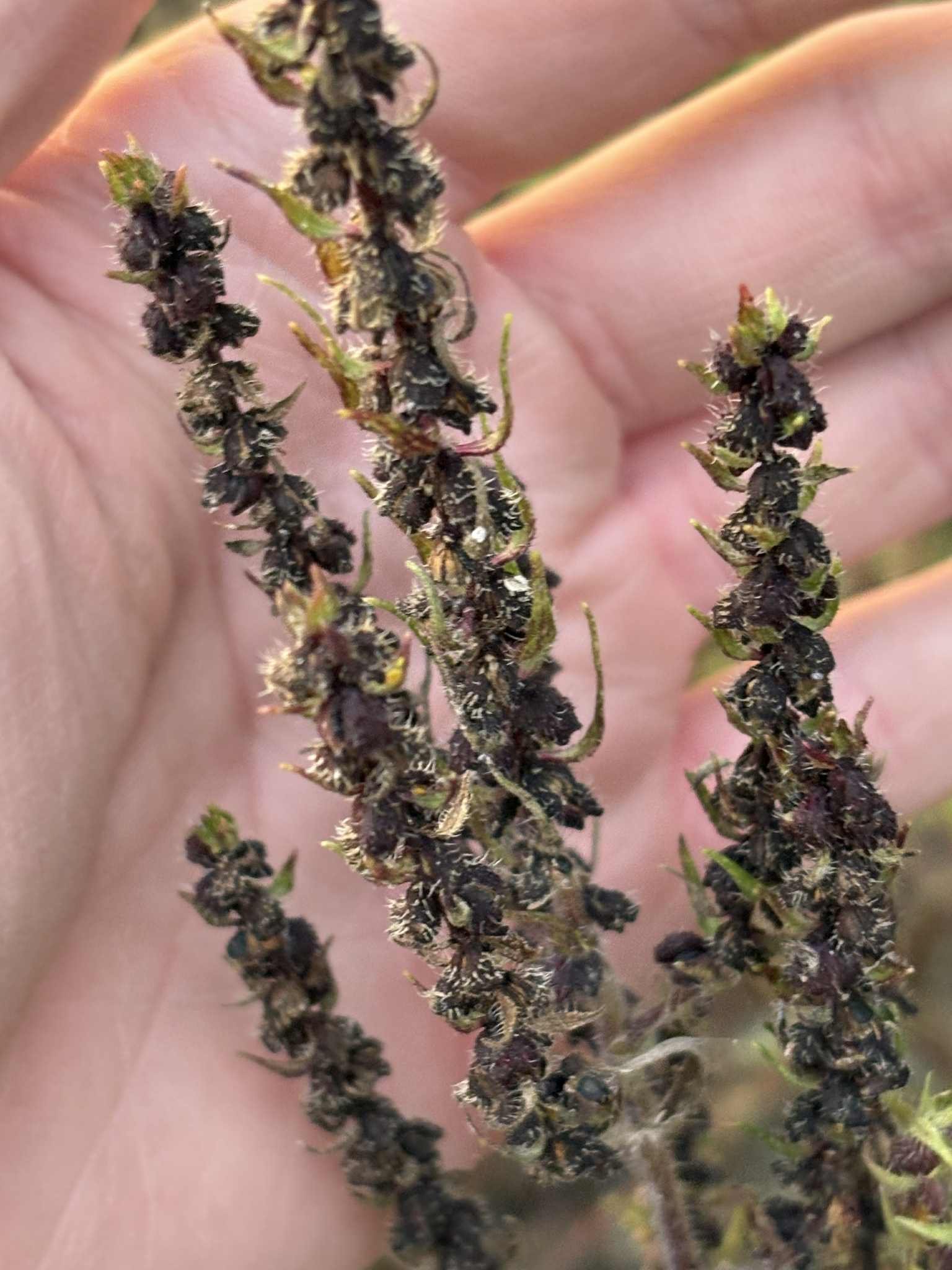 Image 3 of 4
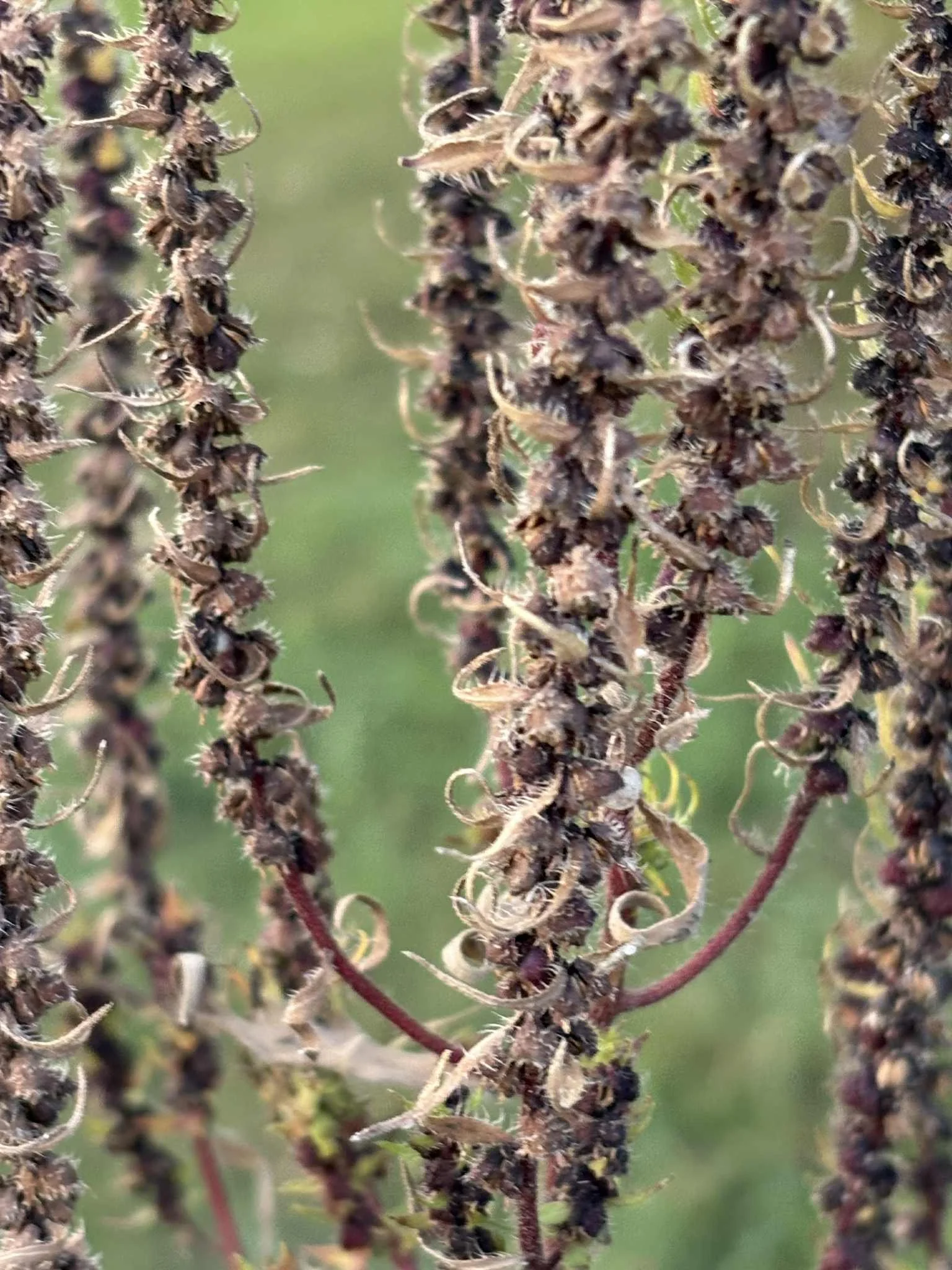 Image 4 of 4
Once a cornerstone of the Eastern Agricultural Complex, Iva annua—known commonly as Marsh Elder—was cultivated and foraged by Indigenous peoples across the Eastern Woodlands thousands of years before the introduction of maize. Its small, oily seeds were rich in protein and fat, forming an essential part of early agricultural systems alongside goosefoot (Chenopodium berlandieri), sumpweed, maygrass, and little barley.
Marsh Elder was tended in floodplains, river terraces, and near seasonal wetlands, often in mixed plantings that balanced wild tending with deliberate selection. Archaeological findings suggest Indigenous communities in the Mississippi and Ohio River valleys had domesticated forms of Iva annua by around 2500–3000 BCE. Its cultivation declined as maize, beans, and squash became the dominant crops, yet it remains a powerful reminder of the ingenuity and ecological harmony of early Native agricultural traditions.
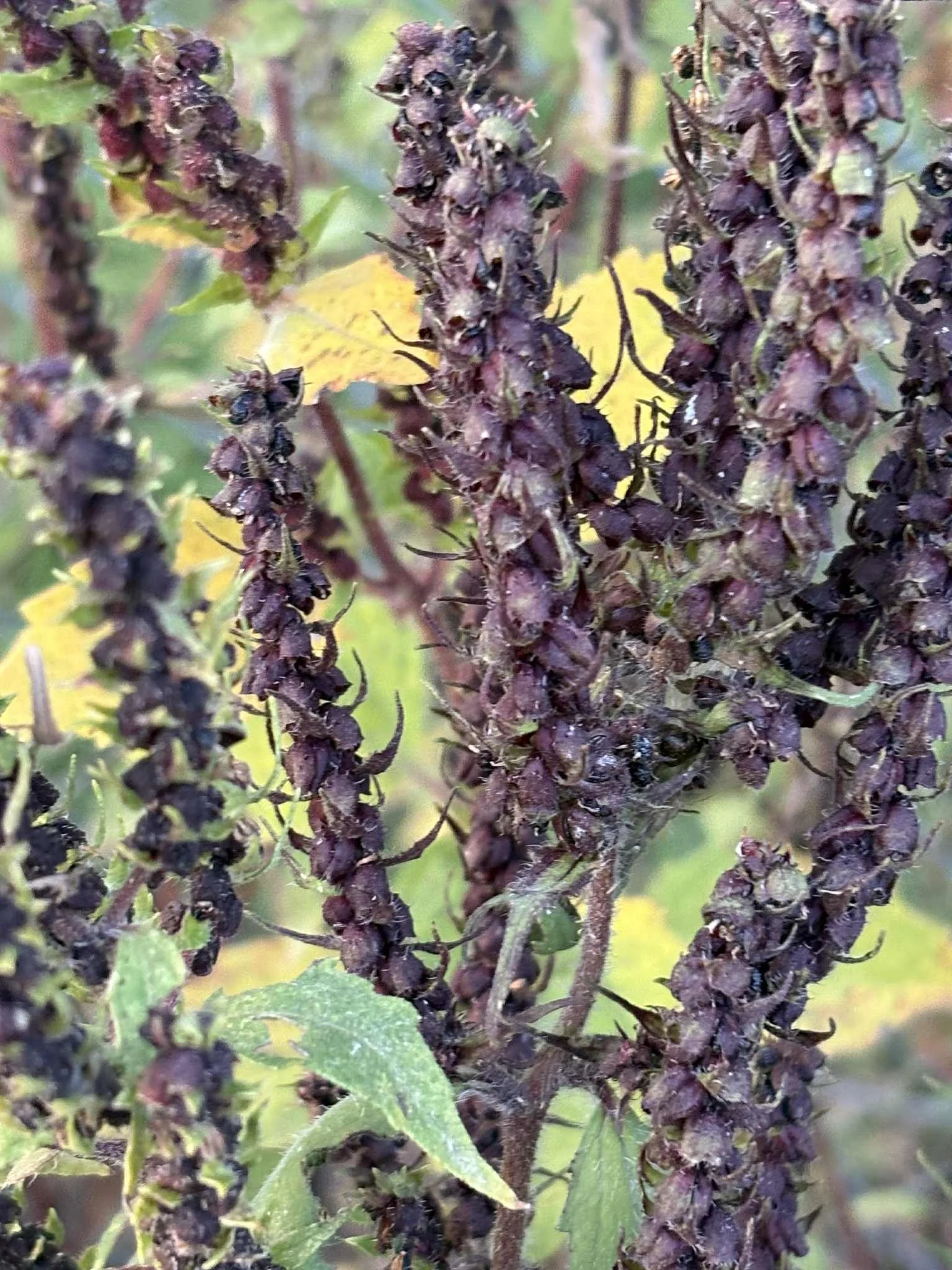
This strain was collected from remnant wild stands near bottomland edges in Montgomery County, Tennessee. The farm has verified arrowheads of early indigenous peoples where the species still volunteered in damp, sunny ground. Its upright, branching plants reach 3–6 feet tall and produce numerous clusters of small seed heads in late summer to fall. The seeds can be parched or ground into meal, offering a nutty, sunflower-like flavor.
Days to maturity: 90–110
Seeds per pack: ~50 seeds
Germination rate: 90% (10/15/2025)
Sow seeds directly in moist, fertile soil after the danger of frost has passed. Iva annua thrives in full sun and tolerates both wet and moderately dry conditions. Scatter thinly and lightly cover with soil—about ⅛ inch deep—as light assists germination. Thin plants to 12–18 inches apart once established. Expect mature seed heads by early autumn, when the bracts begin to brown and the seeds easily loosen from the stalk.
To save seed, allow the heads to dry fully on the plant until crisp. Harvest by hand or cut whole stalks and hang to finish drying in a well-ventilated space. Once dry, thresh gently and winnow to remove chaff. Store clean seed in a cool, dry place. Marsh Elder is largely self-fertile but wind-pollinated, so isolate different Iva species or populations by at least 150 feet to maintain integrity. Properly stored, seed remains viable for three to five years.
Once a cornerstone of the Eastern Agricultural Complex, Iva annua—known commonly as Marsh Elder—was cultivated and foraged by Indigenous peoples across the Eastern Woodlands thousands of years before the introduction of maize. Its small, oily seeds were rich in protein and fat, forming an essential part of early agricultural systems alongside goosefoot (Chenopodium berlandieri), sumpweed, maygrass, and little barley.
Marsh Elder was tended in floodplains, river terraces, and near seasonal wetlands, often in mixed plantings that balanced wild tending with deliberate selection. Archaeological findings suggest Indigenous communities in the Mississippi and Ohio River valleys had domesticated forms of Iva annua by around 2500–3000 BCE. Its cultivation declined as maize, beans, and squash became the dominant crops, yet it remains a powerful reminder of the ingenuity and ecological harmony of early Native agricultural traditions.
This strain was collected from remnant wild stands near bottomland edges in Montgomery County, Tennessee. The farm has verified arrowheads of early indigenous peoples where the species still volunteered in damp, sunny ground. Its upright, branching plants reach 3–6 feet tall and produce numerous clusters of small seed heads in late summer to fall. The seeds can be parched or ground into meal, offering a nutty, sunflower-like flavor.
Days to maturity: 90–110
Seeds per pack: ~50 seeds
Germination rate: 90% (10/15/2025)
Sow seeds directly in moist, fertile soil after the danger of frost has passed. Iva annua thrives in full sun and tolerates both wet and moderately dry conditions. Scatter thinly and lightly cover with soil—about ⅛ inch deep—as light assists germination. Thin plants to 12–18 inches apart once established. Expect mature seed heads by early autumn, when the bracts begin to brown and the seeds easily loosen from the stalk.
To save seed, allow the heads to dry fully on the plant until crisp. Harvest by hand or cut whole stalks and hang to finish drying in a well-ventilated space. Once dry, thresh gently and winnow to remove chaff. Store clean seed in a cool, dry place. Marsh Elder is largely self-fertile but wind-pollinated, so isolate different Iva species or populations by at least 150 feet to maintain integrity. Properly stored, seed remains viable for three to five years.